Insects, like tree diseases, can have devastating effects on your trees. That is why insect control is essential.
The good news is that infestations can be prevented and if caught early enough eradicated to protect your trees from an early demise. Call Dunbar Tree Service to have a certified arborist check your trees for infestations and provide insect control services such as applying pesticides.
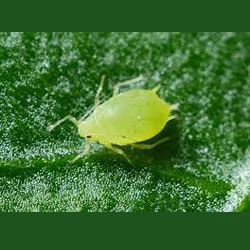
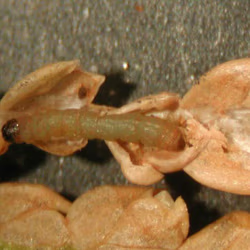
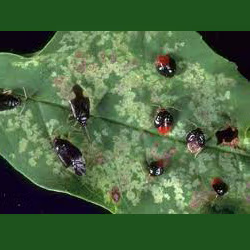
Several species of insects can be damaging to your trees. These insects could be bark eaters, leaf eaters, burrowing insects, or insects that prefer to feed on the softer internal part of your tree. Regardless, of what type of damage they do, they can be deadly for your trees. It is extremely important to have your trees inspected by a certified arborist on a regular basis to prevent significant damage. These bugs, if left unchecked, can kill your beautiful trees. It seems difficult to think that something so small can destroy something so large, but insects can and do destroy trees regularly.
Emerald Ash Borer (Agrilus planipennisor EAB) is a tree insect that has been moving through Southeast Wisconsin killing thousands of Ash Trees. It can severely damage and kill all types of Ash tree species. This can happen in as little as two years.
The best way to stop the Emerald Ash Borer is to treat your Ash trees with insect control preventative measures before an infestation occurs, or in the early stages of an infestation. Preventative measures work better and are less costly than trying to eliminate the pest after an infestation occurs.
The Emerald Ash Borer is a beetle insect that originated in Asia. Like most invasive species, it has had devastating effects on trees and wildlife here in the United States.
The Ash Borer’s infestation has become so problematic that in 2018 the USDA moved away from regulatory activities meant to isolate the Ash Borer. They instead began a plan to mitigate and manage the infestation using treatment methods instead. This method both prevents infestation as well as ends an infestation if caught in the early stages. Ultimately, some Ash trees have had to be taken down as the infestation had progressed beyond the point of effective treatment.
The species of ash trees that are most affected include Green Ash, White Ash, and Black Ash Trees. However, the Emerald Ash Borer can affect any true ash trees. Our Arborists can help you identify if you have any ash trees on your property and if they are infested with the ash borer beetle.
How To Identify The Emerald Ash Borer
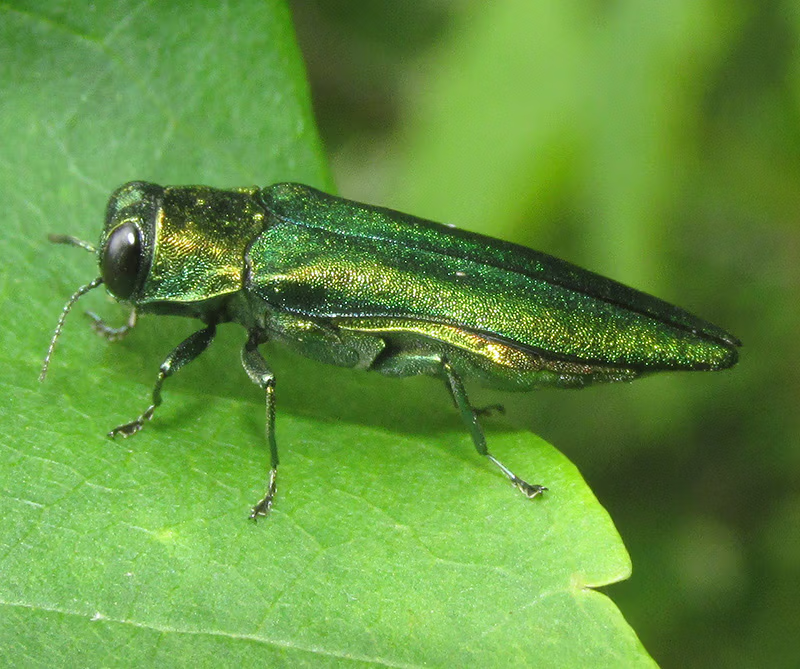
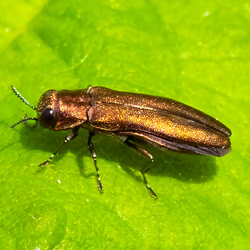
Adult Emerald Ash Borer beetles are long, slender insects ranging from 7.5mm to 13.5mm long. The males are of a smaller size than the females and have really fine hairs on the ventral side of their thorax. The female insects do not feature these fine hairs.
The adult Emerald Ash Borer contains a dark, metallic emerald green wing cover and typically features a bronze, gold, or reddish green torso. The dorsal (upper) side of the abdomen is a metallic purplish-red color and is more easily seen when the wings are spread out. The section behind their head where the first pair of legs is located is slightly wider than the head and is roughly at the same width as the base of their wing covers.
The ash borer larvae come in at a length of 26 to 32 mm, and are white to cream-colored. The brown head is mostly retracted leaving only the mouthparts visible. Their abdomen has 10 segments with the last segment containing a pair of brown, pincer-like appendages.
Signs Requiring Insect Control
It is difficult to identify an infestation of Emerald Ash Borer. The first signs are typically when the ash tree is showing signs of canopy die off. This is because the infestation starts with the larvae burrowing into the softer core of the tree and feeding on the softer sapwood. This is why prevention is so important to insect control. When you begin to see any of the following symptoms, you should call for an inspection from our licensed arborist immediately…
Leaves that are dying back in the upper one-third of the canopy and progressing downward over time.
Vertical splits in the trees bark.
Exit holes in the shape of the letter “D” in the bark of the tree.
Swerving channels under the bark in an S-shaped pattern.
Excessive feeding by woodpeckers may also be a sign.