By Chris Dunbar, Owner of Dunbar Tree Service
Tree risk assessment identifies hazards in trees so property owners, managers, and arborists can reduce injury, property damage, and ecological loss. This guide summarises established assessment methods, hazard‑evaluation techniques, and practical management steps to support safer, evidence‑based decisions.
Professional tree risk assessment applies structured techniques to spot defects and recommend treatments. The International Society of Arboriculture (ISA) publishes widely used protocols; familiarity with those methods improves consistency and decision making for land managers and property owners.
Indeed, several standardized methods guide professional tree inspections and have achieved broad industry acceptance.
Comparing Common Tree Risk Assessment Methods
A variety of risk-assessment methods have been developed to guide professionals through the tree inspection process. In North America, three risk assessment methods have gained the greatest acceptance among tree care professionals, municipal urban forestry programs, and government agencies.
Tree risk assessment methods: A comparison of three common evaluation forms: ENH1226/EP487, 11/2013, AK Koeser, 2013
Assessments determine whether tree condition poses a hazard and which corrective actions are appropriate. Arborists combine visible inspection, site context, and, where needed, instrument data to form recommendations that balance safety and tree value.
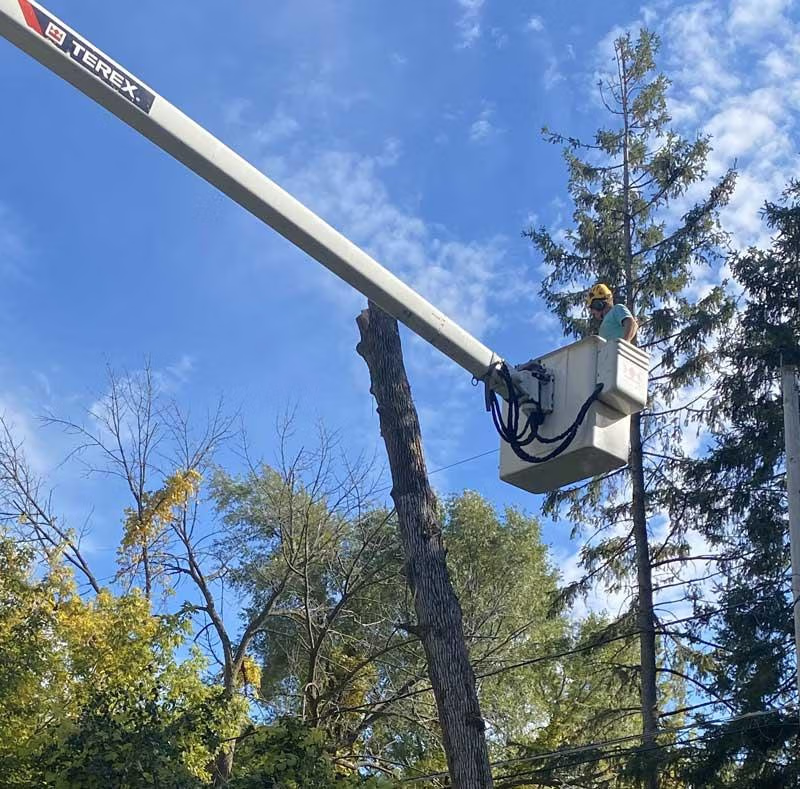
Practitioners use a small set of practical approaches, chosen by the tree’s context and the assessment goals.
While these methods share common objectives, differences in procedure and criteria can affect outcomes and reproducibility.
Evaluating Tree Risk Assessment Method Reproducibility
Tree risk assessment methods have been developed to assist arborists in conducting thorough and systematic inspections of trees and the threat they pose to people or property. While these methods have many similarities, they also have a few key differences which may impact the decisions of those employing them.
Evaluating the reproducibility of tree risk assessment ratings across commonly used methods, RW Klein, 2023
Dunbar Tree Service (Waukesha and Milwaukee counties) offers on‑site risk assessments and concise recommendations tailored to site conditions.
Evaluations quantify risk and identify likely failure modes so responses match the level of hazard.
Advanced diagnostic tools, such as Electric Resistance Tomography, provide detailed information on a tree’s internal condition.
Electric Resistance Tomography for Tree Hazard Detection
The Electric Resistance Tomograph (ERT) is a tree-specific diagnostic device developed in Germany to monitor internal structure and growth. The technique estimates internal conditions by mapping decay, hollowness and the boundary between sapwood and heartwood. Early detection of internal defects is particularly useful for economically important timber trees and for assessing whether growth is impeded.
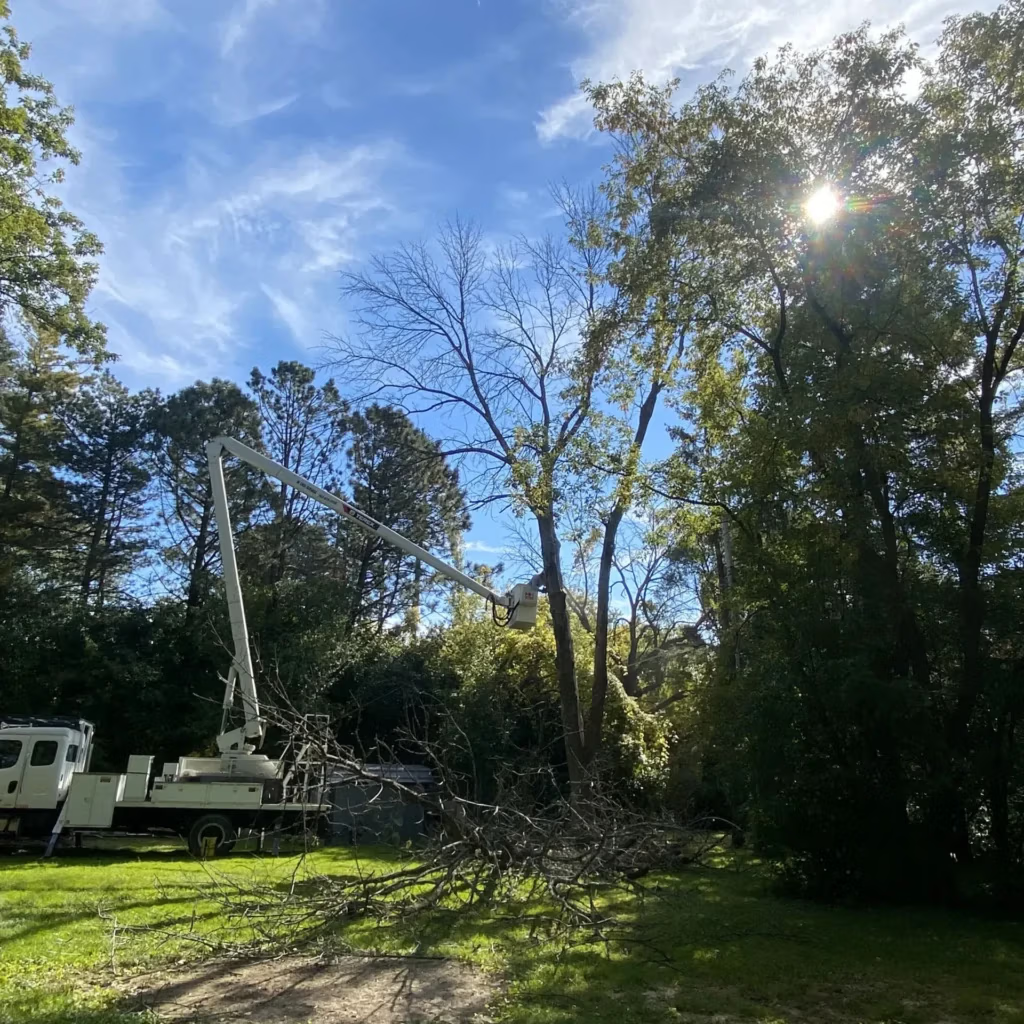
Mitigation matches the hazard: reduce likelihood, lower consequences, or remove the threat when necessary.
Scheduled inspections and targeted pruning reduce failure risk while conserving tree value.
Follow standard procedures, record findings, and involve qualified professionals when uncertainty exists.
Preventive care and planning reduce long‑term hazards and management costs.
Tailored maintenance plans address site risks and support sustained tree health.
Look for ISA certification, relevant experience with local species, and documented references; these indicate training and practical competence.
At minimum annually; increase frequency for older trees, after storms, or in high‑use areas.
Costs vary with tree size, number, and complexity. Residential assessments commonly cost a few hundred dollars; request written quotes to compare scope.
Basic visual checks are possible for owners, but certified arborists provide more accurate diagnoses and tool‑based detection of internal defects.
Take prompt action: options include pruning, bracing/cabling, or removal. Consult a certified arborist to choose the safest approach that considers ecological value.
Use regular watering, proper mulching, correct pruning, soil management, and periodic professional inspections to prevent decline.
Tree risk assessment links inspection, evaluation, and practical mitigation. Use standard methods, document findings, and work with certified arborists to manage hazards while preserving tree benefits.
It is the structured evaluation of tree condition to identify hazards and guide actions that protect people, property, and the trees themselves.
ISA methods combine probability of failure with consequences to produce standardised ratings and recommended responses.
Common signs: visible cracks or wounds, dead or weakened limbs, fungal fruiting bodies, and root or soil problems affecting stability. If you need assistance with tree removal, it’s essential to consult with professionals.
Look for physical damage, fungal growth, wilting, or dieback; use instruments when internal decay is suspected but not visible.
Monitor tree behaviour in storms, new cracks or splits, progressive canopy loss, and root plate movement as early warning signs.
Combine targeted mitigation (pruning, bracing), site remediation (soil/root care), and prioritised inspection schedules to reduce hazards.
When hiring, prioritise certification, local experience, and clear written deliverables.
Chris Dunbar is the owner of Dunbar Tree Service and an ISA Certified Arborist with over 20 years of experience in tree care and risk assessment. His expertise in hazard evaluation and management supports safer environments and healthier trees across Waukesha and Milwaukee counties. Chris is committed to providing professional, evidence-based tree services tailored to local needs. Learn more about our company on the About Us page.