By Chris Dunbar, Dunbar Tree Service
Fruit tree care rewards gardeners with seasonal blossoms and edible harvests. This guide gives beginners concise, practical instruction on pruning, pest management, fertilization, and harvest timing. Each section describes the essential techniques to maintain tree health and improve yield while reducing common beginner mistakes.
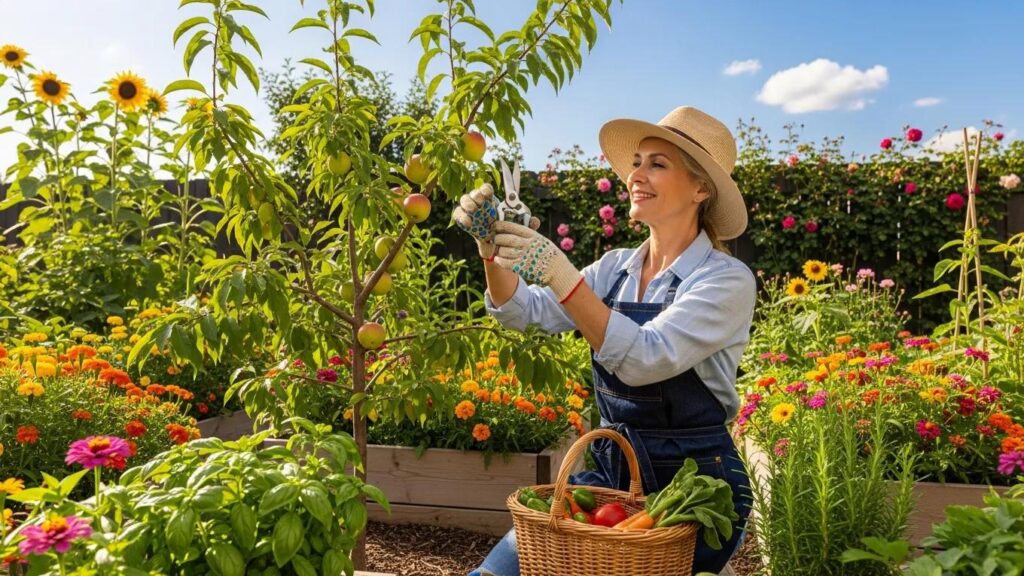
Pruning removes selected limbs to shape structure, improve light and air penetration, and remove dead or infected wood. Structural pruning and selective thinning focus energy on productive fruiting wood. Correct timing and clean cuts support rapid wound recovery and sustained vigor.
Prune in the dormant season—late winter to early spring—when trees are inactive. Dormant pruning reduces stress and lowers pest and disease pressures, and it allows cleaner, more accurate cuts that encourage strong spring growth.
Proper pruning shifts resources from excess vegetative growth to fruiting wood, improves interior light for fruit development, and removes infection sources. Regular, modest pruning over time produces healthier trees and more consistent yields.
Dunbar Tree Service offers pruning services and on-site instruction from ISA Certified Arborists who explain recommended techniques and safety practices for novice gardeners.

Pest and disease control protects tree health and fruit quality. Beginners should routinely scout trees, learn local pest signs, and apply targeted measures early. Organic tactics and integrated pest management (IPM) reduce environmental impact while providing effective control.
Local pests include aphids, spider mites and fruit tree borers. Common diseases include apple scab and fire blight. Early recognition lets you apply timely, appropriate measures to limit spread and crop loss.
Conserve beneficial insects or release them, use botanical products like neem oil when appropriate, and follow IPM: monitor, set thresholds, and apply cultural, biological, or targeted chemical controls only as needed. Regular monitoring and proportional actions are most effective.
For additional detail on organic approaches, see expert research on organic pest management.
Organic Pest Management for Fruit Trees
The main principles of pest management in organic farming system include prevention/avoidance, monitoring and suppression of pests. Monitoring of crop pests is done with visuals, use of nets, sticky traps and pheromone traps. Preventive measures include cultural practices (removal of alternate host plants, selection of cultivars, crop rotations, tillage, mulching, barrier crop, intercropping, planting/sowing time and soil nutrition management) and also conservation of natural enemies. Curative measures include the pinching and pruning, sanitation, fruit bagging, water management, mechanical control, insect traps, using of parasitoids and predators, insect pathogens, botanicals, insect growth regulators, insecticidal oils, insecticidal soaps, organic & organic insecticides and other synthetic substances allowed in organic farming.
Organic pest management in horticultural crops, 2022

Soil management and correct fertilization sustain tree performance. Start with a soil test to identify nutrient gaps and guide product choice. Improve drainage, keep a consistent mulch layer, and avoid compaction to support root health and nutrient uptake.
Base fertilizer selection and rates on soil test results and tree stage. Organic amendments like compost or well-rotted manure improve nutrients and soil structure. Apply recommended amounts in early spring before active growth to avoid imbalances.
Ensure good drainage, maintain mulch to conserve moisture and suppress weeds, and use cover crops where suitable to build organic matter and reduce erosion. These steps create a stable root environment for long-term vigor.
Dunbar Tree Service can advise on soil testing, product selection, and application methods tailored to your trees and site.
Harvest at the appropriate window for each species to secure flavor, texture, and yield. Learn species-specific ripeness signs and handle fruit carefully to avoid bruising and reduce tree stress.
Timing varies by species—apples often in late summer to fall; peaches mid to late summer. Use color, flesh firmness, and taste as practical indicators of ripeness for each fruit type.
Use sharp hand tools and gentle removal to avoid injury to branches and fruit. Hold and place fruit carefully to prevent bruising, and follow appropriate post-harvest storage practices to maintain quality.
Consistent application of these techniques helps beginners establish healthy trees and reliable yields in a home orchard.
Look for yellowing or chlorotic leaves, stunted shoots, poor fruit set, visible pest damage, black lesions, wilting branches, peeling bark, or abnormal growths. Regular inspection and quick action help prevent declines.
Plant compatible varieties for cross-pollination if needed, provide pollinator-friendly habitat with staggered bloom periods, and avoid insecticide use during flowering to protect bees and other pollinators.
Identify the pest, then use targeted controls: manual removal or directed sprays for minor problems; approved organic products (neem oil, insecticidal soap) and biological controls for larger issues. Follow IPM principles to reduce pressure sustainably.
Water needs vary by age, soil, and climate. Young trees often need weekly deep watering; established trees usually need irrigation every two to four weeks in dry spells. Water deeply to encourage roots; add water when the top inch is dry.
Mulch conserves moisture, moderates root-zone temperature, suppresses weeds, and as it decomposes, increases soil organic matter and nutrients. Mulching also reduces erosion and supports beneficial soil life.
Yes—many species, especially dwarf and semi-dwarf varieties, do well in containers. Use well-draining pots and quality potting mix. Container trees need more frequent watering and tailored fertilization due to limited root volume.
Beginner-friendly choices include apple, pear, and cherry trees; figs and peaches can also be straightforward in many gardens. Choose varieties suited to your local climate, soil, and sunlight for best results.
Chris Dunbar is a certified arborist with decades of experience in tree care and maintenance. He leads Dunbar Tree Service, providing expert pruning, pest management, and soil care guidance to gardeners and homeowners. Learn more about Chris and the team at Dunbar Tree Service’s About Us page.