★ ISA-Certified Arborists · Serving Waukesha & Milwaukee County
★ ISA-Certified Arborists · Serving Waukesha & Milwaukee County
By Chris Dunbar, Dunbar Tree Service
Pest management is essential for protecting tree health in Waukesha and Milwaukee counties. This guide summarizes nonchemical and chemical options, explains how they work, and outlines practical application, safety, and regulatory considerations for homeowners and property managers.
Historical data helps show how urban tree pest treatments and preferences have evolved.
Urban Tree Pest Control: Insecticides & Biological Methods
Historically, the most commonly used insecticides included SevinR, malathion, diazinon, Orthene and dormant oil, while fungicides included benomyl, bordeaux, zineb and captan. Only about one-quarter of cities employed systemic treatments or biological control methods.
Urban forest pest management, 1991
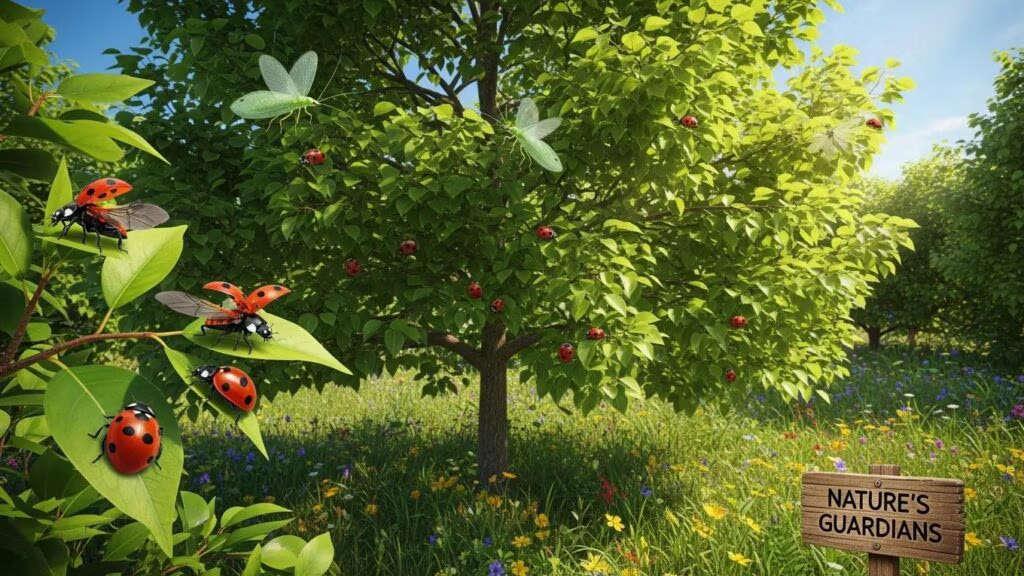
Biological control uses living organisms—predators, parasitoids, pathogens—to suppress pests and reduce reliance on synthetic chemicals. These approaches support biodiversity and leave fewer chemical residues, making them suitable for long-term, sustainable tree care.
Predators such as ladybugs and lacewings, along with parasitic wasps and other natural enemies, lower pest numbers (aphids, mites, etc.) to manageable levels. Their presence reduces the need for repeated chemical sprays and helps maintain ecological balance.
Organic methods limit synthetic exposure, are safer for people and pets, and often improve soil and habitat health. They include releasing beneficial organisms and using non-synthetic insecticides when appropriate.
Chemical insecticides interfere with insect physiology—commonly the nervous system—to control pests quickly and reliably for confirmed infestations. Responsible product selection, correct timing, and careful application reduce impacts on beneficial species and the environment.
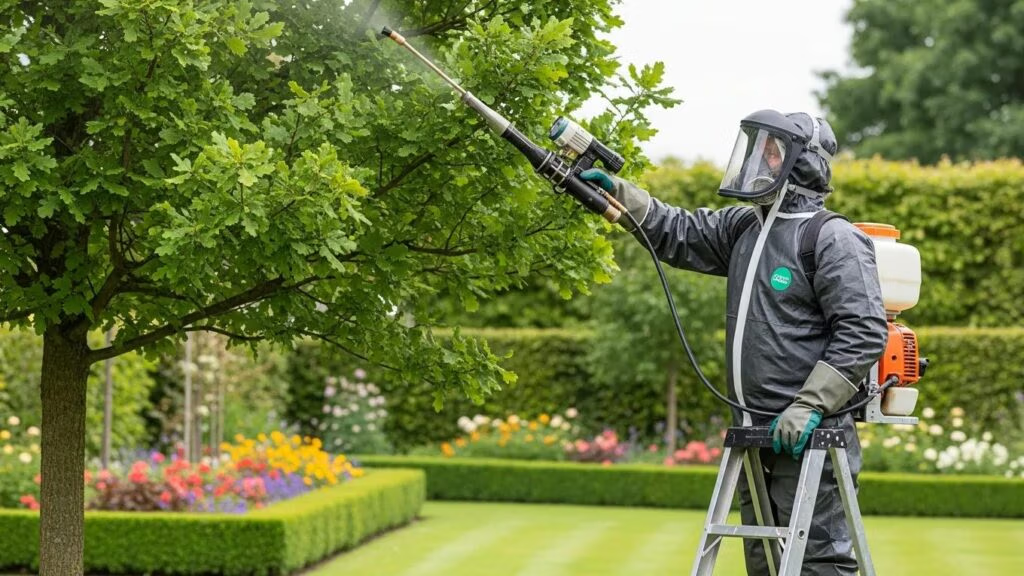
Common application techniques include:
Choose the technique by pest species, infestation level, and tree type for the best balance of efficacy and non-target protection.
Research indicates systemic trunk and soil injections can reduce non-target exposure compared with broadcast sprays.
Systemic Insecticide Injection for Urban Tree Pests
Trunk or soil injection of systemic insecticides has been increasingly preferred for controlling insect pests in urban and suburban landscapes because it presents minimal applicator exposure risk.
Distribution of trunk-injected 14C-imidacloprid in ash trees and effects on emerald ash borer (Coleoptera: Buprestidae) adults, D Mota-Sanchez, 2009
Safety relies on following product labels, timing treatments to avoid beneficial insect activity, and wearing appropriate protective equipment. These practices help trained applicators limit risks to people, wildlife, and the environment.
Combined, these measures let professionals manage pests effectively while minimizing collateral harm.
Local pests that threaten urban and suburban trees require prompt identification and appropriate responses to avoid spread and tree loss.
Emerald Ash Borer (EAB) causes rapid decline in ash trees; watch for canopy thinning, dieback, and D-shaped exit holes. Early detection and targeted treatments or removal of heavily infested trees are key to reducing impact. For more detailed treatment options, visit the Insect Control for Tree Health page.
Species such as the Asian Longhorned Beetle and various bark beetles can cause severe structural damage and open trees to secondary diseases. Integrated approaches are recommended for complex outbreaks.
Treatment choices should weigh environmental impact, effects on non-target species, and human safety. Both biological and chemical options have trade-offs; selecting the right tool for site conditions is essential.
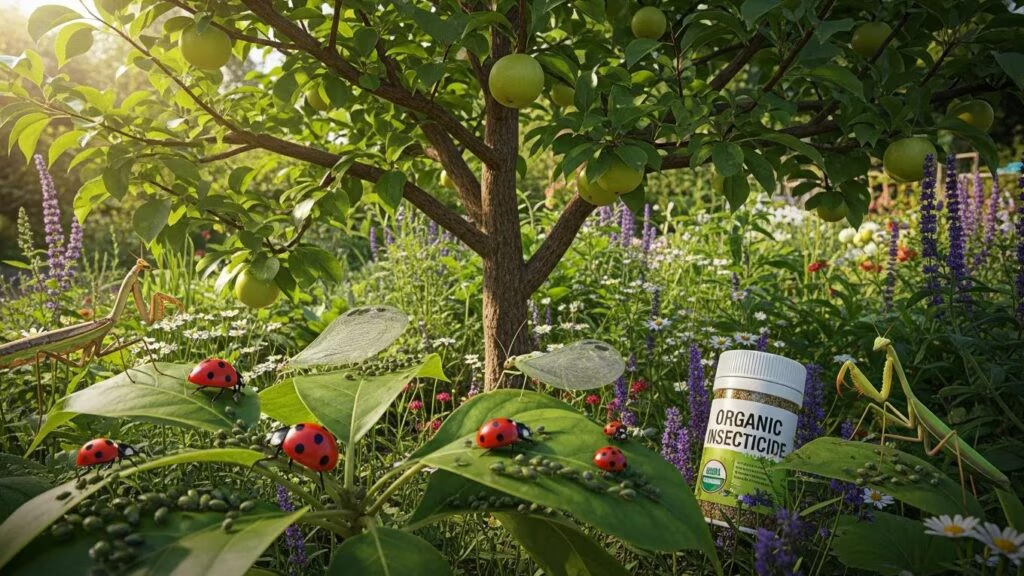
IPM combines monitoring, biological controls, cultural practices, and selective chemical use only when thresholds are met. Prioritising nonchemical methods reduces environmental burden while maintaining healthy trees.
Ongoing research and policy shifts continue to expand alternatives to broad chemical use.
Sustainable Pest Management: Bioinsecticides & Chemical Alternatives
The need for alternatives to chemical control is widely recognised, driven by environmental impacts and increasingly strict regulatory frameworks. Recent studies using next-generation sequencing indicate that insecticides can have complex, indirect effects on animal community structures, highlighting the need for in situ, community-wide assessments. Bioinsecticides have been extensively tested, but their effectiveness is strongly dependent on environmental conditions.
Global insights on insecticide use in forest systems: Current use, impacts and perspectives in a changing world, BML Leroy, 2024
Wisconsin regulates insecticide use to protect public health and the environment. Applicators must meet licensing and training requirements, follow label directions, and consider environmental safeguards.
Professionals and property managers should be familiar with these requirements before applying treatments.
Different biological methods have distinct roles and can be combined to meet management goals.
| Method | Description | Benefits |
|---|---|---|
| Beneficial Insects | Natural predators that control pest populations | Reduces chemical use, promotes biodiversity |
| Organic Insecticides | Non-synthetic treatments derived from natural sources | Safer for humans and pets, environmentally friendly |
| Cultural Practices | Techniques such as pruning and sanitation to prevent pest infestations | Enhances tree health, reduces pest attraction |
The table shows how combining biological approaches can suppress pests while supporting tree health.
Common signs include foliar damage, canopy thinning, dieback, frass, webbing, or exit holes. Regular inspections improve chances of early detection and effective response.
Maintain tree vigor with correct watering, fertilisation, and pruning; remove debris and encourage beneficial insects. Use targeted organic measures as preventive tools when appropriate.
Yes. Improper application can harm non-target organisms, soil, and water, and can pose human health risks. Mitigate risks by following labels, using PPE, and timing applications carefully.
IPM provides a decision-making framework that prioritises monitoring and nonchemical measures, reserving chemicals for when thresholds are exceeded to maintain sustainability and effectiveness.
Identify the pest and assess damage severity. Use cultural and biological measures for minor issues; choose targeted chemical treatments for severe or rapidly spreading infestations and consult a qualified professional for tailored advice.
Organic methods reduce reliance on synthetics, lower residues, support soil and habitat health, and promote biodiversity, helping build more resilient urban and suburban tree populations over time.
Chris Dunbar is a certified arborist with decades of experience in tree care and pest management. He brings expert knowledge and practical insights to help homeowners and property managers maintain healthy, thriving trees. Learn more about Chris and Dunbar Tree Service on the About Us page.