★ ISA-Certified Arborists · Serving Waukesha & Milwaukee County
★ ISA-Certified Arborists · Serving Waukesha & Milwaukee County
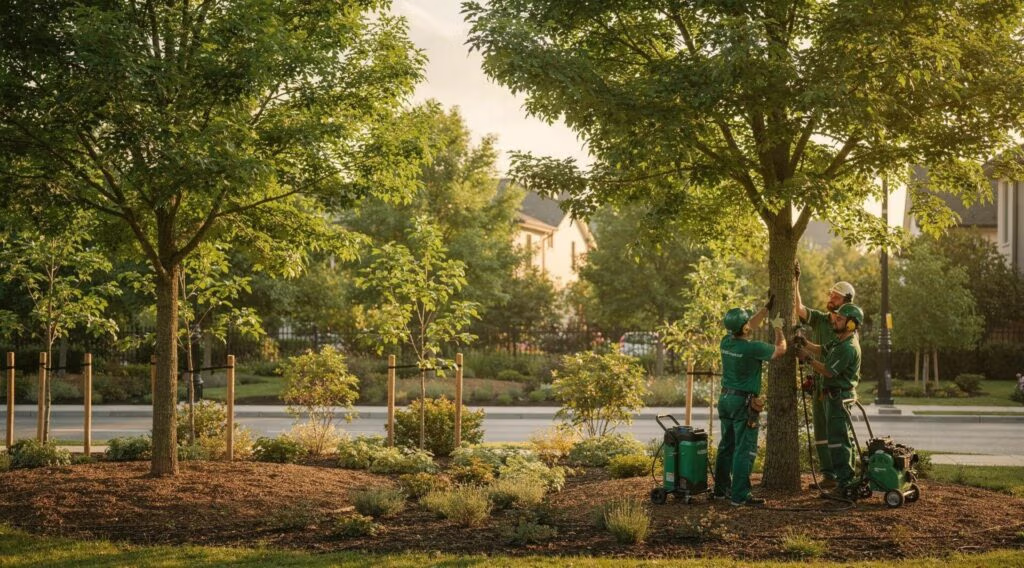
Ongoing tree maintenance contracts are essential for businesses looking to maintain the health and aesthetics of their landscapes. These contracts provide a structured approach to tree care, ensuring that trees are regularly inspected, pruned, and treated for pests and diseases. By investing in ongoing maintenance, businesses can enhance their property’s visual appeal, improve safety, and prevent costly damage from neglected trees. This article will explore the key benefits of ongoing tree maintenance contracts, define annual tree maintenance plans, and discuss how these services can deliver value to businesses. We will also highlight the expertise of Dunbar Tree Service, a leader in professional tree care services in Waukesha and Milwaukee counties, WI.
Ongoing tree maintenance contracts are agreements between businesses and tree care professionals to provide regular tree care services. These contracts ensure that trees receive consistent attention, which is crucial for their health and longevity. The key benefits of such contracts include access to professional expertise, enhanced aesthetic appeal, and cost-effectiveness through regular maintenance.
Dunbar Tree Service specializes in providing tailored ongoing tree maintenance contracts that meet the unique needs of both commercial and residential clients.
Annual tree maintenance plans are structured agreements that outline the specific services to be provided throughout the year. These plans typically include regular inspections, pruning, and emergency preparedness strategies.
| Service Type | Description | Frequency |
|---|---|---|
| Inspections | Regular assessments of tree health and safety | Quarterly |
| Pruning | Trimming and shaping trees to promote growth and aesthetics | Bi-annual |
| Emergency Preparedness | Plans for storm damage and other emergencies | Annual review |
These components ensure that businesses are proactive in managing their tree care, reducing the risk of unexpected issues.
Tree pruning contracts are vital for maintaining the health of trees on commercial properties. Pruning helps prevent the spread of diseases, improves air circulation, and enhances the overall appearance of trees.
By engaging in tree pruning contracts, businesses can ensure their trees remain healthy and vibrant.
Professional tree service agreements typically encompass a range of services designed to maintain tree health and safety. Common services include:
These services are crucial for businesses that want to maintain a safe and attractive environment.
Scheduled tree pruning and risk assessments are integral to effective tree management. Businesses should establish a regular schedule for these services to ensure trees are maintained properly.
By adhering to a scheduled maintenance plan, businesses can enhance both safety and aesthetics.
Implementing a quantified approach to tree risk assessment can further enhance safety and provide property managers with a clear understanding of potential hazards.
Quantified Tree Risk Assessment for Property Managers
A system of tree risk assessment is proposed that expands concepts developed by others and enables a probability of significant harm to be applied to tree failure risk. By evaluating the components of a tree failure hazard and assigning to them estimates of probability, the proposed system enables the skilled tree inspector to calculate the product of those probabilities to produce a numerical estimate of risk. The use of quantification in the assessment of tree hazards enables property owners and managers to operate, as far as is reasonably practicable, to a predetermined limit of reasonable or acceptable risk.
Quantified tree risk assessment used in the management of amenity trees, 2005
Integrated pest management (IPM) is a holistic approach to managing pests while minimizing environmental impact. This strategy is essential for maintaining tree health.
Implementing these programs ensures that trees remain healthy and resilient against pests.
Studies have demonstrated the significant benefits of implementing Integrated Pest Management programs in commercial settings.
Commercial IPM for Arborists: Effective Pest & Disease Management
During the 1982 growing season a Maryland arborist company cooperated with the Department of Entomology, University of Maryland to determine the effectiveness and commercial feasibility of an IPM program compared to a traditional arborist cover spray program. Over 11,000 plants on 26 client properties that previously had received yearly 3 cover sprays, were switched to a biweekly plant monitoring program. The 20 most common plants composed 70% of the total plants monitored. Of the many potential pests encountered (excluding plant diseases) only 25 types reached pest status and required treatment that consisted of spot spraying with pesticides or hand removal. Time spent monitoring, treating, and interacting with clients averaged 20 minutes for ¼ acre to 50 minutes for 4 acres. Pesticide volume sprayed was reduced by 94% compared to 3 general cover sprays.
Integrated Pest Management for Arborists: Implementation of a Pilot Program1, 1984
Ongoing tree maintenance contracts provide significant value to businesses by ensuring that their landscapes are well cared for. These contracts offer access to professional expertise, enhance aesthetic appeal, and ensure compliance with local regulations.
Dunbar Tree Service’s tailored services ensure that businesses receive the best care for their trees.
Investing in preventative tree care can yield significant returns for businesses. By addressing potential issues before they escalate, companies can save on costly repairs and enhance their property’s value.
By prioritizing preventative care, businesses can protect their investments and enhance their landscapes.
Research further supports the financial advantages of proactive tree management, highlighting the costs of both maintaining and neglecting urban forests.
Urban Forest Maintenance: Costs & Benefits for Businesses
This paper presents the results of a literature review on the “Costs of Not Maintaining Trees” commissioned by the ISA Science and Research Committee. The authors summarized the literature from within the field of arboriculture/urban forestry to answer the questions: What are the costs of maintaining trees and the urban forest? And, What are the costs of not maintaining trees? Present here is a detailed summary of the literature on the costs of maintenance and lack of maintenance for types of tree care commonly included in municipal budgets (planting, pruning, removal, pest and disease management) and a brief review of costs associated with less-studied types of tree care (including tree risk management; watering; mulching; fertilizing and nutrient management; staking, cabling
The costs of maintaining and not maintaining the urban forest: A review of the urban forestry and arboriculture literature, J Vogt, 2015
Customized care plans are essential for addressing the unique needs of each commercial property. These plans consider factors such as tree species, location, and specific business requirements.
Dunbar Tree Service offers customized care plans that align with the specific needs of businesses in Waukesha and Milwaukee counties.
Dunbar Tree Service provides comprehensive tree care services across Waukesha and Milwaukee counties. Their expertise in these regions ensures that businesses receive tailored services that comply with local regulations.
This local expertise allows Dunbar Tree Service to provide effective and compliant tree care solutions.
Understanding local tree species and regulations is crucial for effective tree care. Dunbar Tree Service’s local expertise ensures compliance with regional standards.
This commitment to local expertise enhances the quality of services provided.
Initiating and managing tree maintenance contracts involves several key steps. Businesses should engage with certified arborists to assess their needs and develop a tailored plan.
By following these steps, businesses can effectively manage their tree maintenance contracts.
Consultation with certified arborists is essential for developing effective tree maintenance plans. Dunbar Tree Service offers various consultation options to meet the needs of businesses.
These options make it easy for businesses to explore their tree care needs.
Ongoing support is crucial for effective tree health management. Regular monitoring and reporting help businesses stay informed about their tree care.
To learn more about how we can help, contact us today. Dunbar Tree Service provides comprehensive monitoring and reporting to ensure the health of trees over time.
Chris Dunbar is a certified arborist with the International Society of Arboriculture (ISA), bringing over 20 years of experience in the tree service industry. His expertise in professional tree care and commitment to sustainable practices have helped countless businesses maintain healthy and attractive landscapes. For more information about Chris Dunbar and the team, visit the About Us page.