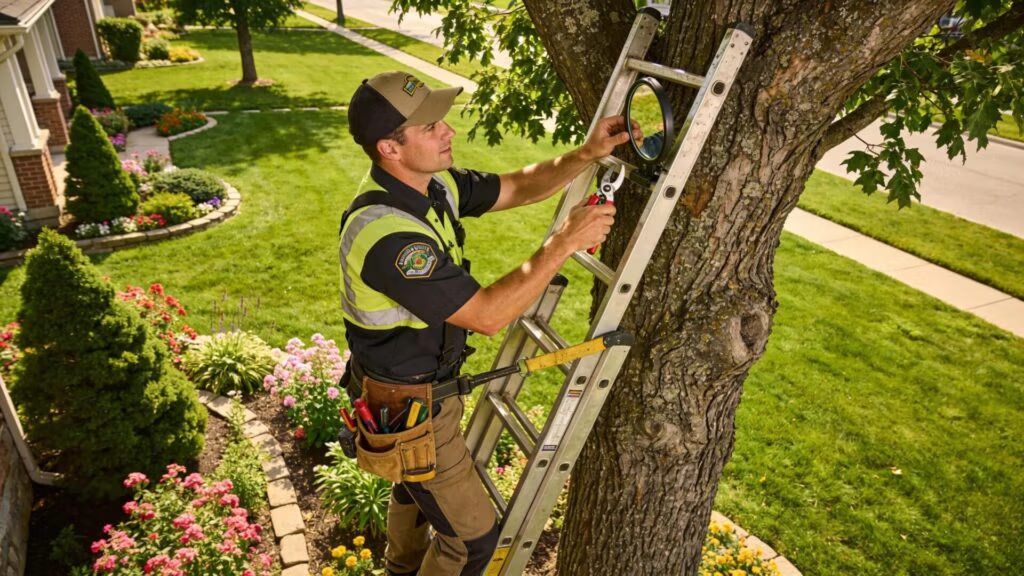
By Chris Dunbar, Owner of Dunbar Tree Service
Trees across Milwaukee do more than shape a property’s curb appeal — they support local ecosystems, and like any living thing, they’re vulnerable to disease, pests, and structural decline. A professional tree health assessment from a certified arborist gets to the bottom of what’s going on: how much disease pressure a tree is under, what structural risks it poses, and which treatments will actually help. This guide walks through why these assessments matter, how arborists carry them out, and what Milwaukee homeowners should watch for — including the warning signs that call for an inspection and the follow-up services that typically come next.
A tree health assessment is a close, structured look at a tree‘s condition and the risks it may carry. A credentialed arborist examines the tree for disease, structural weak points, and environmental stressors that could threaten its stability — and your safety. Catching these issues early means you can act before they turn into costly damage or a genuine safety hazard. For Milwaukee homeowners, scheduling regular evaluations keeps your landscape healthy and supports safer, greener neighborhoods.
Dunbar Tree Service‘s certified arborists perform tree health assessments for residential properties, providing a clear diagnostic report and a plan for what to do next.

A tree‘s condition matters more to your property than you might think. Healthy trees clean the air, make a landscape more inviting, and add real value to your home. Well-maintained trees also cut your energy bills by shading your home in summer and blocking wind in winter. Regular health assessments catch disease, pest damage, and structural instability early, so maintenance stays targeted and effective rather than reactive.
When you understand what your trees do for your property, it’s easier to build a maintenance routine that protects you from the safety risks and costs that come with tree failure.
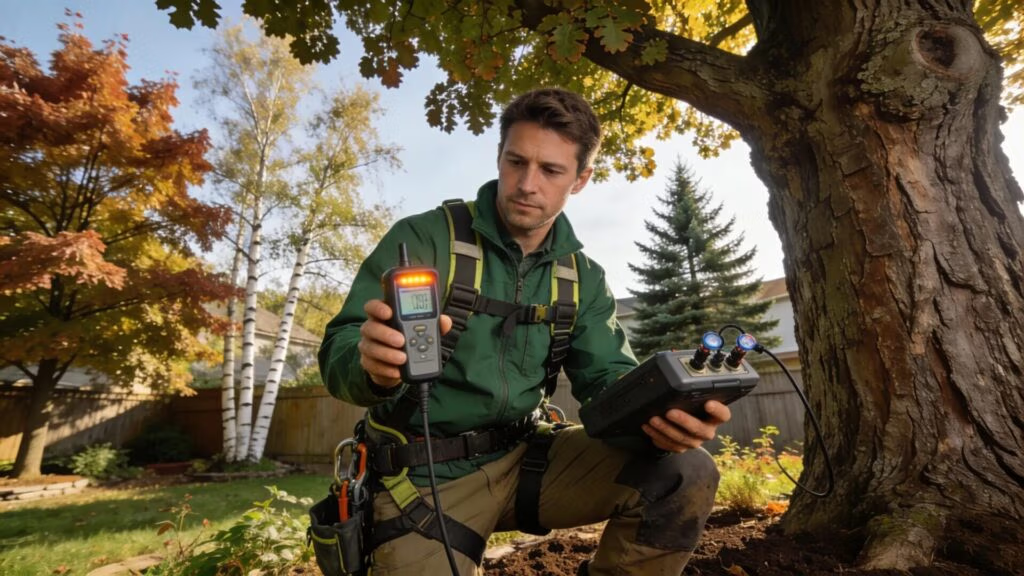
Certified arborists follow proven assessment protocols and use dedicated diagnostic tools to evaluate tree health and risk. The process starts with a thorough visual inspection — checking the leaves, bark, crown shape, and any signs of pests. What the arborist sees in the field shapes the initial risk rating and the recommendations that follow.
For more complex cases, arborists bring in additional diagnostics: visual tree assessment (VTA) methodology, aerial imaging from drones to get a clear view of the canopy, and soil testing to check what’s happening at the root zone. Everything comes together in a formal arborist report — the tree’s condition, the risk factors, and exactly what maintenance or mitigation is recommended. Dunbar Tree Service holds its assessments to industry standards, so homeowners get documentation they can actually act on.
A comprehensive tree health evaluation pays off for property owners in real, measurable ways — catching problems early, pointing you toward the right treatment, and cutting down on costly surprises later.
Bringing in a certified arborist for a detailed evaluation helps your trees live longer and stay structurally sound — giving you a more resilient landscape and less spent on maintenance down the road.
Keep an eye out for the signs that mean it’s time to call in a professional. Watch for discolored leaves, leaves dropping earlier than expected, unusual growth patterns, visible insects, or any change in how stable the trunk or roots seem.
Catching these signs early gives you the chance to call in a professional and fix the problem before it gets worse.
Milwaukee’s climate and urban environment make certain diseases and pests more of a problem here than elsewhere. You’ll commonly see fungal cankers, bacterial blight causing discolored leaves and dieback, and insects like the emerald ash borer, which drives steady canopy decline if left unchecked.
Knowing what to look for means you can get a professional evaluation and the right treatment before things get out of hand.
A structural assessment is a core part of managing risk with your residential trees. Watch for a pronounced lean, cracks in the trunk or bark, and dead or damaged limbs — all signs that structural integrity may be compromised.
Keeping an eye on these structural indicators lowers the odds of failure and helps protect both your property and the people on it.
Once your assessment is complete, a handful of follow-up services put the recommended treatment and maintenance into action. Here’s what that typically looks like:
Following through on these services as your arborist recommends keeps your trees healthier, stronger, and more resilient for years to come.
Milwaukee’s seasons each bring their own challenges, so keeping your trees healthy year-round takes care tailored to the time of year. When storms hit, emergency tree care deals with fallen branches and compromised trees before they become bigger hazards. Beyond that, seasonal services generally cover getting trees ready for winter, pruning in spring before growth kicks in, and mid-summer health checks to catch drought stress or pests early.
Dunbar Tree Service provides emergency and seasonal tree care built around Milwaukee’s local conditions, so your maintenance stays on track and help arrives quickly when you need it.
What you pay for a tree health assessment depends on the size of the tree, how complex the evaluation is, and whether follow-up diagnostic testing or treatment is needed. Most assessments run between $100 and $250, depending on those factors.
Timing matters too. Early spring and autumn tend to give arborists the clearest diagnostic picture, since foliage and the tree’s overall activity make issues easier to spot. Keep the season in mind when you schedule your assessment — it makes a real difference in what the arborist can find.
| Service | Benefit | Recommendation |
|---|---|---|
| Tree Health Assessments | Identifies diseases and structural risks | Schedule annually to catch issues early |
| Pruning Services | Enhances growth and health | Conduct before spring growth begins |
| Pest Control Services | Manages infestations effectively | Implement during peak pest seasons |
The takeaway here is simple: staying proactive with scheduled tree care lowers your risk of failure, protects your landscape’s value, and keeps your Milwaukee property in good shape for the long haul.
We generally recommend a professional assessment once a year to catch emerging issues before they become bigger problems. If you’re dealing with extreme weather swings or a lot of pest activity in your area, twice a year — or extra seasonal checks — may be a better fit to keep your trees healthy and structurally sound.
Look for a certified arborist with recognized credentials — certification from the International Society of Arboriculture (ISA) is the standard to look for — along with real field experience in tree health diagnostics and a track record in risk assessment and mitigation. It’s worth checking references and past projects to confirm they’re reliable and know what they’re doing.
Some species are simply more vulnerable to certain pests and diseases and need closer watching. Ash trees, for instance, are at real risk from emerald ash borer, while oaks and maples often need extra attention in urban settings. A certified arborist can tell you how often your specific trees should be checked based on what’s happening in your area.
If you notice discolored leaves, leaves dropping too soon, or signs of pests on your trees, take note of what you’re seeing and get a certified arborist out for a proper evaluation. Getting a professional diagnosis quickly means you avoid the wrong fix and give your tree the best shot at recovering.
Yes. Well-documented tree health and maintenance boost curb appeal and can genuinely factor into what your property is worth. Healthy, well-managed trees offer environmental and energy benefits that buyers notice — and that makes your property more marketable.
Seasonal care for Milwaukee trees looks like this: a structural check and removal of weak limbs before winter sets in, pruning in early spring to support healthy growth, summer inspections for drought or pest stress, and fall evaluations to look at nutrients and root health before the tree goes dormant. Matching care to the season is what keeps your trees performing their best.
To ensure effective follow-up, implement the arborist’s recommendations in a timely manner, schedule interventions according to recommended seasonal windows, and maintain ongoing communication with the service provider to monitor treatment outcomes and adjust management plans as required.
Investing in professional tree health assessments enables Milwaukee homeowners to manage landscape risk, preserve asset value, and support ecological function through evidence-based evaluations and prescribed follow-up care. Certified arborists identify hazards, recommend targeted interventions, and document condition and risk to inform long-term management. Regular assessments are a prudent component of property stewardship; schedule your tree health assessment today to protect and optimize your landscape assets.