By Chris Dunbar, Owner of Dunbar Tree Service
Stump grinding is a routine landscape maintenance service that removes tree stumps by mechanically reducing them below ground level, thereby restoring usable space and improving site appearance. This article examines key considerations for “**professional stump grinding services**” in Milwaukee, including anticipated benefits, cost determinants, and required expertise. Many property owners do not fully appreciate the impact of residual stumps on safety and marketability; informed decisions require an understanding of service scope, pricing variables, and available alternatives.
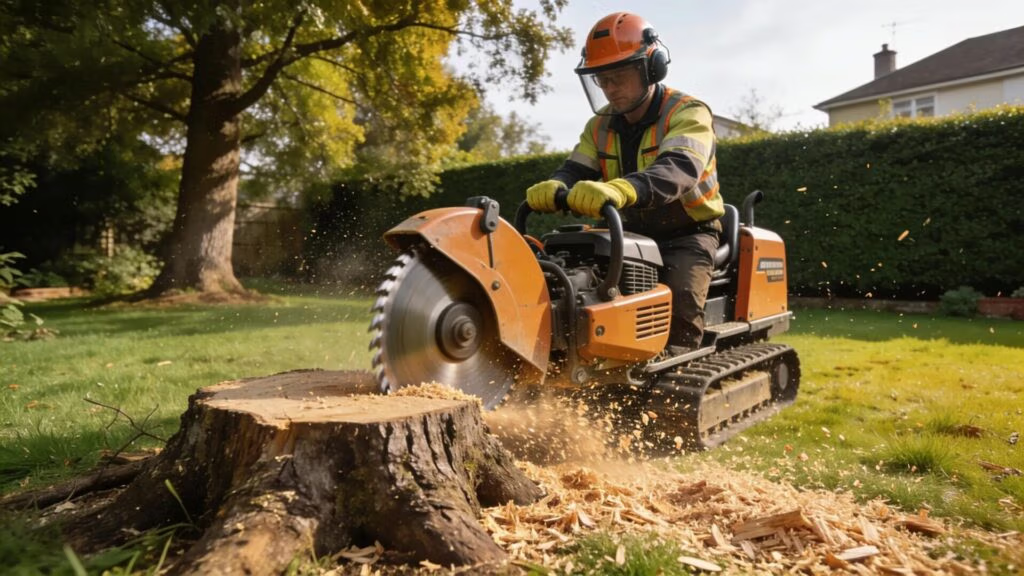
Professional stump grinding in Milwaukee efficiently removes stumps using commercial-grade equipment operated by certified arborists.
Stump grinding improves safety by eliminating tripping hazards and prevents pest infestations and disease spread.
The process converts stumps into mulch, which enhances soil quality and supports sustainable landscaping practices.
Costs vary based on stump size, location, and accessibility, with prices ranging from $100 to $500.
Stump grinding is more cost-effective and less invasive than complete stump removal or chemical treatments.
Certified arborists ensure safe, high-quality stump grinding by following industry standards and providing expert aftercare advice.
Bundling stump grinding with tree removal or pruning services offers cost savings and operational efficiency for homeowners.
The stump grinding process includes site assessment, grinding to below ground level, and thorough site cleanup.
Professional stump grinding enhances property aesthetics, increases usable outdoor space, and can boost property value.
Professional stump grinding is a technical service that removes stumps while limiting disturbance to adjacent vegetation and structures. The method employs commercial-grade grinders operated by trained technicians to reduce stumps to the specified below-ground depth, mitigating pest and safety risks. Dunbar Tree Service, a certificated local provider serving Milwaukee and Waukesha counties, documents its capabilities in integrated tree care services, including stump grinding executed with industry-standard procedures focused on safety and reliability.
Stump grinding begins with a site and stump condition assessment. Arborists evaluate variables such as stump diameter, species, root configuration, and proximity to structures to determine equipment selection and technique. The procedure uses a stump grinder to comminute the stump into wood chips and grind the root flare to grade, typically leaving mulch that can be reused on-site. Dunbar Tree Service employs ISA-certified arborists who implement standard safety protocols throughout the operation.
Industry literature and professional practice identify the reuse of grindings as mulch as a dual-benefit outcome: improving soil structure while maintaining landscape continuity.
Understanding the Benefits of Mulching Following Stump Removal The utilization of wood byproducts as horticultural mulch has trended upward over the past decade, as the horticulture industry and landscape architects have heightened public awareness regarding the aesthetic and maintenance advantages associated with mulch application. The effect of wood mulch type and depth on weed and tree growth and certain soil parameters, DA Rakow, 1995
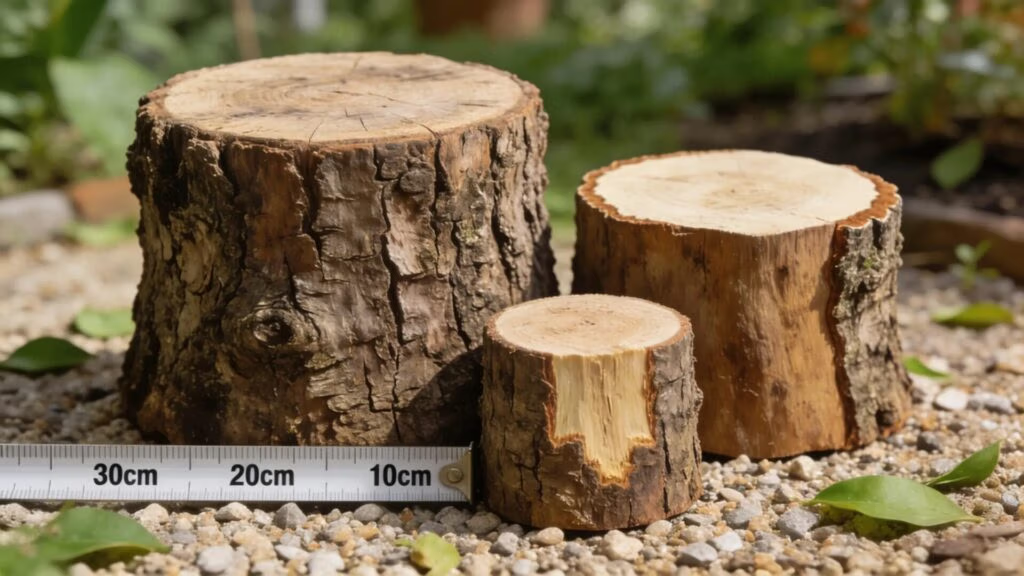
Multiple variables determine the price of stump grinding services; accurate estimates reflect site-specific conditions rather than flat rates. Common cost drivers include stump diameter, root mass, equipment mobilization, and access constraints.
Stump Size | Cost Estimate | Accessibility Impact |
|---|---|---|
Small (up to 12 inches) | $100 – $200 | Easy access, minimal equipment required |
Medium (12-24 inches) | $150 – $350 | Standard accessibility, moderate equipment |
Large (over 24 inches) | $300 – $500 | Challenging access, extensive labor needed |
Awareness of these determinants enables homeowners to obtain precise quotes and compare proposals on an equivalent basis.
Stump grinding delivers several functional benefits for residential properties:
Improved Safety: Removing stumps significantly reduces the risk of tripping hazards for family members and pets, contributing to a safer outdoor environment.
Aesthetic Enhancement: Eliminating unsightly stumps restores the visual appeal of the landscape, providing a clean and finished appearance.
Usable Space Creation: Once stumps are removed, the area can be utilized for new landscaping, gardening, or recreational activities.
Disease Prevention: Stumps can harbor pests and diseases that may spread to surrounding plants. Grinding them can mitigate such risks.
Property owners realize measurable improvements in safety, functionality, and appearance when stump grinding is executed by qualified professionals.
While stump grinding is frequently the preferred method, alternative approaches exist:
Complete Stump Removal: This involves excavating the stump entirely from the ground. Although effective, it’s often costlier and more labor-intensive.
Chemical Treatments: Some may opt for chemical solutions that promote decay, but these can take time and may not be environmentally friendly.
DIY Methods: Homeowners might choose to attempt removal themselves using tools like saws or axes, but this carries risks and often lacks the efficiency of professional services.
Evaluating these alternatives against cost, timeline, and environmental impact is necessary when selecting the appropriate method.
Cost-effectiveness is a primary benefit of stump grinding relative to full excavation. Grinding reduces the need for extensive earthmoving and landscaping restoration, allowing property owners to reclaim space with lower direct costs and shorter project timelines.
From a safety standpoint, stump grinding removes trip hazards and reduces vectors for pest activity. Aesthetically, the removal of visible stumps improves site presentation and facilitates subsequent landscape use, which may positively influence curb appeal.
Stump grinding reduces physical hazards and potential liabilities by eliminating protruding root systems and decaying wood that present trip and contact risks. Addressing these issues contributes to a safer site for residents and visitors.
Improved landscape condition following stump removal can enhance marketability. The elimination of visual obstructions and the recovery of usable space support more favorable buyer perceptions and potential valuation benefits.
Given the involvement of heavy equipment and mechanical operations, industry analyzes emphasize the role of professional oversight to ensure compliance with safety protocols and to minimize incident risk.
Safety Standards in Professional Tree and Stump Removal Services The objective of this study was to identify and quantify the hazards associated with arboricultural operations. Data from the Occupational Safety and Health Administration (OSHA) Fatality and Catastrophe incident database, along with additional Bureau of Labor Statistics (BLS) sources, were analyzed for incidents occurring in arboricultural operations over the 17-year period from 2001 through 2017. A review of United States arboricultural operation fatal and nonfatal incidents (2001–2017): Implications for safety training, J Ball, 2001
Stump grinding supports environmental objectives by converting woody material into mulch that can be reused to improve soil organic matter, reduce erosion, and support plant health. The process also reduces reservoirs for pests and pathogens that can affect adjacent vegetation.
This method aligns with sustainable landscaping practices by recycling organic byproducts and reducing reliance on disposal or chemical decay accelerants.
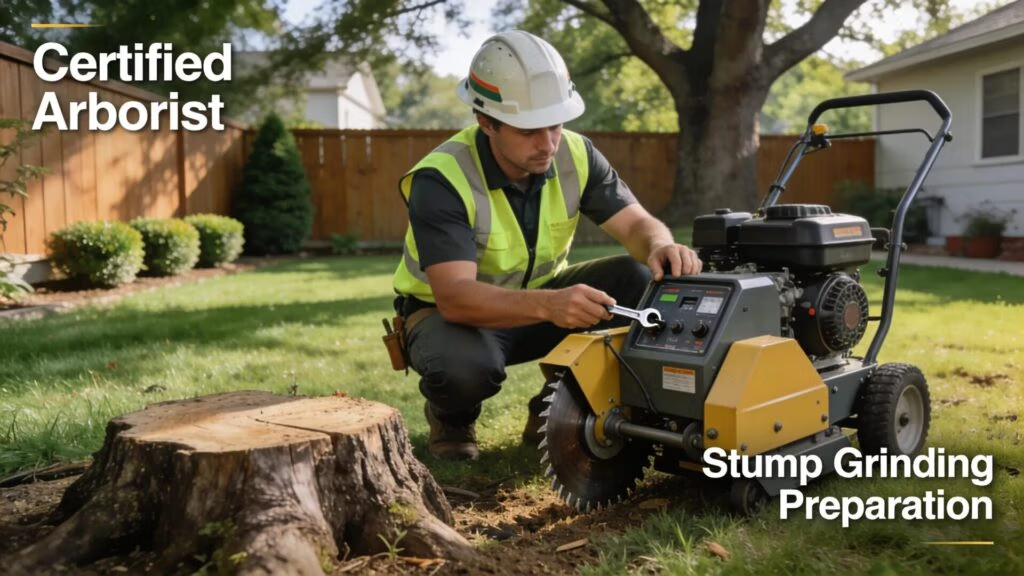
The professional stump grinding workflow comprises a sequence of standardised steps initiated by a site assessment and agreement on the scope of work with the property owner:
Equipment Preparation: Arborists prepare the stump grinder and other necessary tools, ensuring everything meets safety and operational standards.
Grinding Process: The technician positions the grinder over the stump and grinds it down, usually to a depth of 6-12 inches below ground level. The ground material is often left to decompose or used as mulch in the landscape.
Site Cleanup: Once grinding is complete, the area is cleaned up, ensuring no debris is left that could obstruct other landscaping efforts.
The established procedure reduces operational risk and supports consistent outcomes for both property condition and crew safety.
Professional stump grinding employs purpose-built grinders and ancillary tools selected based on stump dimensions and site constraints to achieve efficient removal with controlled disturbance.
Portable Stump Grinders: Ideal for smaller stumps, these machines are easy to transport and maneuver in tight spaces.
Tracked Stump Grinders: These larger equipment types are capable of handling larger stumps and offer enhanced stability and power on uneven terrain.
Manual Stump Grinders: Used for DIY methods, these handheld tools can be labor-intensive but are a cost-effective solution for smaller projects.
When appropriate machinery is combined with certified arborist oversight, stump grinding delivers comprehensive site restoration with minimal collateral impact to the landscape.
Advanced mechanical systems and calibrated operational protocols enable technicians to optimize site preparation and execution, improving productivity and result uniformity during grinding operations.
Optimizing Site Preparation Through Professional Stump Grinding Equipment This article provides an analysis of the technical capabilities of the PT-400 specialized forestry prime mover paired with the FAE-300/S multi-purpose forestry tiller for mulching, stump grinding, and deep soil preparation in the establishment of intensive hybrid poplar plantations. The study quantifies operational productivity, optimal maneuverability, production capacity, and key quality indicators for the machinery under specific site conditions. Evaluation of forest milling machine performances for site preparation, K Marinov, 2015
Homeowners should expect a structured sequence comprising initial evaluation, execution of the grinding procedure, and a concluding inspection to verify outcomes.
Initial Assessment: Arborists evaluate the site and stump condition to determine the best approach.
Grinding Procedure: Using specialized grinding equipment, the stump is gradually reduced to mulch.
Post-Process Inspection: After grinding, technicians inspect the area to confirm satisfactory results and address any remaining concerns.
Adherence to these steps ensures operational efficiency, quality control, and alignment with client expectations.
Stump grinding pricing is subject to variation based on quantifiable factors relevant to labor, equipment, and site complexity.
Stump Size and Type: Larger stumps require more resources and time to grind down, impacting the final bill accordingly.
Accessibility Factors: Stumps located in hard-to-reach spots may incur additional labor costs due to the challenge of maneuvering equipment.
Time Required for the Process: More intricate jobs can take longer, which can also affect pricing.
Clarifying these elements with prospective contractors enables homeowners to budget accurately and compare vendor estimates on an equivalent basis.
Stump diameter, site location, and access constraints collectively influence required machine size, crew time, and logistical effort, which in turn affect the final price. Larger or obstructed stumps typically necessitate additional labor and specialised equipment, increasing cost.
Stump grinding is generally more economical than full stump excavation because it minimizes soil disturbance and reduces the need for subsequent landscape restoration. Full removal requires heavy excavation and greater restoration work, which increases overall project cost.
Engaging certified arborist-led stump grinding services provides technical competence and familiarity with accepted industry practices. Certified professionals have documented training in arboricultural methods and safety protocols, which contributes to consistent execution and regulatory compliance.
Retaining credentialed arborists reduces exposure to operational risk and supports appropriate decision-making regarding tree and site health rather than relying on unverified labor.
A certified arborist is defined by their qualifications, which typically include:
Experience Requirements: Most certifications require significant hands-on experience in tree care and maintenance.
Examination Process: Completion of standardized testing established by recognized bodies to prove knowledge and skill.
Ongoing Education: Commitment to staying updated on best practices and industry standards through continued education and training.
Those credentials provide homeowners with verifiable assurance that the contractor possesses the requisite competence to perform stump grinding to professional standards.
Certified arborists apply specialised knowledge of tree physiology, pathology, and structural risk assessment to inform grinding strategy and limit collateral damage. Their training in safety procedures reduces operational hazards to personnel, property, and the environment.
Arborists also provide post-service care guidance to support long-term site health, extending the benefit of the immediate removal beyond the procedure itself.
Stump grinding is commonly integrated into comprehensive tree removal and emergency response services. Providers coordinate grinding with removal operations to streamline workflow and reduce mobilisation requirements.
This coordinated model simplifies project management for property owners and ensures continuity of technical oversight across removal, grinding, and cleanup activities.
Bundling stump grinding with other tree services yields operational and economic efficiencies:
Cost Savings: Service packages often come with discounts, making it more affordable than hiring for each task separately.
Efficiency of Service Delivery: Coordinated scheduling reduces downtime and ensures a smoother operation.
Enhanced Safety: Having the same team handle multiple aspects of tree care ensures increased adherence to safety protocols.
Combined service delivery reduces administrative burden on the homeowner and supports a unified approach to landscape management.
Emergency tree services prioritize rapid assessment and mitigation. When a tree is damaged or has fallen, emergency crews evaluate hazards and, where operationally appropriate, incorporate stump grinding into the remediation plan to restore site safety and usability.
Stump grinding involves using specialized equipment to grind the stump down to below ground level, often turning the remains into mulch. It’s less invasive and usually more cost-effective compared to stump removal, which fully excavates and removes the stump and roots from the ground, requiring significant labor and can disrupt the surrounding landscape. Homeowners often prefer grinding for its efficiency and minimal impact on their property.
Yes, attempting DIY stump grinding carries several risks. Operating heavy machinery without proper training can lead to accidents, injuries, or property damage. Additionally, improperly grinding a stump may leave roots that can still pose a hazard or encourage regrowth. Hiring professionals ensures that the job is done safely and effectively, adhering to all industry standards while minimizing risks to yourself and your property.
The time it takes to grind a stump varies based on factors such as stump size, location, and accessibility. Generally, the grinding process can take anywhere from 30 minutes to a few hours. After grinding, additional cleanup may extend the total time slightly. Most professional services aim to complete the task efficiently while ensuring thoroughness to prevent potential hazards and maintain property aesthetics.
After stump grinding, the wood chips can be repurposed in several beneficial ways. They can be used as mulch to enrich soil and suppress weeds in garden beds, or they can be composted to enhance the nutrient content of your soil over time. Some homeowners choose to spread the chips as ground cover in paths or as aesthetic features in landscaping designs, promoting sustainable gardening practices.
When performed correctly by professionals, stump grinding should not damage your lawn or surrounding plants. Arborists typically take care to minimize impacts during the grinding process and use techniques that protect adjoining roots and nearby vegetation. However, the removal of stumps can open up areas for new landscaping opportunities, making it possible to enhance the aesthetic of your yard further.
The ideal time for stump grinding is usually in the late winter to early spring when the ground is not too wet. This helps in minimizing ground disruption and makes the stump less likely to re-sprout. However, stump grinding can effectively be done year-round, depending on the specific safety and access conditions of your property. Professional services can assess the conditions and recommend the best timing for your specific situation.
Professional stump grinding provides an efficient, cost-effective method for restoring landscape utility and appearance while reducing safety hazards and supporting environmental reuse of organic material. Engagement of certified arborists promotes adherence to technical standards and reduces operational risk. Contact us to obtain specific information on service scope, scheduling, and cost estimates for stump grinding solutions tailored to your property.