By Chris Dunbar, Owner of Dunbar Tree Service
Healthy trees provide aesthetic value and ecosystem services. Tree diseases present quantifiable risks to tree health and longevity. In Waukesha County, comprehensive disease evaluation and treatment services are necessary to sustain urban and suburban tree populations. This article outlines diagnostic methodologies and care practices employed by certified professionals, including “Dunbar Tree Service”, and describes sustainable treatment approaches. Property managers and homeowners can apply these practices to reduce disease incidence and ensure timely emergency response.
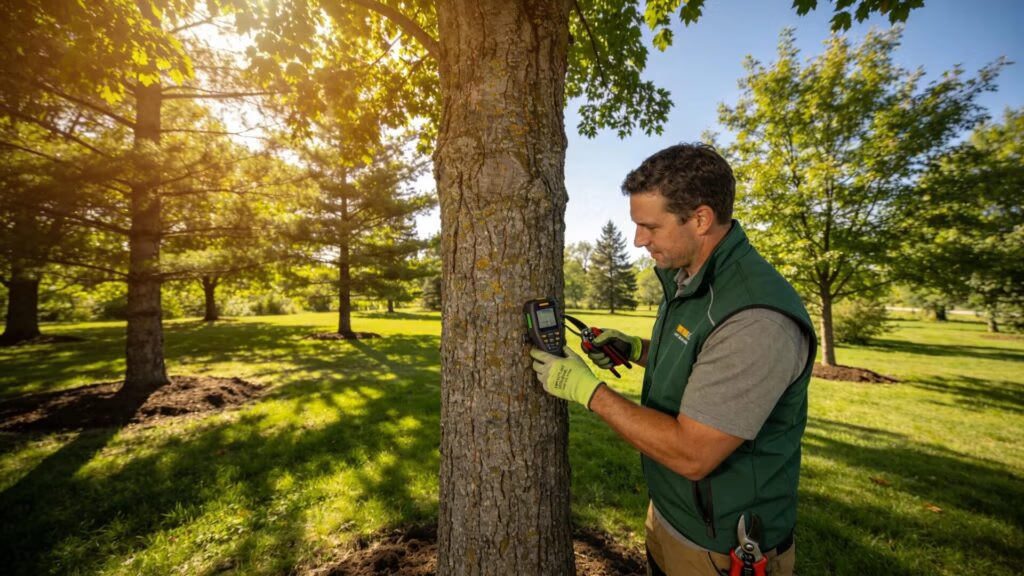
Certified arborists in Waukesha County use advanced diagnostic tools and environmental assessments to identify tree diseases accurately.
Common local tree diseases include oak wilt, Dutch elm disease, and emerald ash borer infestations requiring tailored management strategies.
Effective tree care involves regular monitoring, preventive measures, and consulting professionals for early disease detection and intervention.
Treatment options include chemical fungicides, biological pest control, and pruning to manage and reduce disease impact.
Preventive care practices such as proper watering, mulching, and pruning enhance tree resilience against environmental stressors and pathogens.
Emergency tree disease interventions address rapid leaf drop, bark damage, and structural instability to protect tree health and safety.
Dunbar Tree Service provides certified, prompt, and effective tree disease evaluation and treatment services in Waukesha County.
Evidence from case studies and client feedback supports the reliability and success of Dunbar Tree Service’s treatment methods.
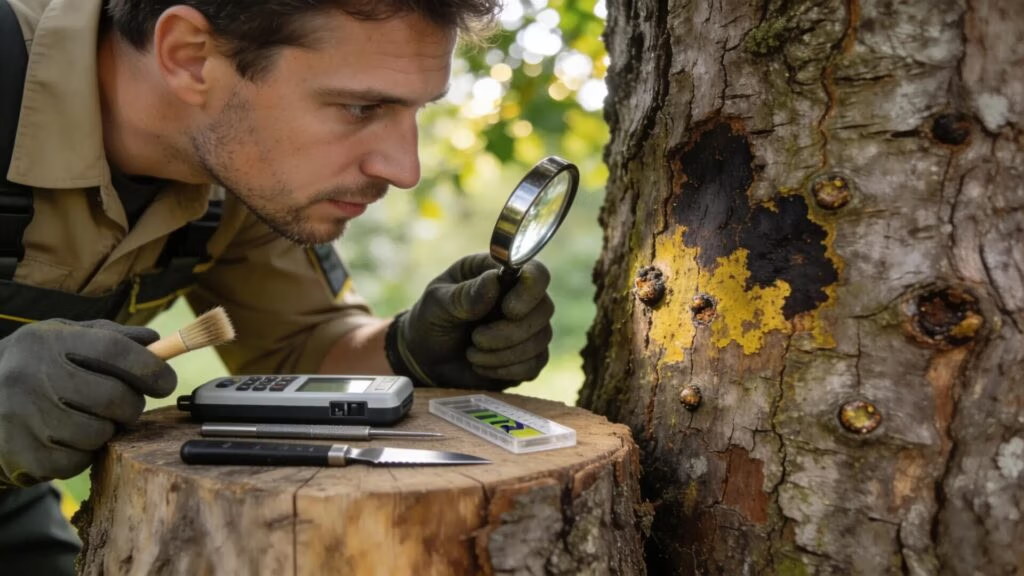
Accurate diagnosis requires certified arborists applying systematic assessment protocols. Practitioners combine targeted visual inspection with specialised diagnostic instruments and quantitative environmental data. Site variables such as soil chemistry, moisture regime, and adjacent vegetation are evaluated to isolate causal agents and confirm pathogen or pest presence.
Environmental assessments provide the contextual data necessary to interpret symptoms. Contributing factors such as drought stress or soil compaction are evaluated, and laboratory or field soil analyzes inform diagnoses of nutrient deficiencies or the presence of toxicants.
Effective care relies on scheduled monitoring and implementation of preventive interventions. Tree owners should inspect for indicators such as wilting foliage, chlorosis, or bark discolouration and commission health risk assessments to identify vulnerabilities at an early stage.
Peer-reviewed research and established plant health care protocols indicate that integrated, sustainable approaches increase urban tree resilience to a range of environmental stressors.
Plant Health Care Strategies for Sustainable Urban Tree Preservation Plant health care integrates strategies to enhance resistance and reduce susceptibility. Combining practices that promote vigor with biological regulation of pest populations establishes a long-term framework for urban tree protection. Integrating classical biological control with plant health in the urban forest, JG Millar, 1993
Decision-support from certified arborists provides technical guidance on corrective actions and alternative management strategies. A proactive, evidence-based approach reduces disease risk and supports extended tree longevity.
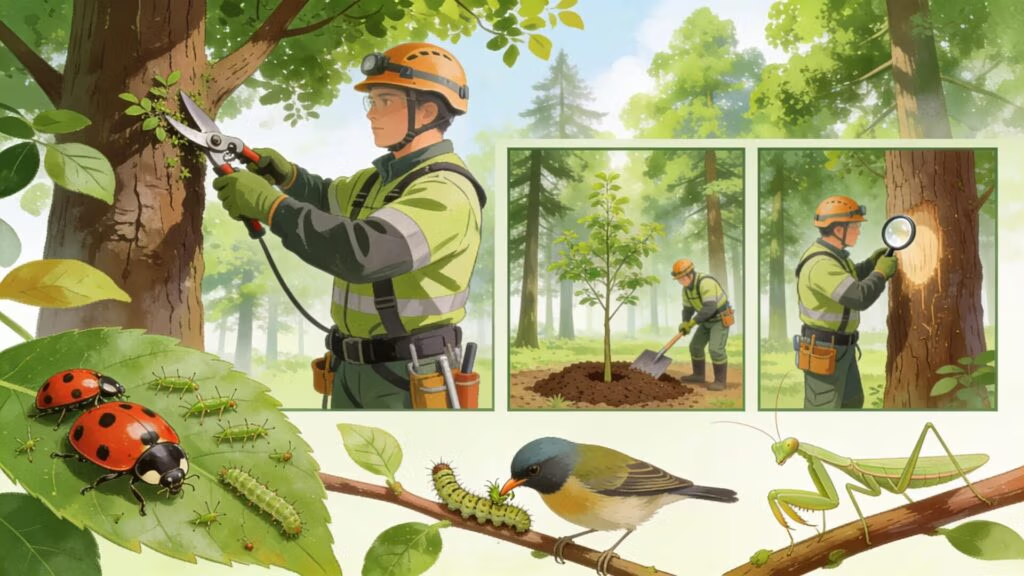
Treatment selection is determined by species, pathogen or pest, and site conditions. Commonly applied methods include the following:
Chemical Treatments: These involve the application of fungicides or insecticides aimed at mitigating pest infestations and fungal infections.
Biological Pest Control: This involves using natural predators to control pest populations without harming the environment.
Tree Pruning Services: Pruning removes infected limbs and promotes healthy growth, helping to manage disease spread.
Dunbar Tree Service provides technical expertise in applying these methods per site-specific requirements to ensure appropriate implementation for local trees.
Assessment of efficacy and suitability is essential when selecting treatments; the table below summarizes key methods and expected performance.
Treatment Method | Description | Efficacy |
|---|---|---|
Chemical Treatments | Application of fungicides or insecticides | Moderate to High |
Biological Pest Control | Utilizing natural predators | High |
“Tree Pruning Services” | Removal of infected branches | High |
The table identifies the principal benefits and relative effectiveness of each method to support informed treatment decisions.
Trees in Waukesha County are commonly affected by oak wilt, Dutch elm disease, and emerald ash borer infestations. Each condition exhibits characteristic symptoms and requires discrete management protocols.
Oak Wilt: This disease progresses rapidly, causing leaves to wilt and turn brown, often signaling fatal outcomes for infected trees. Preventive actions, such as avoiding tree wounds during peak beetle activity periods, are essential.
Dutch Elm Disease: A fungal condition that leads to the wilting and death of elm trees, typically spread by bark beetles. Maintenance practices include careful monitoring and immediate removal of infected trees to prevent further spread.
Emerald Ash Borer: This invasive pest specifically targets ash trees, leading to significant die-offs. Property owners are encouraged to consider treatment options early to prolong tree life amidst infestations.
For pests such as the emerald ash borer, long-term systemic insecticide treatments have demonstrated high effectiveness as a management strategy.
Effective Management and Insecticide Treatment for the Emerald Ash Borer Management strategies that may be included in structured programs include application of emamectin benzoate, which can remain effective for extended intervals depending on site conditions. Emerald ash borer invasion of North America: history, biology, ecology, impacts, and management, DA Herms, 2014
Certified arborists execute comprehensive evaluations using standardised methods and diagnostic tools to achieve accurate diagnoses. They record visible symptoms and assess contributing site factors, employing instruments such as soil analysers and aerial imagery to collect supporting data.
Professional certification guides selection of diagnostic tests and informs the development of targeted intervention plans. Involving certified professionals increases the likelihood of correct diagnosis and appropriate treatment implementation.
Management options span chemical, biological, mechanical, and emergency-oriented interventions. Local providers offer emergency protocols for urgent care, and selection of the appropriate modality depends on disease etiology, tree species, and site parameters.
Comparative Efficacy: There are essential distinctions between chemical and biological treatments. Chemical treatments may provide rapid results, yet biological methods tend to be more sustainable long-term.
Mechanical Treatments: Sometimes, physical removal of affected or dead trees is necessary to protect neighboring healthy trees and preserve the landscape.
Emergency Interventions: In cases of severe infestation, prompt and effective response protocols are critical.
Local tree services provide guidance on selecting and applying these options based on species-specific and site-specific criteria.
Preventive care reduces disease incidence through practices that bolster tree health: consistent irrigation aligned with species requirements, correct mulching depth and placement, and seasonal structural pruning all contribute to stronger root systems and foliage.
Routine monitoring enables early detection and timely response. Maintained trees also deliver ecosystem services and support biodiversity, aligning with sustainable landscape management objectives.
Property managers should monitor for clear indicators of severe distress that require urgent professional assessment; common indicators are listed below.
Rapid Leaf Drop: Sudden loss of leaves can suggest serious health issues.
Significant Bark Damage: Cracks or peeling bark may indicate internal diseases.
Structural Instability: Leaning trees or those with root exposure may pose safety hazards.
Timely engagement following these indicators allows initiation of appropriate treatments, which may preserve affected specimens and protect adjacent vegetation.
Severe Infestation: When pests threaten the structural integrity of the tree.
Fungal Infections: Rapidly spreading conditions can compromise the overall health of the tree.
Environmental Hazards: Trees that pose a risk to property or individuals need immediate evaluation.
Immediate professional consultation is essential to limit further damage and to protect surrounding assets.
Dunbar Tree Service maintains rapid response protocols to deploy certified arborists for emergency situations. Established safety procedures enable effective urgent interventions while minimizing site impact.
The organization’s combination of field experience and formal training supports effective management of emergency cases; clients can expect prompt interventions and comprehensive care for affected trees.
Supporting evidence includes case studies that document treatment outcomes and client feedback that reports reliability and responsiveness. Documentation of treatment activities and results provides a record of service performance.
This evidence base supports informed collaboration between property managers and service providers. For immediate assistance or specific concerns, contact us via our “contact us” page to schedule an evaluation. Engagement with experienced professionals ensures that management decisions are informed throughout Waukesha County.
Inspect trees regularly for early indicators such as wilting foliage, chlorosis, bark discolouration, abnormal growth patterns, fungal fruiting bodies, or elevated pest activity. Additional signs include reduced shoot extension and branch dieback. Early detection facilitates effective intervention; consult a certified arborist when symptoms are observed.
Conduct formal tree health assessments at least annually, preferably during the active growing season when symptoms are most discernible. Perform additional inspections following severe weather events. Professional evaluations provide a comprehensive appraisal of condition and recommended interventions.
Environmental variables significantly influence tree susceptibility to pathogens and pests. Soil structure and chemistry, moisture availability, and neighboring vegetation affect vigor. Stressors such as drought, compaction, and pollution reduce resistance and increase vulnerability to infestation and disease.
Yes. Numerous tree pathogens and pests can spread to proximate vegetation via root grafts, soil movement, or airborne propagules. Invasive insects can migrate from an infected host to adjacent trees. Managing infected specimens reduces the risk of landscape-level spread.
Basic maintenance—appropriate irrigation, correct mulching, and nutrient management—can support overall tree health but do not substitute for professional diagnosis and targeted treatment. Significant infections typically require technical interventions such as registered fungicides or biological control measures; engage certified arborists for appropriate treatment selection.
If disease is suspected, document observed symptoms and refrain from applying chemical treatments without professional guidance. Contact a certified arborist for a diagnostic assessment and tailored treatment recommendations. Delayed action increases the likelihood of irreversible decline.
Maintain trees through species-appropriate planting, regular watering, proper mulching, and scheduled structural pruning. Implement routine health assessments and integrated pest management where applicable. Engage certified arborists for site-specific guidance to support long-term tree health.
Maintaining tree health in Waukesha County supports ecological function and landscape value. Engagement with certified professionals, such as Dunbar Tree Service, facilitates timely diagnosis and appropriate treatment. Proactive preventive measures and routine monitoring enhance tree resilience. For expert guidance on tree care and management, contact the team to discuss tailored solutions for your landscape needs.