★ ISA-Certified Arborists · Serving Waukesha & Milwaukee County
★ ISA-Certified Arborists · Serving Waukesha & Milwaukee County
By Chris Dunbar, Owner of Dunbar Tree Service
Stump grinding is a specialised remediation technique that removes residual tree trunks to restore site utility and appearance. This article describes Dunbar Tree Service’s stump grinding procedures, equipment specifications, and cost parameters applicable to Wisconsin properties. It outlines assessment protocols, operational steps, and post‑service site preparation so property managers and homeowners can evaluate options and make evidence‑based decisions.
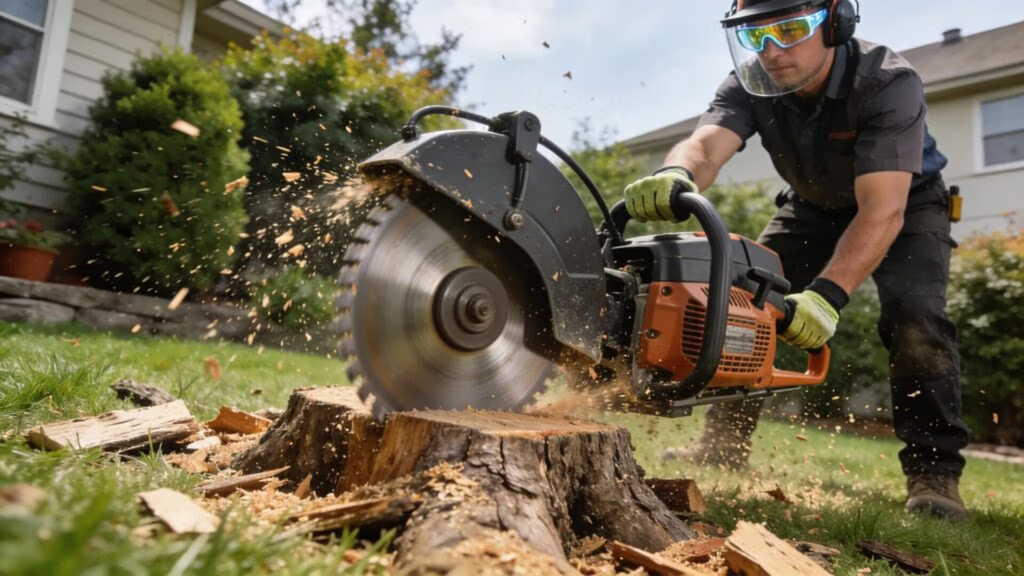
Stump grinding uses specialized machinery to efficiently remove stumps while preserving surrounding soil and roots.
Dunbar Tree Service offers residential, commercial, and emergency stump grinding services tailored to Wisconsin clients.
The stump grinding process includes assessment, grinding below ground level, and thorough cleanup for landscaping readiness.
Costs for stump grinding in Wisconsin range from $100 to $500, depending on stump size and complexity.
ISA-certified technicians ensure safe, effective, and environmentally responsible stump grinding practices.
Advanced equipment and skilled operators enable Dunbar to handle stumps in tight or difficult-to-access locations.
Environmental benefits include pest control, soil enrichment from mulch, and reduced landfill waste.
Customer testimonials highlight Dunbar Tree Service‘s professionalism, quality workmanship, and responsive communication.
Dunbar provides rapid emergency stump grinding responses to address urgent tree-related hazards promptly.
Stump grinding employs mechanised cutters to comminute the woody mass to coarse mulch. The method targets the root collar and main root flare while minimizing disturbance to adjacent soil strata and underground utilities. Successful execution requires calibrated equipment selection and operator competence to achieve specified excavation depth and surface grade.
The described extraction methods align with published technical studies on machinery performance and energy inputs for commercial arboricultural operations, providing an empirical basis for procedural selection.
Professional Stump Grinding and Extraction Methodologies: A Technical Overview Stump extraction may be performed using two primary methodologies: (i) the utilization of a large, bottom-edged cylindrical cutter head, driven by the tractor’s Power Take-Off (PTO) system, featuring externally mounted components. Stump grinding on a poplar plantation: Working time, productivity, and economic and energetic inputs, R Picchio, 2012
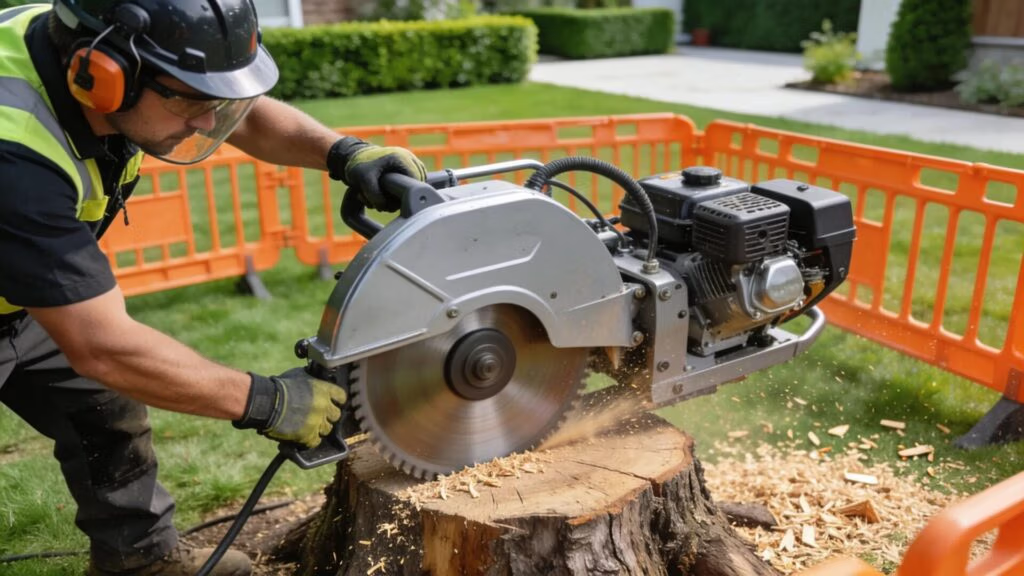
Initial operations begin with a site assessment that documents stump diameter, depth, root architecture, and proximity to structures or utilities. Technicians then position a stump grinder to reduce the stump to several inches below ground level, producing mulch as the primary residual material. Typical task durations range from approximately 30 minutes for small stumps to several hours for larger or more complex specimens.
Dunbar Tree Service utilises commercially specified stump grinders equipped with high‑speed cutting heads and replaceable carbide teeth engineered for hardwood and softwood substrates. Equipment selection is based on stump dimensions and access constraints; scheduled maintenance ensures cutting performance and operational safety. Compact units provide required manoeuvrability for residential settings where clearance is limited.
Comprehensive tree stump removal comprises sequential phases: site evaluation, mechanical grinding, debris management, and site restoration. Each phase has defined deliverables and acceptance criteria to ensure the work meets safety standards and landscape readiness for subsequent use.
The assessment phase quantifies variables that influence method selection and cost, including species identification, stump diameter, root spread, site access, and nearby impediments. This analysis informs equipment allocation and operational sequencing to minimize collateral impact on existing plantings and hardscape.
During grinding, the machine’s cutting head progressively reduces the stump while operators maintain prescribed clearance zones and personal protective equipment. Operators follow established safety protocols and monitor cutting parameters. The time required depends on stump size, wood density, and root complexity.
Post‑grinding procedures include redistribution or removal of generated mulch, verification of excavation depth, and site grading to specification. Proper cleanup mitigates trip hazards, facilitates soil recovery, and prepares the area for planting or construction activities.
Service pricing reflects measurable inputs: labor hours, equipment mobilisation, stump diameter, site accessibility, and waste handling. Clear articulation of these cost drivers enables property owners to compare estimates and budget for stump removal projects with reduced uncertainty.
Service Type | Price | Key Features |
|---|---|---|
Standard Stump Grinding | $100 – $200 | Basic removal of smaller stumps |
Medium Tree Stump Grinding | $200 – $350 | Suitable for larger and more complex stumps |
Large Stump Grinding | $350 – $500 | Professional removal for large stumps |
The preceding cost matrix summarizes typical price bands for Dunbar Tree Service’s stump grinding offerings and supports comparative evaluation when selecting a service tier.
Dunbar Tree Service maintains a structured customer support framework and scheduling protocol to ensure timely site assessments and coordinated service delivery. Clients receive a documented appointment window and follow‑up communication to confirm scope and logistical requirements prior to mobilisation.
Consultations are scheduled by telephone or email and conducted by qualified technicians who document site conditions and client objectives. The consultation provides a clear scope of work, estimated timeline, and preparatory instructions to optimize on‑site efficiency.
Dunbar Tree Service operates throughout Waukesha and Milwaukee counties with operational knowledge of local species and growing conditions. Services are provided to residential and commercial properties with an emphasis on rapid response and regional compliance. To request immediate assistance for hazard scenarios, clients may schedule an emergency assessment.
Dunbar Tree Service delivers a structured portfolio of stump grinding services designed for distinct client requirements, including scheduled residential work, commercial contracts, and expedited emergency response.
Residential Stump Grinding: Tailored for homeowners aiming to restore their landscapes.
Commercial Stump Removal: Focused on larger-scale operations with professional outcomes.
Emergency Stump Grinding: Quick responses for urgent stump removal cases.
These service categories provide clients with defined options aligned to project scale, timeline, and site constraints.
ISA (International Society of Arboriculture) certification demonstrates technician proficiency in arboricultural standards, safety practices, and species‑specific considerations. Certification supports consistent application of industry best practices, which contributes to effective, compliant, and environmentally responsible stump grinding operations.
Dunbar Tree Service offers multiple service modalities to address differing operational requirements, including standard grinding, site‑specific custom solutions, and services adapted for limited access conditions.
Standard Grinding: Efficient removal of tree stumps regardless of size.
Custom Solutions: Personalized approaches based on specific site requirements.
Accessible Services: Attention to areas with complex access challenges.
The available options enable selection based on site configuration, regulatory constraints, and client objectives for post‑service land use.
Observed market rates in Wisconsin typically fall within the $100 to $500 range; the precise fee correlates to measurable variables such as stump diameter, wood density, and site access complexity. Transparent estimates support accurate budgeting and procurement decisions.
Dunbar Tree Service controls costs through detailed pre‑service estimates, efficient equipment utilisation, and process standardisation. Clear written estimates and equipment optimizations reduce on‑site time requirements, which can produce cost efficiencies without compromising technical standards.
Cost variance typically depends on the following factors:
Stump Size and Complexity: Larger, more complex stumps often require more time and resources.
Location Accessibility: Difficult-to-reach stumps may incur higher costs due to additional labor or equipment needs.
Tree Species: Some tree types have denser wood, making them harder to grind, thus affecting pricing.
Identifying these variables during assessment allows for more accurate cost projections and resource allocation.
Dunbar Tree Service deploys specialised grinders with engineered cutting heads, operated by certified technicians. The methodology includes equipment selection based on stump parameters, adherence to safety protocols, and on‑site recycling of wood chips for mulch to minimize waste.
Advanced Equipment: State-of-the-art grinders that cut through the toughest stumps efficiently.
Skilled Operators: Experienced technicians ensure safety measures are upheld during the grinding process.
Environmentally Responsible Practices: Stump debris is repurposed for mulch, minimizing waste and enhancing local ecosystems.
These combined elements support consistent operational performance and align service delivery with recognized arboricultural practices.
Dunbar Tree Service maintains procedures for expedited response following storm damage or structural failures. The emergency protocol emphasizes rapid assessment, risk mitigation, and prioritized scheduling to restore safety and site function.
Rapid Response Times: Quick assessments and service availability ensure safety and recovery.
Comprehensive Solutions: Addressing not only stumps but any residual safety hazards.
Ongoing Communication: Clients are kept informed throughout the process, creating a seamless experience.
These processes enable Dunbar Tree Service to manage urgent requests while maintaining compliance with safety and quality standards.
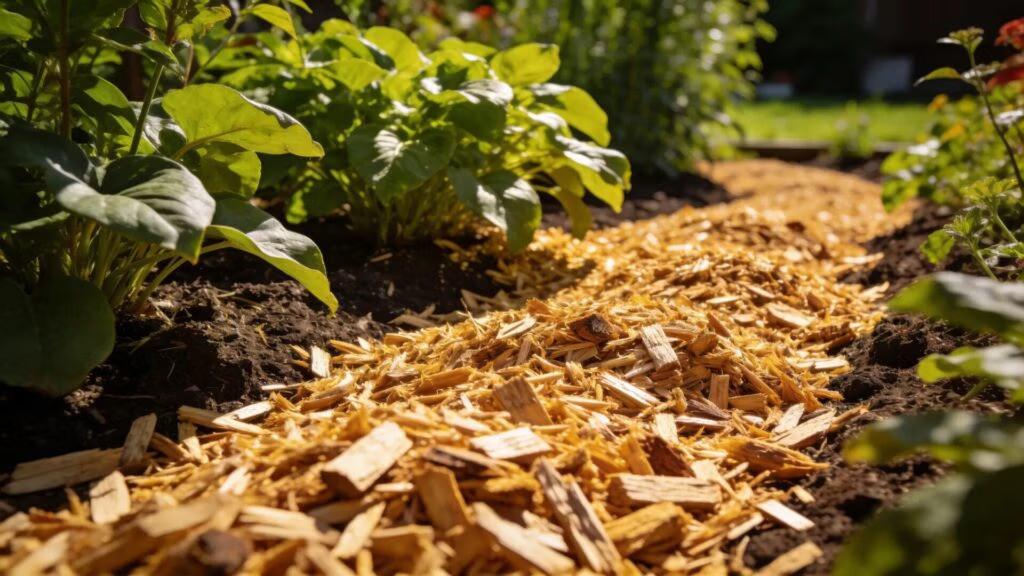
Stump grinding reduces material sent to landfill by producing wood chips that can be repurposed as mulch. The process also removes potential pest harbourage and, when managed correctly, contributes organic matter back to the soil profile.
Pest Control: Grinding stumps eliminates habitat for pests, thereby promoting healthier landscapes.
Soil Health: The recycled wood chips enrich the soil, potentially aiding in future plant growth.
Reduced Waste: Proper disposal methods minimize landfill contributions and enhance local ecosystems.
These practices reflect an operational approach designed to reduce environmental impact while delivering site restoration outcomes.
Client feedback consistently references professional conduct, technical competence, and timely communication. These attributes correlate with measurable performance indicators such as on‑time completion and adherence to quoted scopes of work.
Professionalism: Technicians are commended for their skill and courtesy during service.
Quality Workmanship: Many testimonials emphasize the thoroughness of stump removal and site cleanup.
Responsive Customer Service: Quick and effective communication contributes to overall customer satisfaction.
Such feedback provides prospective clients with empirical confidence when selecting Dunbar Tree Service for stump grinding operations.
Typical durations range from approximately 30 minutes for small, accessible stumps to several hours for large or obstructed stumps. An on‑site assessment provides a time estimate that accounts for stump diameter, wood density, and site access considerations.
Technicians implement standard safety measures including the use of helmets, eye protection, gloves, and clear exclusion zones. Pre‑work inspections identify hazards and protect bystanders; adherence to these protocols reduces exposure to operational risks.
Mulch produced during grinding is typically reused on‑site to fill the excavation or distributed across the landscape as a soil amendment. This material supports soil retention and organic matter content when applied according to site requirements.
Yes. Compact stump grinders and experienced operators enable removal in confined spaces near structures, fences, and planted areas. Equipment selection and operational planning minimize risk to surrounding features while achieving the required removal depth.
Best practice is to schedule stump grinding promptly following tree removal to prevent pest colonisation, infection, and undesirable vegetative regrowth. Timely grinding also reduces complications for subsequent landscaping or construction activities.
Stump grinding is considered environmentally favorable when compared to removal methods that generate greater soil disturbance or transport requirements. The process converts woody material into reusable mulch and eliminates habitats for pest species, supporting ecosystem health when implemented with appropriate disposal practices.
Dunbar Tree Service employs documented consultation procedures, qualified personnel, and post‑service follow‑up to verify that work meets specified requirements. Transparent estimates and quality checks are used to align outcomes with client expectations and maintain service standards.
Professional stump grinding restores site usability and reduces biological and physical hazards by removing remaining trunk material. Dunbar Tree Service applies certified technicians, specialised equipment, and environmentally conscious disposal practices to deliver efficient stump removal in Wisconsin. Contact Dunbar Tree Service to obtain a detailed estimate and schedule services that align with project requirements.