★ ISA-Certified Arborists · Serving Waukesha & Milwaukee County
★ ISA-Certified Arborists · Serving Waukesha & Milwaukee County
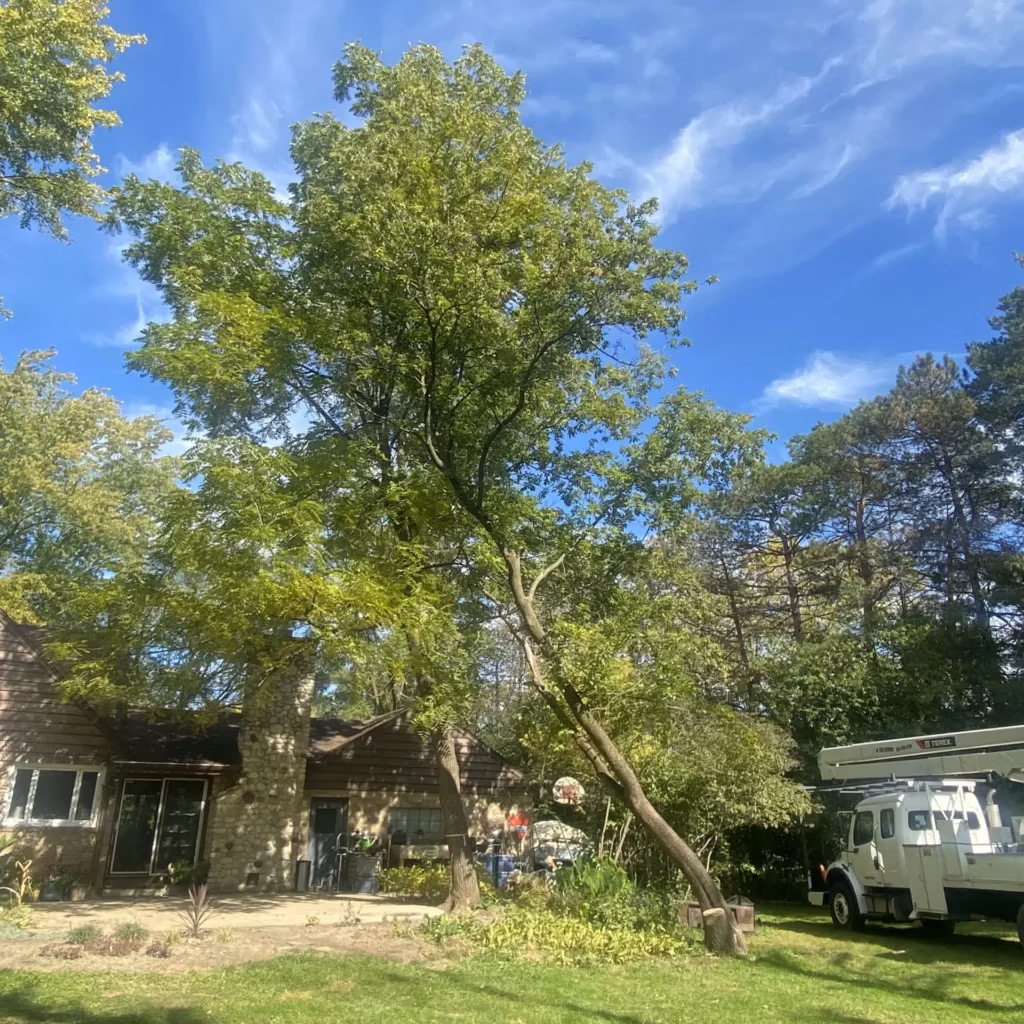
By Chris Dunbar, Owner of Dunbar Tree Service
Preparing trees for severe weather reduces risk to people and property while supporting tree health. This article summarizes professional storm-pruning techniques, tree risk assessment practices, and practical steps to prepare trees for storms so they withstand severe weather and recover more quickly. You will also find Dunbar storm pruning tips and guidance on storm-ready tree maintenance that keeps your property protected year-round.
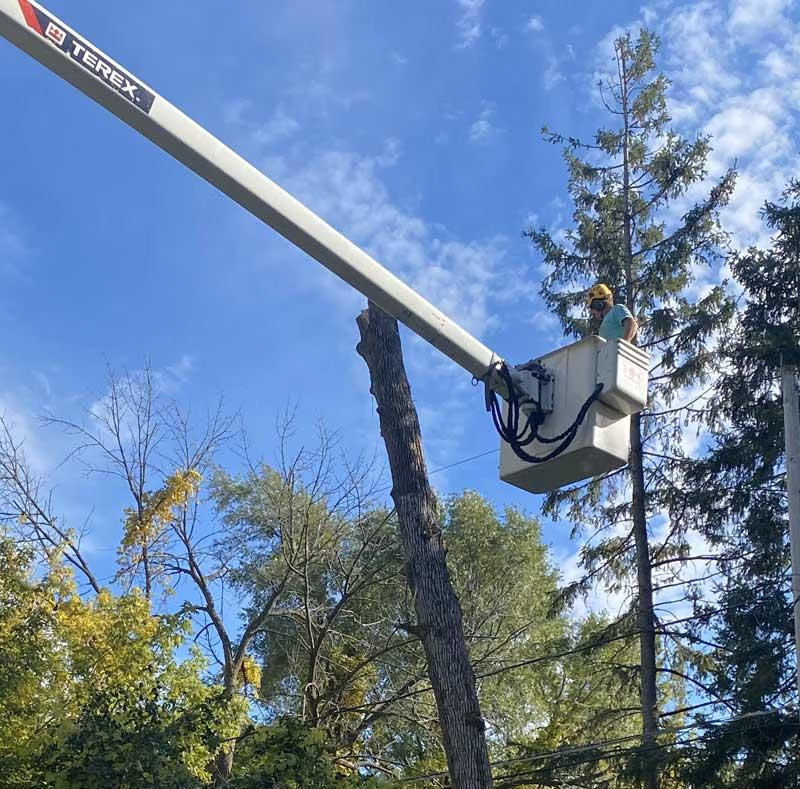
Storm pruning uses targeted cuts to improve canopy structure, remove weak or damaged limbs, and support long-term health. Regular inspections paired with correct pruning reduce wind sail and failure risk.
Dunbar Tree Service offers storm-ready maintenance by certified arborists who apply industry best practices to strengthen trees before severe weather.
Arborists first assess tree health and structure, then apply techniques—like crown thinning and selective removal of dead or diseased wood—to lower the chance of limb or whole-tree failure. Major pruning is often scheduled in late winter or early spring so trees can recover during the growing season.
Common effective techniques include:
When done properly these methods reduce limb failure and wind damage while supporting healthy regrowth.
Research demonstrates how specific pruning types and intensities affect a tree’s capacity to resist storm winds.
Pruning Types & Tree Stability in Storm Winds We constructed a wind-generating apparatus capable of producing 33.5 m/s (75 mph) winds to evaluate the influence of pruning dose and American National Standards Institute A300 pruning type on trunk movement of Quercus virginiana ‘QVTIA’ PP #11219 (Highrise®) at various wind speeds. Trunk movement was regressed against wind speed and pruning dose for each tree tested. Higher wind speeds increased trunk movement, and the magnitude of that increase depended on pruning dose and pruning type. Increasing pruning dose reduced trunk movement, with the reduction becoming more pronounced at higher wind speeds. The predicted trunk movement of thinned trees was statistically greater than that of structurally pruned, raised, and lion’s‑tailed trees at 20.1 m/s (45 mph) and was greater than all pruning types at 26.8 m/s (60 mph). Effects of pruning dose and type on trunk movement in Tropical storm winds, JC Grabosky, 2008
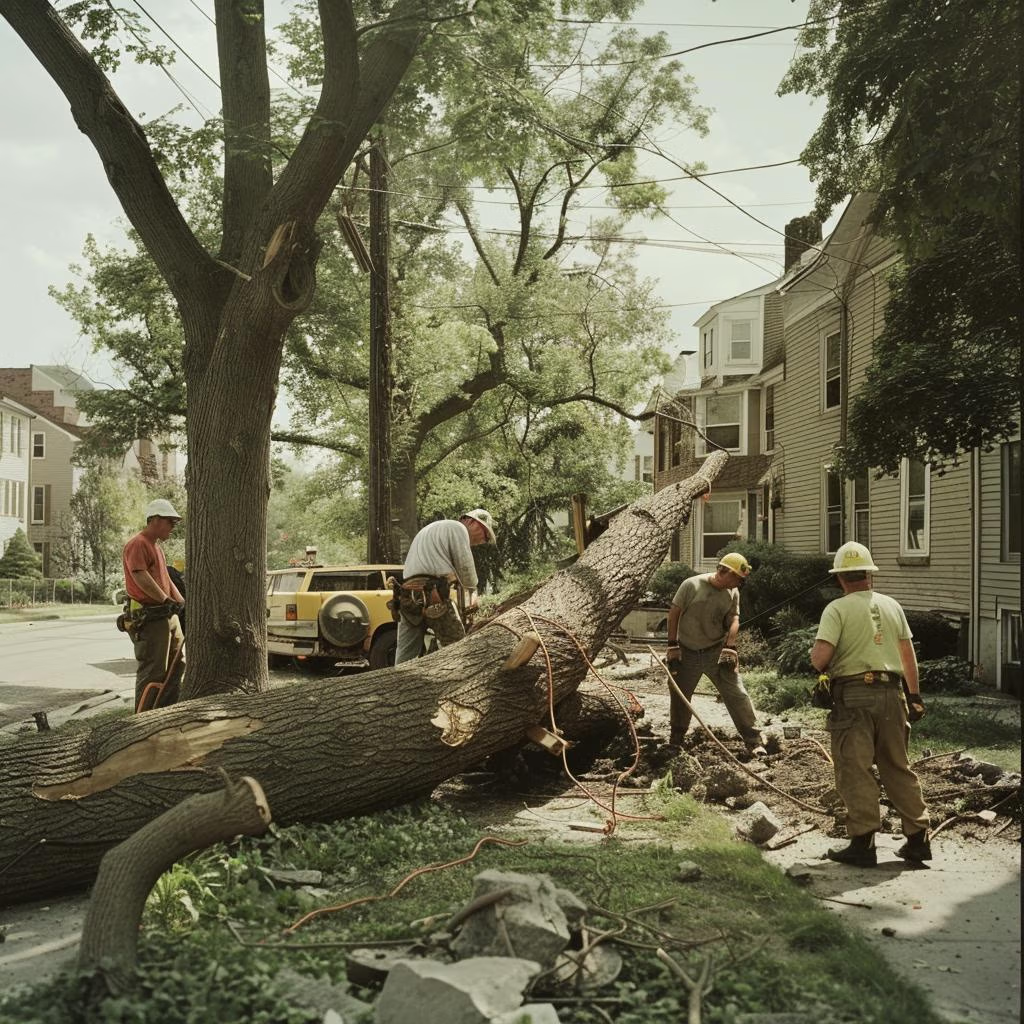
Tree risk assessments identify structural defects, health problems, and site conditions that increase failure risk in storms. Inspections combine visual evaluation of the trunk, branches, roots, and environment with consideration of past weather and site use to recommend mitigation.
Professional arborists apply structured risk-assessment protocols to ensure consistent, evidence-based evaluations.
Professional Tree Risk Assessment Methods All trees present some level of risk to nearby people, structures, and utilities. As trees age or become weakened by pests, disease, or other stresses, an owner or manager must determine what risk level is acceptable and what interventions may be needed. Experienced arborists assist by conducting professional risk assessments that quantify the likelihood of whole or partial tree failure, the consequences of such failure, and the potential targets affected. A range of assessment methods has been developed to guide professionals through the inspection process. Tree risk assessment methods: A comparison of three common evaluation forms: ENH1226/EP487, 11/2013, AK Koeser, 2013
Dunbar Tree Service conducts comprehensive risk assessments that factor in local species, soils, and weather to produce clear maintenance or mitigation recommendations.
Key evaluation factors include:
Combining these elements lets arborists prioritize interventions that reduce hazard and cost.
Systematic risk-assessment methods are essential for mitigating hazards and protecting public safety.
Systematic Tree Risk Assessment for Safety When a target is present, tree failure can damage property, disrupt services, or threaten public safety. Worldwide, several qualitative methods have been developed to provide a systematic framework for tree risk assessment and management. The consistency and accuracy of these methods, the value assigned to the tree and its potential targets, and the risk perceptions and tolerance of the evaluator and tree owner all influence how risk is managed. Risk assessment and risk perception of trees: A review of literature relating to arboriculture and urban forestry, RW Klein, 2019
Local arborists recognize species vulnerabilities, local pests, soil behavior, and microclimates, which improves diagnosis and makes recommendations more reliable for regional storm conditions.
Storm pruning is a proactive approach to remove hazardous limbs, correct structural faults, and shape the crown so the tree has less wind resistance and fewer failure points during storms.
Post-storm services stabilize sites and remove immediate threats. Typical emergency steps include:
Dunbar Tree Service maintains rapid-response crews to secure properties and begin remediation after storms.
Crews assess affected areas, prioritize based on risk, and perform mitigation ranging from limb reduction to removal, using safe, efficient methods tailored to each site.
Core safety measures include appropriate personal protective equipment, quick hazard identification, and use of specialized tools to protect crews and the public during emergency operations.
Late winter to early spring is generally best for major pruning because trees are dormant and can recover as growth resumes.
Seasonal practices that improve readiness include:
Consistent maintenance reduces the likelihood of storm-related failures.
Preparing trees ahead of storms lowers damage risk, supports tree health, and improves safety for people and property.
Storm pruning focuses on removing failure risks—weak, hazardous, or poorly attached limbs—while regular pruning addresses overall health, form, and growth. Storm pruning is proactive and often timed before storm seasons.
Assess trees at least annually, ideally before expected storm seasons. Trees in exposed locations or with known defects may need more frequent checks.
Contact a certified arborist. Indicators such as large broken limbs, a leaning trunk, or visible decay require professional evaluation; avoid attempting complex removals yourself.
Many species benefit from storm pruning, but techniques must match each species’ biology. Consult a certified arborist for species-appropriate practices.
Regular maintenance improves structural integrity, reduces storm damage risk, and sustains long-term vigor while providing environmental benefits like shade and habitat.
Start with an assessment, schedule storm pruning as needed, maintain watering and nutrition, and mulch the root zone. Follow seasonal inspections to keep trees resilient.