★ ISA-Certified Arborists · Serving Waukesha & Milwaukee County
★ ISA-Certified Arborists · Serving Waukesha & Milwaukee County
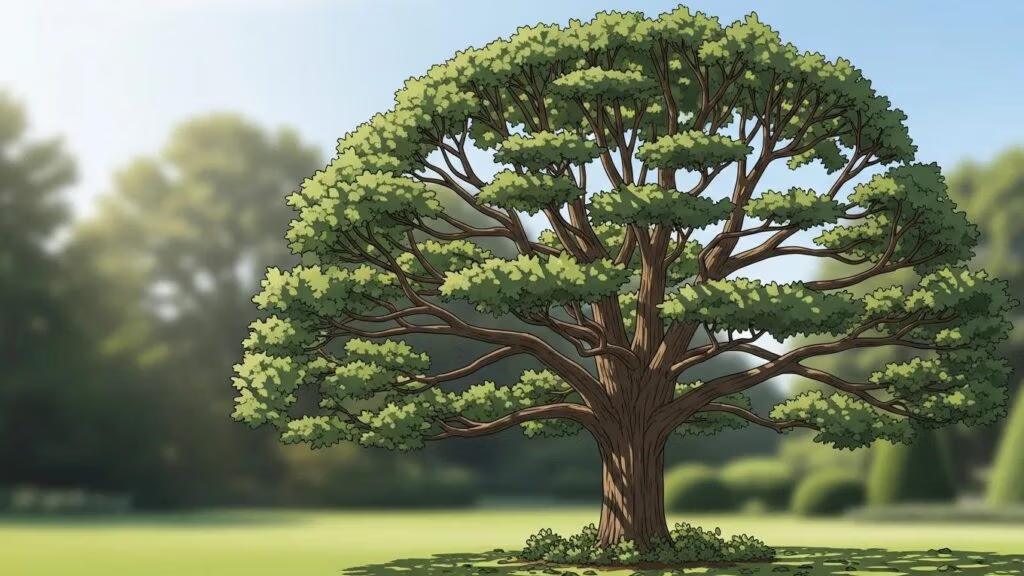
Crown reduction and shaping are essential practices in tree care that enhance both the health and aesthetics of trees. These services not only improve the visual appeal of your landscape but also contribute to the longevity and structural integrity of the trees. Dunbar Tree Service specializes in providing professional crown reduction and shaping services tailored to meet the unique needs of each tree and its environment. In this article, we will explore the definition and purpose of crown reduction, its benefits for tree health, and how to choose the right professional for these services. Additionally, we will discuss the costs associated with crown maintenance and the best practices for post-pruning care.
Crown reduction trimming is a tree care technique that involves selectively removing branches to reduce the overall size of the tree’s canopy. This process not only helps maintain the tree’s health by improving light penetration and air circulation but also minimizes the risk of branch failure. By carefully reducing the crown, arborists can enhance the tree’s structural integrity and promote healthy growth. This method is particularly beneficial for trees that have outgrown their space or are posing a risk to nearby structures.
Tree crown reduction serves multiple purposes, primarily focusing on safety and aesthetics. The primary goal is to reduce the height and spread of the tree while maintaining its natural shape. This practice is essential for preventing potential hazards, such as falling branches, especially in urban areas where trees are in close proximity to buildings and power lines. Additionally, crown reduction can enhance the tree’s appearance, making it a more attractive feature in the landscape.
Research further emphasizes the importance of strategic reduction pruning for both safety and tree health, particularly in environments with potential hazards like electrical lines.
Optimizing Reduction Pruning for Tree Safety & Health
wood at the cutting point are important for optimizing the pruning cycle and maintaining safe trees. In this study, we investigated post-pruning traumatic responses in relation to tree vitality and wood properties, and we discuss the implications for optimizing reduction pruning under electrical lines.
Optimizing reduction pruning under electrical lines: The influence of tree vitality before pruning on traumatic responses, S Delagrange, 2021
Crown reduction offers several key benefits that contribute to the longevity and structural integrity of trees:
Dunbar Tree Service provides expert crown reduction services that ensure your trees remain healthy and safe while enhancing their beauty.
Professional tree crown shaping is crucial for enhancing safety and protecting property. By carefully shaping the tree’s canopy, arborists can reduce the risk of falling branches, which can cause damage to homes, vehicles, and power lines. Additionally, crown shaping improves visibility, allowing for better sightlines in residential areas and along roadways. This proactive approach to tree care not only protects your property but also contributes to the overall health of the tree.
When it comes to crown shaping, adhering to safety standards is paramount. Professional arborists follow strict guidelines to ensure the safety of both the workers and the surrounding environment. Key safety measures include:
Expert tree pruning is vital for preventing property damage. By maintaining the structural integrity of trees, pruning reduces the risk of falling limbs that can cause significant harm. Regular pruning also promotes healthy growth, ensuring that trees remain strong and resilient against environmental stressors. Engaging a professional service like Dunbar Tree Service can help you avoid costly repairs and maintain the beauty of your landscape.
Certified pruning contractors utilize various techniques for effective crown thinning, including:
These techniques are essential for ensuring that trees remain healthy and aesthetically pleasing.
Industry-recognized pruning methods are crucial for effective crown thinning. These methods include:
By employing these methods, certified arborists can enhance the health and safety of trees in any landscape.
Choosing the right pruning techniques depends on the specific tree species and its condition. Different species have unique growth patterns and structural characteristics that influence the best approach to pruning. Additionally, the tree’s health status plays a critical role in determining the appropriate techniques. Consulting with a professional arborist can help ensure that the right methods are applied for optimal results.
Selecting a professional tree pruning contractor for crown reduction services involves several key considerations:
Dunbar Tree Service is committed to providing qualified and experienced professionals for all your tree care needs.
When evaluating potential tree service providers, it is essential to check their credentials and certifications. Look for certifications from recognized organizations, such as the International Society of Arboriculture (ISA), which indicate a commitment to professional standards. Additionally, assessing their experience in the field can provide insight into their expertise and reliability.
The significance of professional certification, such as those offered by the International Society of Arboriculture, is widely recognized in the industry for validating an arborist’s expertise and adherence to ethical standards.
Professional Arborist Certification & Tree Care Standards
Professional credentialing refers to the process of obtaining a certification or license that validates an individual’s knowledge, skills, and abilities according to industry-accepted ethics and standards. The International Society of Arboriculture (ISA) confers and manages professional arborist certification as well as other arborist credentials. However, many communities, such as in the southern United States, have few if any credentialed commercial tree care professionals. This study explores the motivations and barriers commercial tree care workers place on professional arborist certification.
Motivations and barriers of professional certification for tree workers, JS Gordon, 2024
Local expertise is invaluable when choosing a tree service provider. Arborists familiar with the regional climate and tree species can offer tailored advice and services. Customer testimonials can also provide insight into the quality of service and customer satisfaction. Engaging with local providers like Dunbar Tree Service ensures that you receive knowledgeable and reliable care for your trees.
Understanding the costs associated with tree crown maintenance services is essential for budgeting. Typical pricing structures may vary based on factors such as:
Understanding the broader financial implications of tree care, including both maintenance and the costs of neglecting it, is crucial for effective urban forest management.
Costs of Tree Maintenance & Urban Forest Care
This paper presents the results of a literature review on the “Costs of Not Maintaining Trees” commissioned by the ISA Science and Research Committee. The authors summarized the literature from within the field of arboriculture/urban forestry to answer the questions: What are the costs of maintaining trees and the urban forest? And, What are the costs of not maintaining trees? Present here is a detailed summary of the literature on the costs of maintenance and lack of maintenance for types of tree care commonly included in municipal budgets (planting, pruning, removal, pest and disease management) and a brief review of costs associated with less-studied types of tree care (including tree risk management; watering; mulching; fertilizing and nutrient management; staking, cabling
The costs of maintaining and not maintaining the urban forest: A review of the urban forestry and arboriculture literature, J Vogt, 2015
When comparing service packages, consider the value propositions offered by different providers. Look for packages that include comprehensive assessments, free consultations, and a range of services tailored to your needs. Dunbar Tree Service offers competitive pricing and exceptional value, ensuring that you receive the best care for your trees.
Post-pruning care is crucial for maintaining tree health. After crown reduction and shaping, it is essential to monitor the tree for signs of stress and ensure proper care. Key practices include:
To support the health of your trees after pruning, consider implementing the following practices:
Recognizing the signs of tree stress is vital for timely intervention. Common indicators include:
If you observe any of these signs, it is essential to consult a professional arborist to assess the situation and recommend appropriate actions.
Chris Dunbar is a certified arborist with decades of experience in professional tree care. His expertise ensures that every tree receives the best possible treatment for health, safety, and aesthetics. To learn more about Chris and the team, visit the About Us page of Dunbar Tree Service.
crown reduction service, crown reduction services, tree crown shaping, crown reduction pruning, tree canopy reduction, canopy shaping services, overgrown tree canopy management, tree height reduction, tree branch structure shaping, professional canopy pruning, tree crown management