★ ISA-Certified Arborists · Serving Waukesha & Milwaukee County
★ ISA-Certified Arborists · Serving Waukesha & Milwaukee County
By Chris Dunbar, Owner of Dunbar Tree Service
Healthy trees contribute to landscape quality and reduce risk to property. A **free estimate** for **tree health assessments** supplies property owners with objective information about tree condition and required care. Dunbar Tree Service, based in Wisconsin, provides complimentary evaluations that assess tree health and recommend appropriate interventions. This article outlines the components of a tree health assessment, the procedures used in professional evaluations, the role of ISA-certified arborists in ensuring diagnostic accuracy, and the process to obtain a free estimate. It also summarizes common regional tree health issues and the benefits of timely pruning or removal.
Dunbar Tree Service offers free tree health assessments to evaluate tree condition and recommend care services.
Assessments include structural stability, vigor, disease signs, and may suggest pruning, removal, or emergency care.
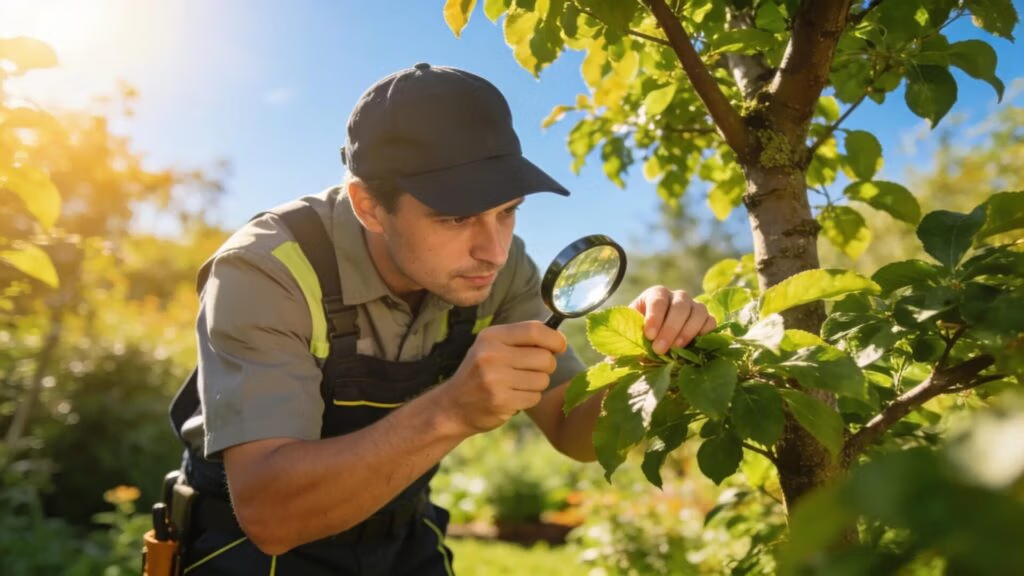
ISA certified arborists conduct systematic evaluations using visual inspections and root structure assessments.
Common tree health issues in Wisconsin include diseases indicated by leaf discoloration, mold, and abnormal growth.
Climate change impacts urban tree health by affecting growth rates and disease prevalence in Milwaukee area trees.
Scheduling pruning and removal after assessments helps maintain tree health and ensures property safety.
Free estimates in Waukesha and Milwaukee counties connect homeowners to expert tree care services efficiently.
Dunbar’s ISA certified arborists ensure accurate diagnoses through professional training and scientifically accepted methods.
Offering free estimates provides a competitive advantage by fostering trust and transparency with customers.
A tree health assessment provided by Dunbar Tree Service comprises discrete, documented elements designed to evaluate tree condition and recommend appropriate management actions.
Assessment Criteria: During the free evaluation, several criteria are analyzed, including structural stability, overall vigor, and signs of disease.
Services Offered: The assessment may encompass recommendations for necessary services such as tree removal, pruning, trimming, or emergency interventions.
Recommendations: Based on the findings, arborists will suggest maintenance strategies tailored to the specific needs of each tree.
This methodology provides property owners with actionable diagnostic information and expert maintenance recommendations specific to each tree.
A systematic approach to evaluating tree safety is essential for property owners assessing potential hazards.
Professional Tree Risk Assessment: Systematic Methods for Property Safety When potential targets are present, tree failure can cause property damage, service disruption, or threats to public safety. Various qualitative frameworks have been developed to provide systematic approaches to tree risk assessment and management. Management decisions are influenced by method consistency and accuracy, the values assigned to the tree and its targets, and the risk perceptions and acceptance thresholds of both the evaluator and the property owner.Risk assessment and risk perception of trees: A review of literature relating to arboriculture and urban forestry, 2019
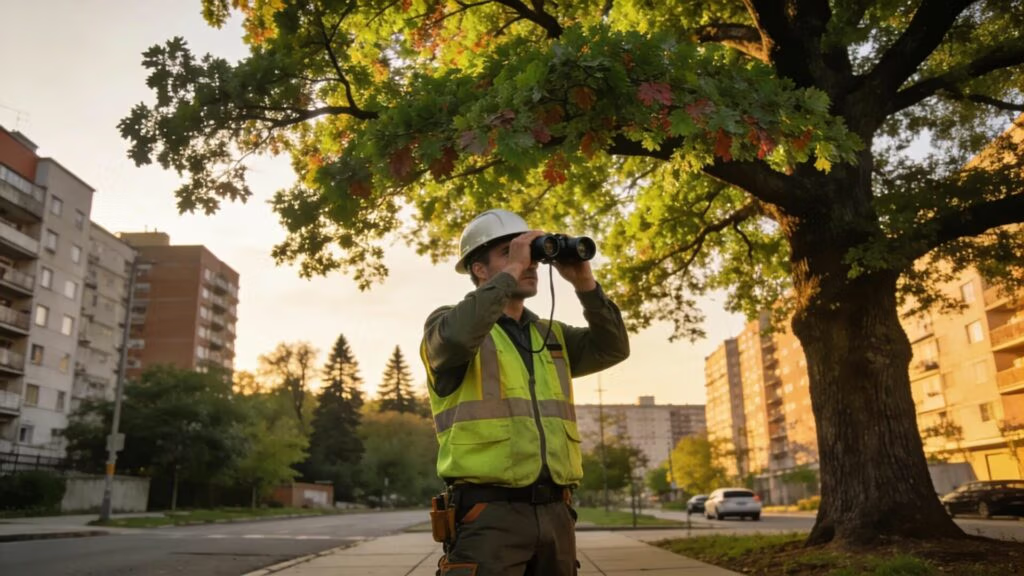
A professional tree health evaluation follows a defined sequence of procedures to generate reliable condition data and management recommendations.
The initial phase consists of a visual survey to detect signs of distress, including visible damage, atypical growth patterns, and overall canopy condition.
Arborists employ inspection techniques such as binocular-assisted canopy surveys to evaluate crown architecture and structural integrity at height.
Root condition assessment addresses anchorage and nutrient acquisition; soil probes and other diagnostic tools may be used to evaluate soil properties and root viability.
Root system assessment informs stability analysis and evaluates the tree’s capacity to tolerate urban environmental stressors.
Understanding Root Health and Longevity in Urban Tree Management Urban root systems are subject to anthropogenic impacts across the production and lifecycle stages that can compromise tree health and longevity. Root system reduction by severance or constriction may impair structural stability and increase physiological stress. Although root severance is common in urban settings, available evidence indicates such wounds do not typically result in extensive decay. Conflicts between roots and infrastructure are frequent in constrained urban environments.The management of tree root systems in urban and suburban settings II: A review of strategies to mitigate human impacts, 2014
Assessments include identification of pathogens and pests that may reduce vitality, enabling specification of timely management measures.
Primary indicators used in evaluations include foliar discoloration, atypical growth patterns, and structural defects, each of which may reflect distinct underlying conditions.
Detailed inspection entails systematic observation and documentation of findings to support precise care instructions and treatment selection.
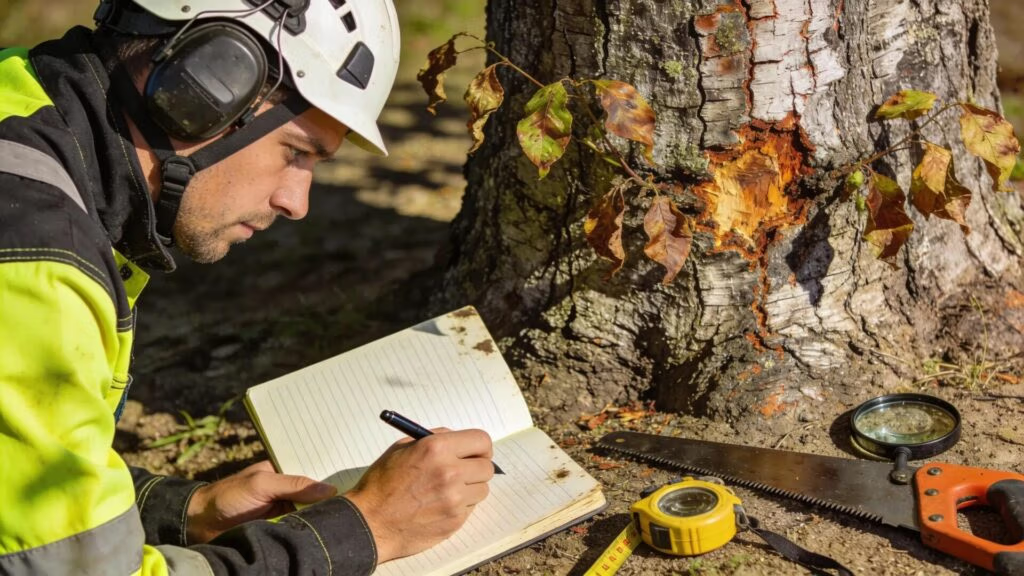
Risk documentation records identified hazards and supports prioritization of remedial actions to reduce exposure to failure.
ISA-certified arborists contribute professional credentials and standardised practices that improve diagnostic reliability and consistency.
ISA certification indicates formal training in tree biology, pathology, and maintenance practices necessary to perform comprehensive assessments.
Certified practitioners apply established, scientifically accepted methodologies and field-tested diagnostic techniques to produce reproducible results.
The assessment protocol is systematic, with each procedural step designed to capture comparable data for monitoring condition changes over time.
Arranging a no-cost tree care estimate with Dunbar Tree Service is a structured process; the company provides scheduling and intake procedures to initiate an evaluation.
Eligibility is generally limited to property owners in Waukesha and Milwaukee counties. Property owners with observable tree health concerns should contact Dunbar Tree Service via the dedicated contact page and provide relevant information about the affected trees.
The cost-free estimate functions as the diagnostic phase and may be followed by recommended tree care services, providing a direct pathway from assessment to intervention.
Dunbar Tree Service documents several prevalent tree health issues in Wisconsin and uses those observations to guide preventive and corrective measures.
Common indicators observed during inspections include wilting foliage, fungal or mold presence, and atypical growth patterns that suggest potential disease processes.
Climate change alters growth dynamics, disease incidence, and stress responses in multiple tree species; recognizing these trends informs adaptive management strategies.
Regional monitoring programmes supply empirical data that clarify how broader environmental changes affect urban forest canopy conditions in Wisconsin.
Protocols and Professional Standards for Monitoring Urban Forest Health in Wisconsin The U.S. Department of Agriculture Forest Service, in collaboration with state partners, developed methodologies to monitor urban forest structure, function, and health at a statewide scale. Pilot studies implemented across five states adapted protocols from Forest Inventory and Analysis and Forest Health Monitoring standards. The variables and analytical methods are specified, the advantages of large-scale monitoring are discussed, and illustrative results from Wisconsin are presented.Urban forest health monitoring: Large-scale assessments in the United States, 2008
Following a comprehensive assessment, scheduling recommended actions such as **tree removal** or pruning supports longevity and reduces failure risk.
Pruning is generally recommended during the growing season when evaluations identify overgrowth, deadwood, or structural conditions that present potential risk to property.
Emergency tree service addresses acute hazards requiring immediate mitigation and functions as a complementary component of comprehensive risk management.
Dunbar Tree Service demonstrates technical expertise through deployment of ISA-certified arborists and provision of localised services that enable site-specific care.
ISA certification validates arborists’ competencies and supports adherence to established professional standards for tree health evaluation.
Customer testimonials report high satisfaction with Dunbar Tree Service, citing the quality of assessments and effectiveness of subsequent management actions.
Assessment fees in Milwaukee vary according to tree size and the complexity of diagnostic requirements. By offering free estimates, Dunbar Tree Service reduces the initial cost barrier to professional evaluation.
Standard evaluations in Wisconsin commonly range from $100 to $350, contingent on assessment complexity and required diagnostic procedures.
Providing free estimates promotes transparency and client acquisition, supporting longer-term client relationships and prioritized tree health management for property owners.
If a tree exhibits distress indicators such as wilting foliage, atypical growth, or visible damage, document the symptoms and contact Dunbar Tree Service to schedule a professional assessment. Timely intervention increases the likelihood of recovery and reduces risk to structures.
Assessment frequency depends on species, local climatic conditions, and site factors. Annual evaluations are generally advisable; more frequent monitoring may be required for aging specimens, trees with prior issues, or trees located adjacent to structures.
Tree health assessments identify early indicators of pest infestations and disease, such as foliar discoloration or abnormal growth, which enables prompt treatment and mitigation to prevent progression.
Arborists utilise specialised equipment including binoculars for canopy inspection, soil probes for root and soil evaluation, and diagnostic instruments for pest and disease identification, all of which enhance assessment precision.
Urbanization reduces rooting volume, increases soil compaction, and elevates pollutant exposure, which raises physiological stress and susceptibility to pests and disease. Regular assessments enable arborists to implement targeted mitigation strategies for urban trees.
Regular tree care—inspections, pruning, and disease management—delivers long-term benefits including improved property aesthetics, increased property value, enhanced environmental services, and reduced risk of hazardous tree failure.
Requesting a free tree health assessment from Dunbar Tree Service provides data-driven analysis of tree condition and actionable recommendations to support health and longevity. ISA-certified arborists supply tailored maintenance plans that reduce risk exposure and contribute to property value preservation. Contact Dunbar Tree Service to request a free estimate and initiate a structured, preventative tree care programme.