★ ISA-Certified Arborists · Serving Waukesha & Milwaukee County
★ ISA-Certified Arborists · Serving Waukesha & Milwaukee County
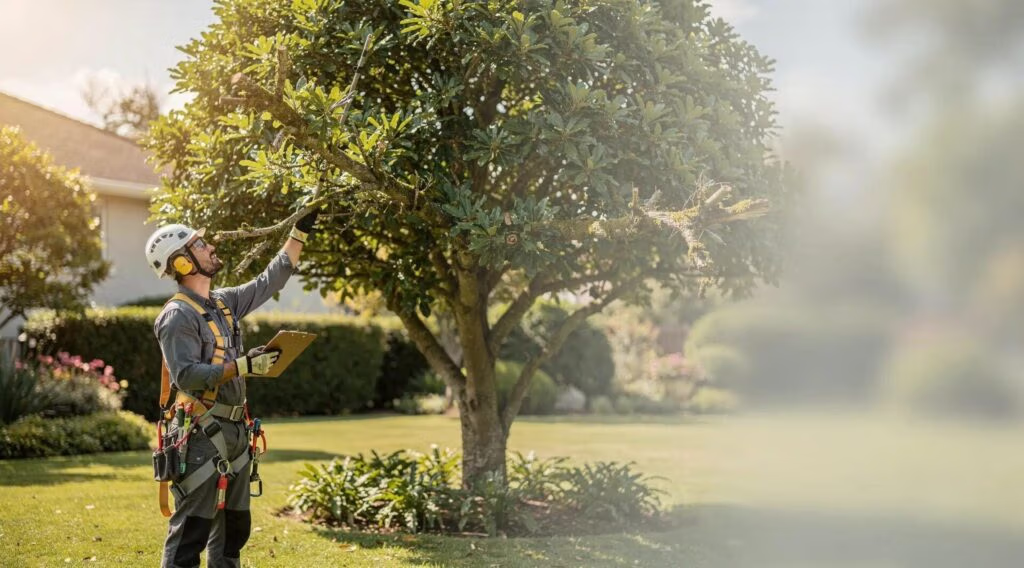
Selecting the right arborist is crucial for maintaining the health and safety of your trees. With numerous options available, understanding the qualifications and expertise of an arborist can significantly impact the quality of tree care services you receive. This guide will provide you with essential tips on how to choose an arborist, focusing on their qualifications, certifications, and the questions you should ask before hiring. By the end of this article, you will be equipped with the knowledge to make an informed decision, ensuring your trees receive the best care possible.
In this article, we will explore the qualifications that define a certified arborist, the significance of ISA certification, and the impact of experience and local knowledge on arborist reliability. Additionally, we will provide a checklist for hiring an arborist, discuss how to verify their credentials, and outline the costs and service expectations associated with professional tree care.
A certified arborist is a professional who has demonstrated a high level of knowledge and expertise in tree care. To achieve certification, arborists must meet specific eligibility requirements, which often include a combination of education, experience, and passing a comprehensive examination. Ongoing education is also essential, as it ensures that arborists stay updated on the latest industry standards and practices.
The International Society of Arboriculture (ISA) certification is a widely recognized credential that signifies an arborist’s commitment to maintaining high standards in tree care. This certification not only reflects their knowledge but also their dedication to safety and environmental sustainability.
Indeed, professional credentialing, particularly through organizations like the ISA, is fundamental to validating an arborist’s expertise and adherence to industry standards.
Understanding Arborist Certification & ISA Credentials
Professional credentialing refers to the process of obtaining a certification or license that validates an individual’s knowledge, skills, and abilities according to industry-accepted ethics and standards. The International Society of Arboriculture (ISA) confers and manages professional arborist certification as well as other arborist credentials.
Motivations and barriers of professional certification for tree workers, JS Gordon, 2024
ISA certification indicates that an arborist has met rigorous standards set by the industry. This certification demonstrates a commitment to ongoing education and adherence to safety protocols, which are crucial for effective tree care. Certified arborists are trained to assess tree health, identify potential hazards, and implement appropriate care strategies.
Moreover, ISA-certified arborists are knowledgeable about environmental sustainability practices, ensuring that their work contributes positively to the ecosystem. This expertise is vital for property owners who want to ensure the longevity and health of their trees while minimizing environmental impact.
Experience and local knowledge play a significant role in an arborist’s reliability. Arborists with extensive experience are better equipped to handle various tree care challenges, from pruning to disease management. Their familiarity with local tree species and conditions allows them to provide tailored care that meets the specific needs of the area.
Local knowledge also encompasses an understanding of the regional climate and its effects on tree health. Arborists who are well-versed in local conditions can make informed decisions about tree care practices, ensuring optimal results for your trees.
Before hiring an arborist, it’s essential to ask several key questions to ensure you are making the right choice. Here are some important inquiries to consider:
These questions will help you gauge the arborist’s qualifications and ensure that you are hiring a professional who prioritizes safety and quality.
When hiring an arborist, having a qualifications checklist can streamline your decision-making process. Here are the key components to include:
This checklist will help you evaluate potential arborists and ensure that you choose a qualified professional for your tree care needs.
Verifying an arborist’s credentials is a crucial step in the hiring process. Here are some steps you can take:
By taking these steps, you can ensure that the arborist you hire is qualified and adheres to safety practices.
Tree health and risk assessments are essential services provided by arborists to evaluate the condition of trees and identify potential hazards. The process typically begins with an initial inspection, where the arborist examines the tree’s overall health, structure, and any visible signs of disease or damage.
The effectiveness of these assessments heavily relies on the arborist’s professional judgment, which is honed through extensive training and experience.
Arborist Expertise: Training, Judgment, and Tree Care
Professional judgment is derived from a person’s intuition, training, and level of expertise. When exploring the influence that expertise has on the process of tree risk assessment, it is helpful to approach the topic in relation to its impact across various related fields and disciplines. This paper reviews the effects of arboricultural and tree risk assessment training on the assessor and overall tree risk assessment methodology through the lens of professional judgment and decision making.
Professional expertise and its role in risk assessment, RW Klein, 2021
During the assessment, the arborist documents their findings and may use specialized tools to gather data on the tree’s health. This information is crucial for making informed decisions about necessary care or interventions.
A comprehensive tree health assessment includes several key components:
These components are vital for maintaining the health and safety of your trees.
Tree risk assessments are conducted to evaluate the potential hazards posed by trees on your property. The process typically involves an initial evaluation, where the arborist inspects the tree for signs of instability or disease.
Specifically, experienced arborists are crucial for conducting thorough risk assessments that detail potential tree failures and their consequences.
The Role of Experienced Arborists in Tree Risk Assessment
Experienced arborists can aid in this decision process by conducting a professional risk assessment that specifies the likelihood of whole or partial tree failure, the consequences of such a failure, and the potential targets affected.
Tree risk assessment methods: A comparison of three common evaluation forms: ENH1226/EP487, 11/2013, AK Koeser, 2013
Documentation of findings is crucial, as it provides a record of the tree’s condition and any recommended actions. Based on the assessment, the arborist may suggest proactive measures, such as pruning or removal, to mitigate risks and ensure the safety of your property.
Local factors significantly influence the services provided by arborists in Waukesha and Milwaukee counties. Understanding the specific tree species and conditions in these areas is essential for effective tree care.
Additionally, weather patterns can impact tree health and the timing of services. Arborists familiar with local conditions can make informed decisions about tree care that addresses the unique challenges posed by the environment.
Property owners should be aware of several important regulations regarding tree care:
Understanding these regulations can help property owners navigate the complexities of tree care.
Local expertise enhances the quality of arborist services by providing a deeper understanding of the unique challenges and opportunities presented by the local environment. Arborists with local knowledge can:
This expertise is invaluable for property owners seeking reliable and effective tree care.
The costs associated with hiring an arborist can vary widely based on the services provided. Here are some typical cost ranges for common arborist services:
When hiring an arborist, it’s essential to discuss service expectations upfront to ensure clarity regarding the scope of work and associated costs.
Hiring a certified arborist offers several benefits that justify the associated costs. These professionals bring expertise and knowledge that can lead to:
These benefits highlight the value of hiring a certified professional for your tree care needs.
When hiring a professional tree care service, customers can expect several key elements:
By understanding these expectations, customers can ensure they receive high-quality tree care services.
If you’re ready to take the next step and need reliable tree care, don’t hesitate to contact us.
Chris Dunbar is the owner of Dunbar Tree Service and a certified arborist accredited by the International Society of Arboriculture (ISA). With over 20 years of professional experience in tree care and management, Chris combines expert knowledge with a passion for preserving the health and safety of trees. His commitment to continuing education and strict adherence to industry standards ensures every client receives reliable and environmentally responsible tree care services. To learn more about Chris and his team, visit the About Us page.