★ ISA-Certified Arborists · Serving Waukesha & Milwaukee County
★ ISA-Certified Arborists · Serving Waukesha & Milwaukee County

By Chris Dunbar, Owner of Dunbar Tree Service
Tree health assessments are essential for maintaining urban forest vitality in Waukesha, where local environmental conditions materially affect tree performance. This article explains the purpose, methodology, and benefits of **ISA Certified Arborist Tree Health Assessments**. It outlines the role of certified arborists in diagnosing tree conditions, the governing professional standards, and the practical advantages of formal evaluations. The content also summarizes typical costs and the process to schedule services with Dunbar Tree Service. Throughout, keywords such as “ISA Certified Arborist tree assessment,” “tree health assessment Waukesha,” and “professional tree inspection Waukesha” are included to maintain search relevance.
ISA Certified Arborist tree assessments provide comprehensive evaluations to diagnose tree health and identify potential issues.
Certified arborists use visual inspections, soil analysis, and disease diagnosis to ensure accurate tree health assessments in Waukesha.
ISA standards promote consistent, data-driven tree evaluations that enhance reliability and urban forest management.
Professional tree inspections help detect problems early, reducing risks and costly interventions for Waukesha residents.
Certified arborists offer expert recommendations tailored to maintain and improve tree vitality and safety.
The cost of tree health assessments varies by complexity, ranging from basic visual checks to comprehensive monitoring programs.
Scheduling assessments with Dunbar Tree Service is accessible via phone, email, or in-person consultation in Waukesha.
Local environmental factors like climate change and invasive pests significantly impact urban tree health in Waukesha by 2026.
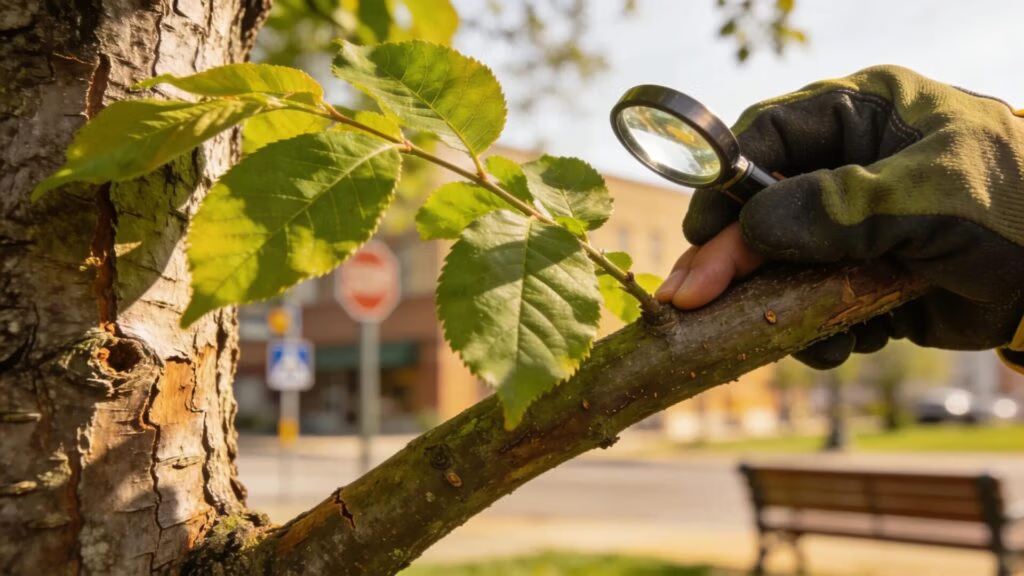
ISA Certified Arborist Tree Health Assessments are systematic evaluations performed by credentialled professionals to determine tree condition and identify contributing stressors. Assessments commonly include a visual structural assessment, detailed soil profile analysis, and diagnostic testing for pathogens and pests. In Waukesha, these evaluations support urban forest resilience by identifying vulnerabilities to biotic and abiotic stressors, informing targeted interventions that preserve tree longevity and the ecosystem services trees provide.
Assessments conducted by ISA Certified Arborists follow a structured protocol to evaluate physiological and structural indicators of tree health. Practitioners perform visual inspections of foliage, crown architecture, branch attachments, and trunk condition to detect signs of decline. Complementary site and soil evaluations identify edaphic limitations and environmental drivers. The objective is to produce a comprehensive diagnostic profile that supports evidence-based management decisions to restore or maintain tree vigor.
Professional arborists apply standardised frameworks and documented risk-evaluation procedures to ensure consistency and reproducibility across assessments.
Understanding Professional Tree Risk Assessment Methodologies Tree risk assessment methodologies have been developed to assist arborists in conducting thorough and systematic evaluations of trees and the potential hazards they pose to persons or property. Although these methodologies share fundamental similarities, they also possess distinct differences that may influence the decision-making processes of the practitioners employing them. Evaluating the reproducibility of tree risk assessment ratings across commonly used methods, 2023
ISA certification signifies formal training in arboricultural science, pest and disease identification, and tree risk assessment. Certified professionals demonstrate competency in tree physiology, diagnostic techniques, and treatment modalities, which improves the reliability of clinical findings and subsequent recommendations. Certification therefore serves as a verifiable indicator of technical proficiency when selecting a practitioner for complex site evaluations.
Advanced training and certification provide the methodological foundation that enables arborists to apply professional judgement in complex diagnostic scenarios.
The Role of Professional Expertise in Tree Risk Management This paper examines the influence of arboricultural and tree risk assessment training on the practitioner and the broader tree risk assessment methodology through the lens of professional judgment and decision-making. Professional expertise and its role in risk assessment, RW Klein, 2021
The International Society of Arboriculture issues guidelines that standardise assessment procedures and reporting criteria. Adherence to ISA standards ensures evaluations rely on measurable indicators and documented observations rather than subjective impressions. Consistent application of these standards facilitates comparable records over time, supporting data-driven urban forest management and more reliable diagnostic outcomes.
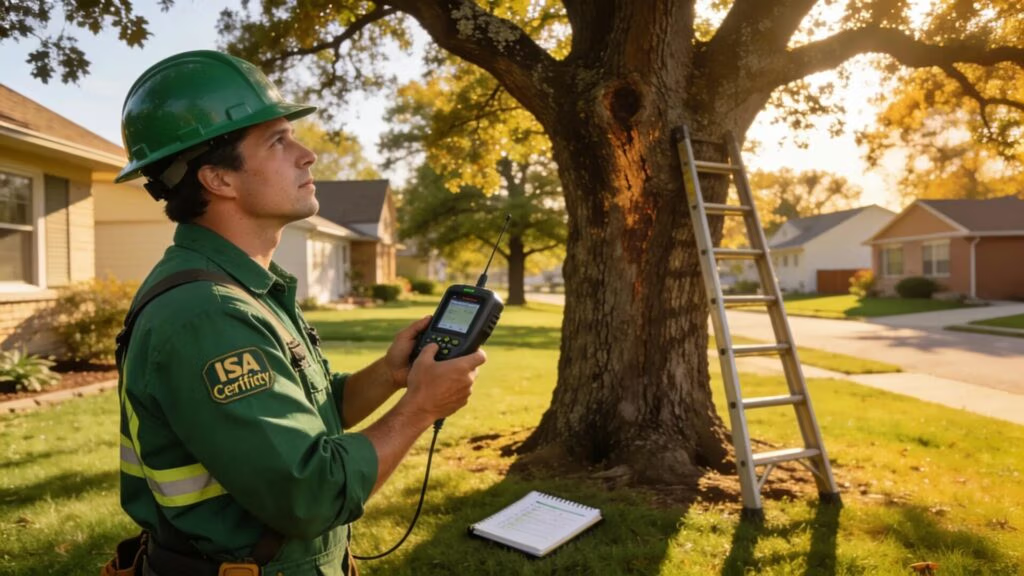
Engaging professional tree inspection services yields several operational benefits: early detection of structural defects and pathogenic infections, evidence-based recommendations for remediation, and mitigation of liability through assessment of structural integrity. Certified arborists provide site-specific management plans that prioritize safety and long-term tree health while optimizing maintenance expenditure.
Proactive Issue Identification: Early detection of tree diseases and pests prevents further damage.
Expert Recommendations: Tailored care strategies informed by professionals can lead to healthier trees.
Safety Enhancement: Evaluation of structural integrity reduces risks associated with falling branches or unsafe trees.
Pricing for ISA Certified Arborist Tree Health Evaluations depends on variables such as tree diameter, species, site accessibility, and the diagnostic depth required. Fees increase with additional procedures such as laboratory soil analysis, laboratory pathogen testing, or extended monitoring. The table below illustrates representative price points for common assessment tiers.
Assessment Type | Price | Description |
|---|---|---|
Basic Visual Assessment | $150 | Involves a straightforward evaluation of the tree’s exterior condition. |
Comprehensive Health Assessment | $300 | Includes detailed diagnostics and soil testing, providing a complete health overview. |
Ongoing Monitoring Program | $500 | Regular evaluations and health checks throughout the year to monitor tree health. |
In Waukesha, these cost determinants enable property owners to select an assessment level aligned with their management objectives. If specialised interventions such as **tree trimming** or pruning are required, arborists can integrate those services into a prescribed treatment plan.
Clients may schedule a tree health assessment with Dunbar Tree Service by telephone at (262) 271-0189, by email at trees@dunbartreeservice.com, or by visiting the office at 1013 Anoka Avenue, Waukesha, WI 53186 to discuss requirements in person. The contact us page provides service request forms and additional instructions. When requesting an assessment, provide details on tree locations, species, and observed symptoms to support an efficient and focused site visit.
Projected into 2026, urban tree health in Waukesha is affected by climatic variability and the ongoing spread of invasive pests and pathogens. Altered precipitation regimes and temperature fluctuations increase physiological stress and susceptibility to disease. These factors require adaptive management strategies, including enhanced monitoring, integrated pest management, and selection of resilient species to maintain urban canopy function.
Select an arborist who holds ISA (International Society of Arboriculture) certification and demonstrates documented experience with local species and site conditions. Confirm familiarity with tree risk assessment procedures, pest diagnostics, and safety protocols. Professional references and verifiable case examples provide objective evidence of capability and performance.
Assessment frequency depends on species, site stressors, and observable symptoms. For stable, healthy specimens, a professional evaluation every two to three years is generally sufficient. Trees exposed to construction, drought, or signs of decline warrant more frequent monitoring. Establishing a schedule based on risk profile optimizes resource allocation and early problem detection.
An ISA Certified Arborist will conduct a systematic inspection of trunk, roots, crown, and surrounding site conditions. The process may include measurements, soil sampling, and documentation of symptoms related to pests, pathogens, or structural defects. The arborist will deliver a report that summarizes findings, diagnostic evidence, and recommended management actions with prioritized steps.
Preliminary visual checks can identify obvious symptoms such as leaf discolouration or abnormal growth. However, comprehensive assessments require professional training to detect subtle indicators and to interpret diagnostic tests. For conclusive diagnosis and treatment planning, engage a certified arborist with access to diagnostic tools and laboratory resources.
Seasonality affects diagnostic visibility and intervention timing. Early spring assessments are advantageous for observing foliar development and early-season symptoms, while late autumn inspections facilitate structural evaluation after leaf drop. Consult an arborist to determine optimal timing for specific species and management objectives.
Follow the arborists prescribed treatment plan, which may include targeted pruning, application of registered fungicides or pesticides, and modifications to watering or nutrient regimes. Early implementation of recommendations improves control outcomes. In cases of irreversible decline or public-safety risk, removal may be advised to prevent spread and mitigate hazards.
Engaging ISA Certified Arborist Tree Health Assessments provides Waukesha property owners with evidence-based diagnostics and management recommendations that support tree longevity and public safety. Professional evaluations enable early detection of hazards and inform targeted interventions that preserve canopy value. Contact Dunbar Tree Service to arrange an assessment and obtain a formal, site-specific management plan.
Conclusion