★ ISA-Certified Arborists · Serving Waukesha & Milwaukee County
★ ISA-Certified Arborists · Serving Waukesha & Milwaukee County
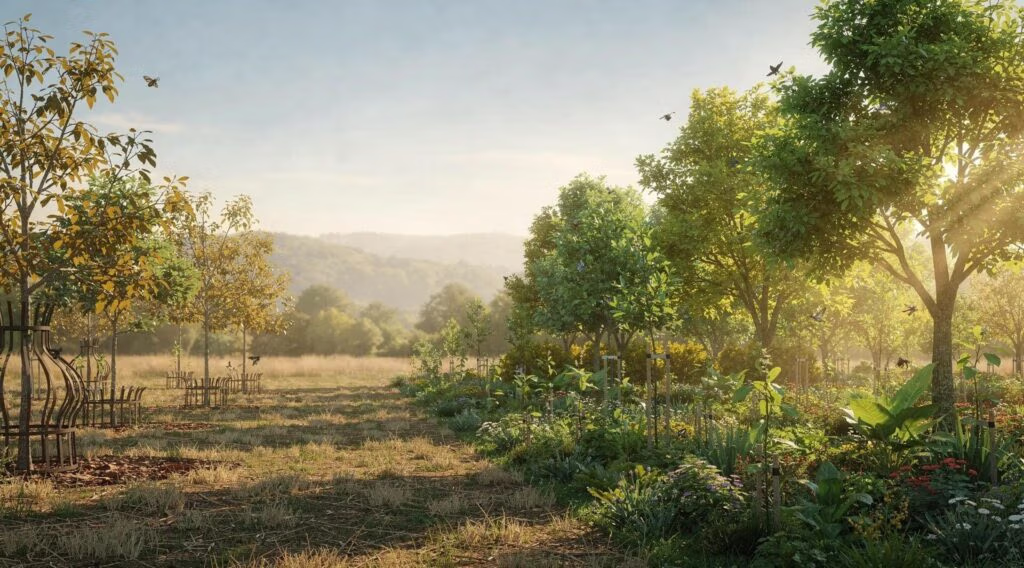
Selecting the right native trees for your property in Southeast Wisconsin can significantly enhance the landscape, support local wildlife, and improve environmental health. This guide provides essential insights into the best native tree species, their characteristics, and how to choose the right trees based on soil, climate, and yard size. Many homeowners and property managers face challenges in selecting trees that thrive in local conditions, which can lead to poor growth and maintenance issues. By understanding the unique needs of native trees, you can make informed decisions that benefit both your property and the ecosystem. This article will cover the best native tree species, compare oak and maple trees, explore additional native options, and provide guidance on selecting and caring for these trees.
Understanding the nuances of local adaptation is crucial when selecting native trees, as research highlights the complexities of defining ‘local’ in ecological terms.
Local Adaptation in Native Tree Selection
Although the importance of using local provenance planting stock for woodland production, habitat conservation and restoration remains contentious, the concept is easy to understand, attractive and easy to ‘sell’. With limited information about the extent and scale of adaptive variation in native trees, discussion about suitable seed sources often emphasises “local” in a very narrow sense or within political boundaries, rather than being based on sound evidence of the scale over which adaptation occurs.
Is local best?
Exa
mining the evidence for local adaptation in trees and its scale, D Boshier, 2015
Southeast Wisconsin is home to a variety of native tree species that are well-suited for residential and commercial landscapes. These trees not only thrive in local conditions but also provide numerous ecological benefits. Here are some of the best native tree species for your yard:
These native trees not only enhance the beauty of your property but also contribute to the local ecosystem by providing habitat and food for wildlife.
When considering oak and maple trees for your landscape, it’s essential to understand their differences in characteristics and care requirements.
Understanding these differences can help you choose the right tree for your specific needs and ensure a healthy, thriving landscape.
In addition to oaks and maples, several other native trees thrive in Waukesha and Milwaukee counties. These include:
These species not only enhance the biodiversity of your landscape but also provide essential resources for local wildlife.
Selecting the right native trees involves considering several environmental factors, including soil type, climate, and the size of your yard.
By assessing these factors, you can select trees that will thrive in your specific environment.
Caring for native trees involves understanding their specific needs and providing appropriate maintenance. Here are some best practices:
These practices ensure that your native trees remain healthy and vibrant throughout their lifespan.
Soil conditions play a crucial role in the health and growth of native oak and maple trees.
By understanding these soil conditions, you can create an optimal environment for your trees to thrive.
The climate of Southeast Wisconsin significantly influences tree selection.
Choosing trees that are well-adapted to the local climate ensures their long-term success and health.
Planting and caring for native trees requires specific techniques to ensure their successful establishment and growth.
Implementing these best practices will help your native trees thrive in Southeast Wisconsin.
The optimal time to plant native trees in Wisconsin is during the spring or fall.
Choosing the right planting time is crucial for the successful establishment of your native trees.
Pruning and maintenance are vital for the health of oak and maple trees.
Proper pruning and maintenance practices will ensure that your oak and maple trees remain healthy and vibrant.
Planting native trees provides numerous environmental and wildlife benefits.
By planting native trees, you contribute to a healthier environment and support local wildlife populations.
Beyond immediate benefits, historical ecological data provides valuable context for restoration efforts, guiding us toward more resilient forest ecosystems in Wisconsin.
Wisconsin Forest Restoration: Historical Conditions
In Wisconsin, as in other states, management goals sometimes include restoration of historical forest conditions, which may prepare forests to be more compatible with future climates, disturbances such as drought and fire, and forest health threats. We quantified historical (1830–1866) composition and structure to develop historical reference conditions for restoration and documented changes based on current (2005–2009) forest surveys in Wisconsin.
His
torical range of variability for restoration and management in
Wisconsin, BB Hanberry, 2019
Native trees play a crucial role in supporting local wildlife habitats.
Supporting local wildlife habitats through native tree planting is essential for maintaining ecological balance.
In urban areas, native trees offer several environmental advantages.
Integrating native trees into urban planning is essential for creating sustainable and livable cities.
Further emphasizing the importance of thoughtful urban tree selection, studies reveal how species diversity directly impacts the resilience of metropolitan forests, particularly in areas like Milwaukee.
Milwaukee Urban Forest Resilience & Species Diversity
Low species diversity is a contributor to high urban forest vulnerability, and this study examined 40 public and private tree inventories in the metropolitan area of Milwaukee, Wisconsin, USA. Applying an established vulnerability framework, this study helps to identify the current and future resilience of the urban forest in the face of climate change and other urban forest threats.
Examining species diversity and urban forest resilience in the Milwaukee, Wisconsin (USA) metropolitan area, EC Rogers, 2023
Dunbar Tree Service offers a range of services to assist with native tree selection and care in Southeast Wisconsin.
With over 20 years of experience in the tree services industry, Dunbar Tree Service is well-equipped to help you select and care for native trees in your landscape.
Dunbar Tree Service is led by Chris Dunbar, an ISA certified arborist (ISA #WI-1163A) with over 20 years of experience in the tree services industry.
Our expertise and commitment to excellence make us a trusted choice for tree care in the region.
Accessing expert consultation and tree care services from Dunbar Tree Service is easy.
Our team is ready to assist you with all your native tree selection and care needs. For expert consultation and tree care, contact Dunbar Tree Service today.
Chris Dunbar is the owner of Dunbar Tree Service and an ISA certified arborist (ISA #WI-1163A) with over 20 years of experience in the tree services industry. His expertise in native tree selection and care makes him a trusted professional in Southeast Wisconsin. To learn more about Chris and the team, visit the About Us page.