★ ISA-Certified Arborists · Serving Waukesha & Milwaukee County
★ ISA-Certified Arborists · Serving Waukesha & Milwaukee County
By Chris Dunbar, Owner of Dunbar Tree Service
Homeowners in Wisconsin routinely confront tree health issues that affect both landscape aesthetics and property value. Pathogens and pests can propagate rapidly and produce irreversible structural damage when not identified and managed promptly. Tree disease consultation services provide systematic diagnosis, targeted treatment recommendations, and preventive protocols tailored to regional conditions. This article summarizes assessment methodologies, treatment modalities, and prevention measures, and outlines common regional diseases and the consultation workflow, including the role of ISA-certified arborists in delivering evidence-based tree care.
Tree disease consultation services in Wisconsin help homeowners identify, treat, and prevent tree diseases effectively.
Assessment techniques include visual inspections, soil testing, and professional arborist consultations for accurate diagnosis.
Treatment options such as targeted pesticides, soil amendments, and mechanical removal address various tree diseases.
Prevention strategies like regular inspections, proper watering, and integrated pest management reduce disease risks.
Common Wisconsin tree diseases include Dutch Elm Disease, Oak Wilt, and Emerald Ash Borer infestations.
Early symptom identification of Oak Wilt and Emerald Ash Borer is crucial for timely and effective management.
Elm, oak, and ash trees are most vulnerable to regional diseases due to their biological characteristics.
The consultation process involves inspections, documentation, and collaboration with ISA-certified arborists for tailored care.
ISA-certified arborists provide expert diagnosis and comprehensive management strategies to maintain tree health in Wisconsin.
Accurate assessment is the foundation of effective tree health management. Combining structured visual surveys, laboratory soil analysis, and professional diagnostic consultation enables precise identification of causal agents and site factors that influence tree vigor.
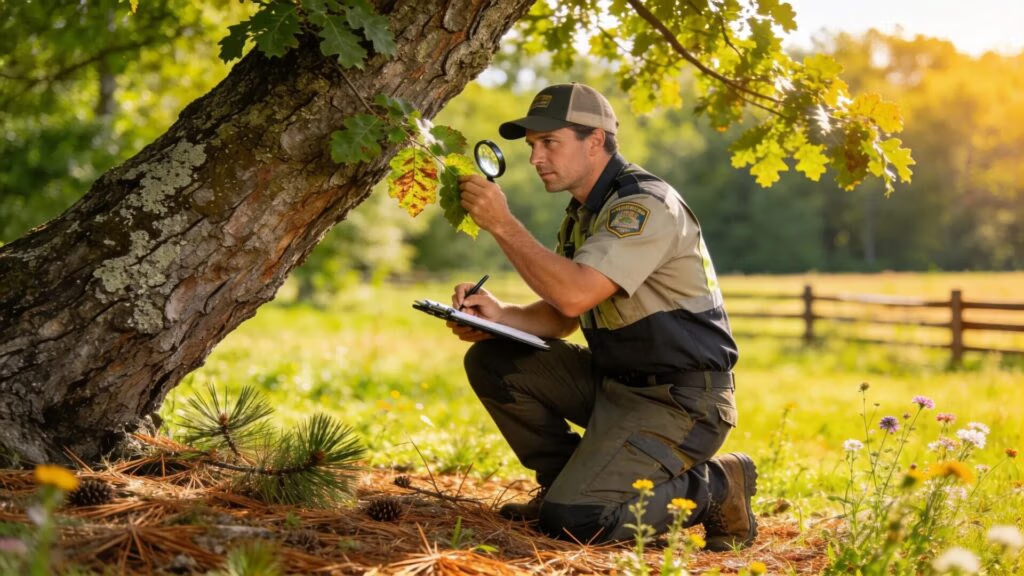
Visual Inspections: Conducting thorough visual inspections allows arborists to identify visible symptoms of diseases, such as discoloration or wilting leaves. Observing these early signs can be crucial in diagnosing health issues before they escalate.
Soil Testing: Soil health directly influences tree vitality. Testing for nutrient deficiencies, pH imbalances, and moisture levels provides insight into the environment affecting tree growth and resilience.
Professional Consultations: Engaging with expert arborists through consultations guarantees reliable diagnostics. Their training and experience enable them to identify subtle signs of distress that might not be apparent to untrained eyes.
Soil quality assessments are necessary to improve practitioners’ capacity to manage urban soils and arboricultural resources. The cited study evaluated which soil properties serve as the most reliable indicators of urban tree performance and reported specific soil attributes correlated with tree health.Soil quality attributes as indicators of urban tree performance, BC Scharenbroch, 2012
Integrating these assessment techniques supports objective diagnosis and informs selection of appropriate management interventions.
Following diagnosis, treatment selection should align with the identified etiology and site-specific constraints. Options range from targeted chemical controls to cultural and mechanical interventions that mitigate spread and restore tree function.
Targeted Pesticide Applications: For certain tree diseases caused by pests or fungi, targeted pesticide applications can effectively manage infestations and minimize further damage.
Soil Amendments: Improving soil quality through nutritional supplements can aid in recovery by ensuring trees have access to essential nutrients for growth and resilience.
Mechanical Removal: In severe cases, removal of infected branches or even entire trees may be necessary to prevent the spread of disease to surrounding plants and trees.
Each treatment modality carries distinct efficacy profiles and operational requirements; selection should be based on diagnostic evidence, risk assessment, and regulatory compliance.
Different treatment strategies serve various diseases through distinct mechanisms.
Treatment Method | Target Disease | Effectiveness |
|---|---|---|
Targeted Pesticide Applications | Oak Wilt, Emerald Ash Borer | High, prevents further spread |
Soil Amendments | General Nutritional Deficiencies | Moderate, enhances recovery |
Mechanical Removal | Severe Infections | High, prevents disease spread |
Reviewing treatment alternatives in collaboration with a qualified arborist enables selection of the most appropriate interventions for the specific pathology and site conditions.
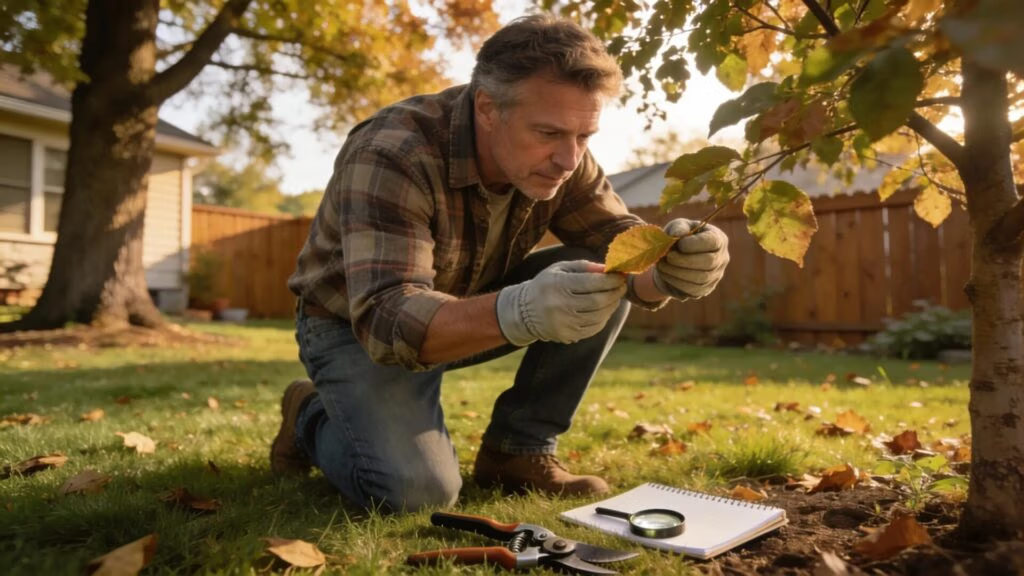
Preventive measures reduce incidence and severity of tree disease and are more cost-effective than reactive responses. A structured prevention programme addresses monitoring, cultural practices, and integrated pest management to maintain tree resilience.
Regular Inspections: Scheduling frequent visual inspections enables early detection of potential problems, allowing for timely interventions.
Proper Watering and Fertilization: Ensuring trees receive adequate water and nutrients not only promotes health but also strengthens their resilience against diseases.
Integrated Pest Management: Utilizing a combination of biological, chemical, and cultural control methods minimizes the overall risk of pest infestations that could lead to disease.
Consistent application of these prevention strategies extends tree longevity and reduces the probability of severe outbreaks.
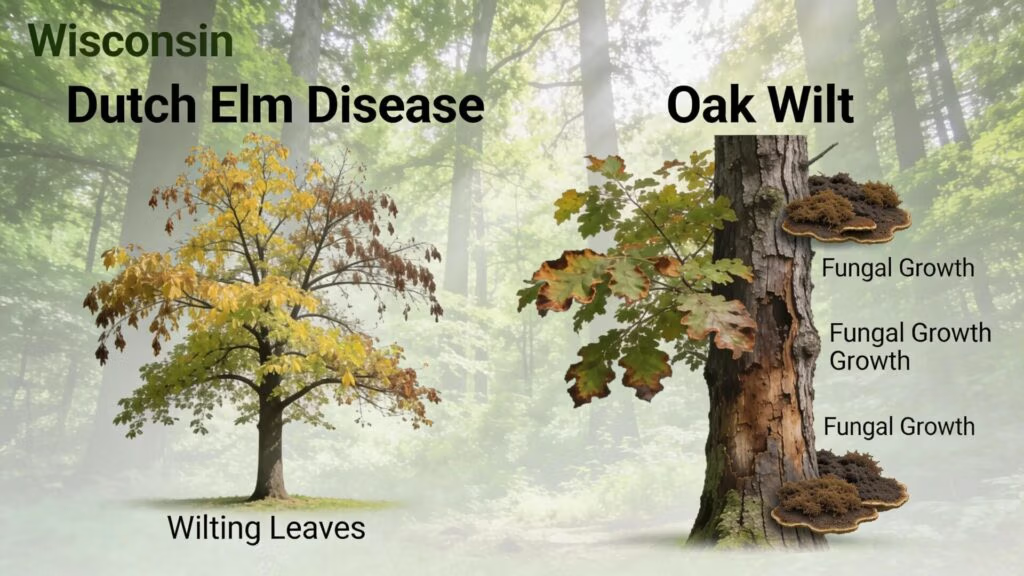
Wisconsin landscapes are affected by several recurrent pathologies that warrant targeted management. Awareness of these disease agents and their primary indicators assists in timely detection and mitigation.
Dutch Elm Disease: This disease affects elm trees and is transmitted by beetles. Symptoms include wilting leaves and branch dieback, leading to tree death if untreated.
Oak Wilt: A serious disease that causes rapid wilting and leaf discoloration in oak trees. It primarily spreads through interconnected root systems.
Emerald Ash Borer: This invasive pest targets ash trees, leading to their decline. Look for D-shaped exit holes in the bark and increased woodpecker activity as signs of infestation.
After recognition of these conditions, homeowners should contact professional consultation services to obtain diagnostic confirmation and recommended interventions.
Early recognition of characteristic symptoms facilitates timely containment and treatment. Symptom profiles for Oak Wilt and Emerald Ash Borer are distinct and diagnostic when evaluated systematically.
Oak Wilt Symptoms: Look for wilting leaves that may turn brown and drop prematurely. The rapid progression from green leaves to brown is a key indicator.
Emerald Ash Borer Symptoms: Signs include distinctive D-shaped exit holes in the bark along with increased woodpecker activity as they feed on the larvae.
Documenting symptom onset and distribution supports rapid decision making and increases the likelihood of successful management outcomes.
Species susceptibility varies according to host-pathogen interactions and landscape context. Identifying high-risk species informs planting decisions and prioritizes monitoring and protection efforts.
Elm Trees: Highly susceptible to Dutch Elm Disease, which can quickly decimate entire populations if not managed effectively.
Oak Trees: Vulnerable to Oak Wilt, these trees are often impacted in dense plantings where root systems are interconnected.
Ash Trees: The Emerald Ash Borer selectively targets ash species, making them particularly at risk in infested areas.
Recognizing species-specific vulnerabilities enables homeowners to implement targeted prevention, monitoring, and treatment strategies.
The consultation process is structured to produce a documented assessment and an evidence-based management plan. It integrates field inspection, diagnostic testing where required, and formulation of site-specific recommendations.
Visual Inspections and Diagnostics: The consultation begins with a visual inspection, where certified arborists examine the tree and surrounding conditions to identify potential issues.
Documentation of Tree Health: Detailed notes on tree health, including any visible symptoms and environmental factors, aid in developing a management plan.
Collaboration with Expert Arborists: Working with ISA-certified arborists ensures accurate diagnosis and effective treatment choices tailored to the specific conditions of each tree.
Familiarity with this process allows homeowners to engage efficiently with providers and to evaluate recommended interventions against documented observations.
Treatment and management should follow diagnostic confirmation and consider efficacy, environmental impact, and long-term site objectives. Options span chemical, biological, and removal strategies.
Chemical Controls: Often necessary for immediate pest management, chemical treatments can help contain disease outbreaks when used appropriately.
Biological Controls: Methods such as introducing natural predators can assist in restoring tree health without the use of synthetic chemicals.
Tree Removal: In instances where disease has severely compromised a tree’s health, removal may be necessary to prevent further spread to healthy trees.
Implementation should be supervised by qualified professionals and aligned with municipal regulations and best practice standards.
ISA certification denotes formal training and adherence to industry standards in arboriculture. Consultation by certified arborists supports accurate diagnosis and standardised care recommendations.
Expertise in Tree Health: These professionals possess the knowledge and skills necessary for accurate tree health assessment and disease management.
Accurate Diagnosis: Consultation with ISA-certified arborists ensures tailored strategies that consider local species and environmental conditions.
Comprehensive Care Strategies: They provide integrated care strategies designed to support long-term tree health, safeguarding homeowners’ investments in their properties.
Engaging ISA-certified arborists provides documented expertise and promotes consistent, evidence-based management of tree health concerns.
Homeowners should monitor for wilting, premature leaf abscission, foliar discoloration, dieback, cankers, and atypical growth patterns. Specific indicators include rapid leaf browning in Oak Wilt and D-shaped emergence holes with increased woodpecker activity in Emerald Ash Borer infestations. Regular, systematic observations improve the probability of early detection.
Homeowners can implement routine inspections, maintain appropriate irrigation and nutrient regimes, apply mulch correctly, and adopt integrated pest management practices that combine biological controls, cultural methods, and targeted treatments when necessary. These measures reduce stressors that increase disease susceptibility.
Complete prevention of all tree diseases is not feasible. However, risk reduction through appropriate species selection, site preparation, soil management, and monitoring substantially decreases incidence. Upon detection, professional management is necessary to limit impact and reduce transmission.
Soil properties determine nutrient availability, water retention, aeration, and root development. Suboptimal soil pH, compaction, or nutrient deficits increase vulnerability to pathogens and pests. Periodic soil testing enables targeted amendments to address identified limitations and support tree resilience.
Local factors such as soil texture, drainage, microclimate, and weather patterns modulate stress exposure and pathogen survival. For example, prolonged saturation predisposes roots to rot, while drought stress reduces host defenses. Selecting species and management practices appropriate to local conditions mitigates disease risk.
Consultation is warranted upon observation of abnormal symptoms—sudden leaf loss, discoloration, canopy thinning, or visible pest damage—or when planning significant landscape changes. Seasonal assessments in spring and fall also provide opportunity for preventive evaluation and planning.
Utilising tree disease consultation services enables homeowners to obtain precise diagnoses and evidence-based management plans that protect tree health and property value. ISA-certified arborists deliver specialised assessment and treatment recommendations for prevalent conditions such as Oak Wilt and Emerald Ash Borer. Proactive maintenance and adherence to professional guidance contribute to sustained landscape resilience.