★ ISA-Certified Arborists · Serving Waukesha & Milwaukee County
★ ISA-Certified Arborists · Serving Waukesha & Milwaukee County
By Chris Dunbar, Owner of Dunbar Tree Service
A tree health risk assessment gives you a clear, systematic way to protect your home and preserve the value of your landscape. Performed by certified arborists, these evaluations look for the structural and biological problems that put trees at risk of failure. In Waukesha, tree stability, age-related decline, and seasonal weather stress all shape how much risk a given tree carries. Catching these issues early through timely assessment lowers the chance of property damage and keeps intervention affordable. In this article, we walk through the assessment methods our arborists use, the risk indicators to watch for, preventive maintenance practices that help, and the full range of services Dunbar Tree Service offers.
A tree health risk assessment is a professional evaluation that looks closely at a tree’s physiological condition, its structural integrity, and the risk it poses to nearby structures, utility lines, and people. Waukesha’s shifting weather and varied site conditions affect how trees perform and where they’re most likely to fail, which is exactly why regular assessments matter here. Done well, an assessment identifies hazards, guides a plan to manage them, and lowers your liability exposure by putting documented findings and recommendations in your hands.
At Dunbar Tree Service, we provide assessments built on evidence, giving you condition reports you can act on to manage your trees proactively.
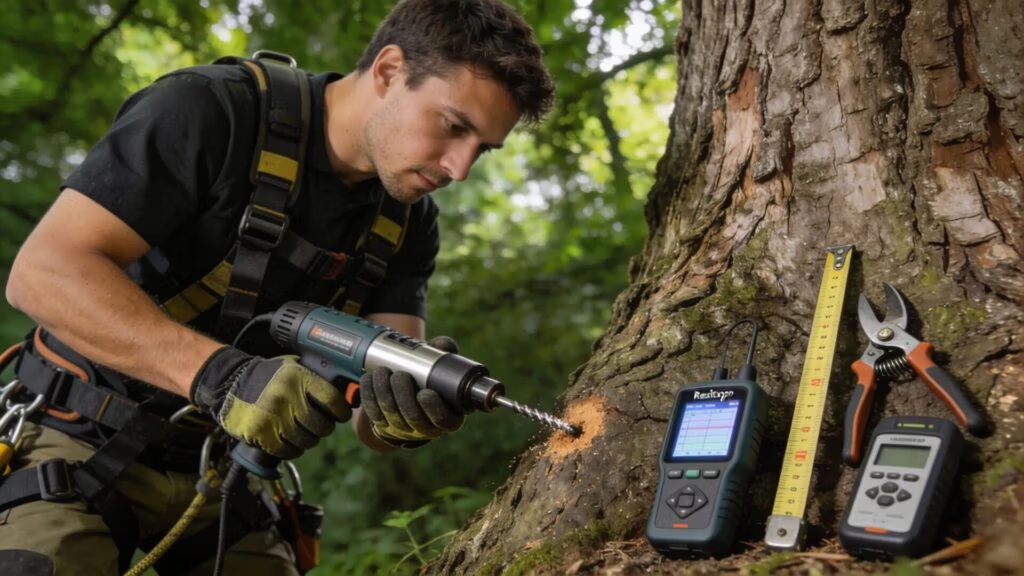
Our certified arborists combine visual assessment with instrument-based diagnostics, moving through a tiered inspection process to build a full picture of a tree’s condition.
Knowing what each step involves helps property owners understand just how much goes into an accurate condition and risk appraisal.
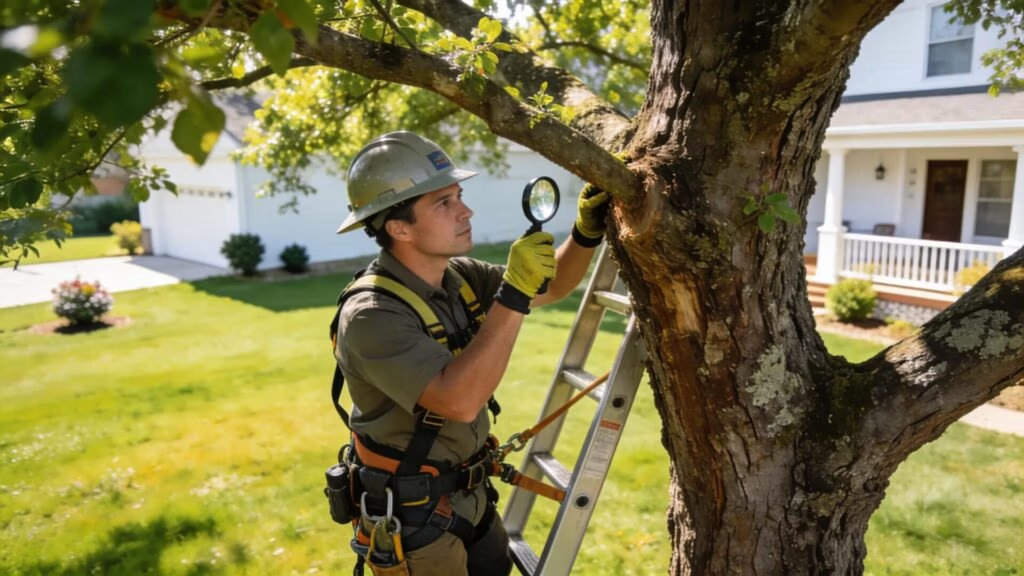
During the initial evaluation, our arborists note the external signs of decline—bark defects, canopy dieback, foliar symptoms—and record them carefully so we can track changes over time. We follow strict safety protocols while scanning the site, keeping everyone clear of any hazards we identify along the way.
For the detailed inspection, we bring in instrumented testing and, when needed, targeted excavation. Increment resistance testing, sonic tomography, and root-plate examination all help us detect internal decay, cavities, and weak anchorage that aren’t visible from the outside. Together, these diagnostics give us a solid, measurable basis for judging a tree’s structural capacity and how it’s likely to hold up under wind and weather.
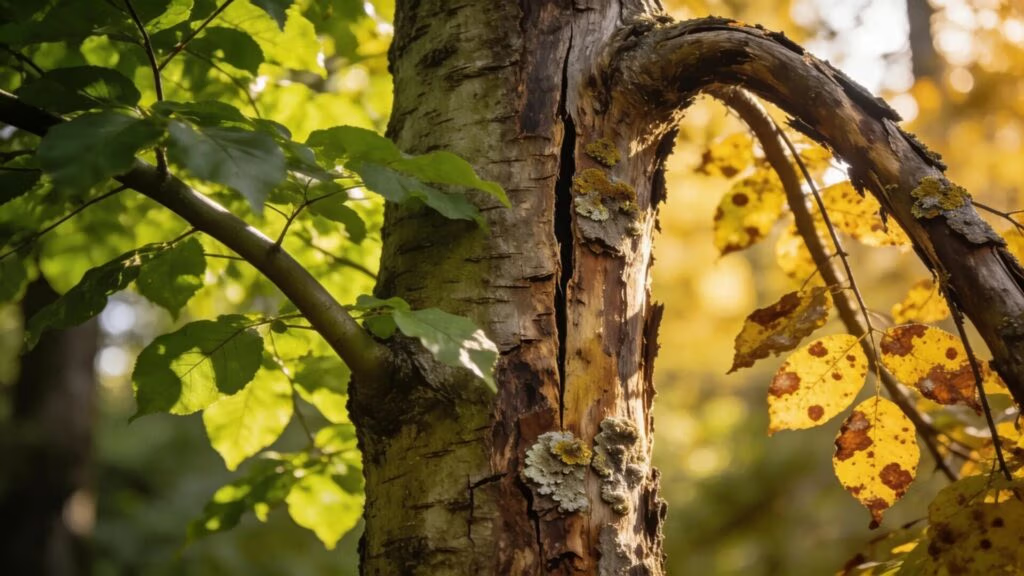
During an inspection, we look for a range of conditions that raise the odds of failure: cracks spreading through the trunk or scaffold branches, uneven canopy loading, built-up deadwood, pests or disease, root dysfunction, and leaning beyond what’s normal for the species. We weigh each of these factors for how much it adds to the tree’s overall risk.
Staying on top of a tree’s condition with ongoing monitoring and timely mitigation keeps immediate risk in check; when a hazard needs fast action, our **emergency tree services** are ready to step in.
We shape each assessment around the property it’s for. For residential evaluations, we focus on individual trees and how close they sit to your home, driveway, and utility lines. Commercial evaluations usually call for a broader, plot-level look, with asset protection strategies built for groups of trees across a landscape management plan.
This tailored approach lets our arborists hand you recommendations that actually fit your property type and goals.
A comprehensive evaluation follows a standard sequence of steps that leaves you with a clear, well-documented condition record:
This process gives you a documented baseline to build on, making it easier to track changes over time and plan future risk assessment and maintenance work.
We assign risk ratings by weighing three things: how likely the tree is to fail, how much damage the debris could cause if it does, and what’s actually at risk nearby — a shed, a driveway, your family. Our arborists bring together health indicators, structural defects, and environmental load to arrive at a consistent rating you can use to prioritize and plan mitigation.
Dunbar Tree Service puts together structured reports that lay out what we observed, the risk ratings we assigned, and the recommended mitigations, so you have what you need to make an informed decision. Learn more about their services.
What you pay for an assessment depends on the scope of work, how many trees are involved, how complex the inspection is, and local market conditions. Pricing generally reflects time on site, the diagnostic tools we use, and how detailed the documentation is. It’s worth weighing the cost against the quality of what you get back — a sharper diagnosis and recommendations you can actually use to reduce risk.
Compared to the cost of repairing or replacing what a fallen tree damages, a proactive assessment and timely intervention is usually money well spent.
A tree’s size and structural complexity, local service rates and demand, and any permits or extra documentation required by regulation all factor into the final cost.
Keep these in mind as you budget for routine inspections and any remedial work down the line.
Catching structural defects and disease early lets you act where it matters most — pruning, bracing, or removal — which cuts the odds of a catastrophic failure and keeps repair costs from piling up. Regular evaluations also point you toward the kind of ongoing maintenance that keeps your trees healthy and your landscape’s value intact.
Certification tells you a practitioner has met real educational and experiential standards and follows established assessment protocols. Certified arborists are trained in standardized inspection methods and know how to document their findings in a way that meets industry expectations and holds up to scrutiny.
ISA certification means an arborist has met the credentialing standards for tree care and risk assessment. It gives you confidence that the evaluation you’re getting follows recognized practices, and that any recommendations are grounded in accepted arboricultural principles rather than guesswork.
Our arborists stay current on local ordinances, utility clearances, and conservation requirements, then fold that knowledge into site-specific recommendations. That keeps your assessment compliant and in step with Waukesha’s environmental management goals.
Preventive services turn assessment findings into real action, lowering the odds of failure before it happens. That can mean targeted crown reduction, structural pruning, soil management to support the root environment, or keeping emergency response capacity on hand for hazards that can’t wait.
Performed to accepted arboricultural standards, these interventions keep your trees structurally sound and healthy for the long haul. For routine maintenance such as pruning, consider **tree trimming** and **pruning**.
It’s time to act when an assessment turns up structural compromise, extensive decay, repeated limb failure, pest infestations, or anything that clearly threatens people or property nearby. From there, recommendations come down to how severe the defect is, the risk rating it carries, and what you’re trying to achieve on the site.
Our emergency services move fast to bring down the risk that an inspection flags as urgent. That usually means hazard tree removal, quick limb reduction, or stabilizing the site on the spot. Once the immediate danger is handled, we follow up with inspection and documentation to catch any remaining risk and guide the maintenance that comes next.
Homeowners tend to ask the same handful of questions — how often to inspect, what hazards look like, what drives the cost, and what to look for in a provider. Clear answers to these help you manage risk in your own landscape more effectively.
How often you need an inspection really depends on the tree: younger, lower-risk trees are usually fine every two to three years, while mature or high-exposure trees deserve a look every year. We also recommend stepping up inspections after major storms or as soon as you notice signs of decline.
Watch for cracks or splits in the trunk, a lot of deadwood, foliage that’s thinning or dropping early, or a tree that shifts or shows root heave in the wind. Any of these is worth a professional look.
Spotting these signs early means we can step in with assessment and targeted mitigation before things get worse. For full-service evaluation and corrective work, contact **Dunbar Tree Service**.
Look for ISA certification, real field experience, client references, and proper insurance coverage. Together, these show you’re dealing with someone who genuinely understands tree biology, risk assessment, and safety standards. It’s also worth checking that they’re familiar with local licensing and permitting requirements.
Prepare by identifying specific trees of concern, noting observed symptoms or recent events affecting tree condition, and providing any available maintenance history. Clearing access routes and ensuring site safety facilitates a thorough inspection and efficient data collection.
Late fall and early spring permit assessment of branch architecture and structural defects when deciduous trees are leafless, improving visibility of defects. Assessments remain valid year-round when immediate concerns arise and should not be deferred if a hazard is suspected.
Assessments are appropriate for trees at all life stages. Younger trees require early monitoring to detect establishment problems, while mature specimens may present increased structural risks that demand regular evaluation and targeted maintenance.
Assessments provide a probabilistic evaluation of future risk by analyzing current health, structural defects, site conditions, and species-specific failure modes. While prediction is not certain, assessments enable prioritized mitigation to reduce likelihood and consequence of future failures. Regular reassessment refines risk projections over time.
If a hazardous condition is identified, the arborist will issue a documented report with risk rating and recommended corrective actions, which may include pruning, cabling, or removal. The report supports decision-making and provides a record for compliance and insurance purposes. Timely implementation of recommendations reduces exposure to liability and property damage.
Regular, documented tree health risk assessments establish a defensible basis for safety management and asset preservation on Waukesha properties. Utilising certified arborists ensures assessments are conducted to accepted professional standards and that recommendations are evidence-based. Homeowners seeking structured tree care and risk mitigation may consult Dunbar Tree Service to implement comprehensive assessment and maintenance programmes.