★ ISA-Certified Arborists · Serving Waukesha & Milwaukee County
★ ISA-Certified Arborists · Serving Waukesha & Milwaukee County
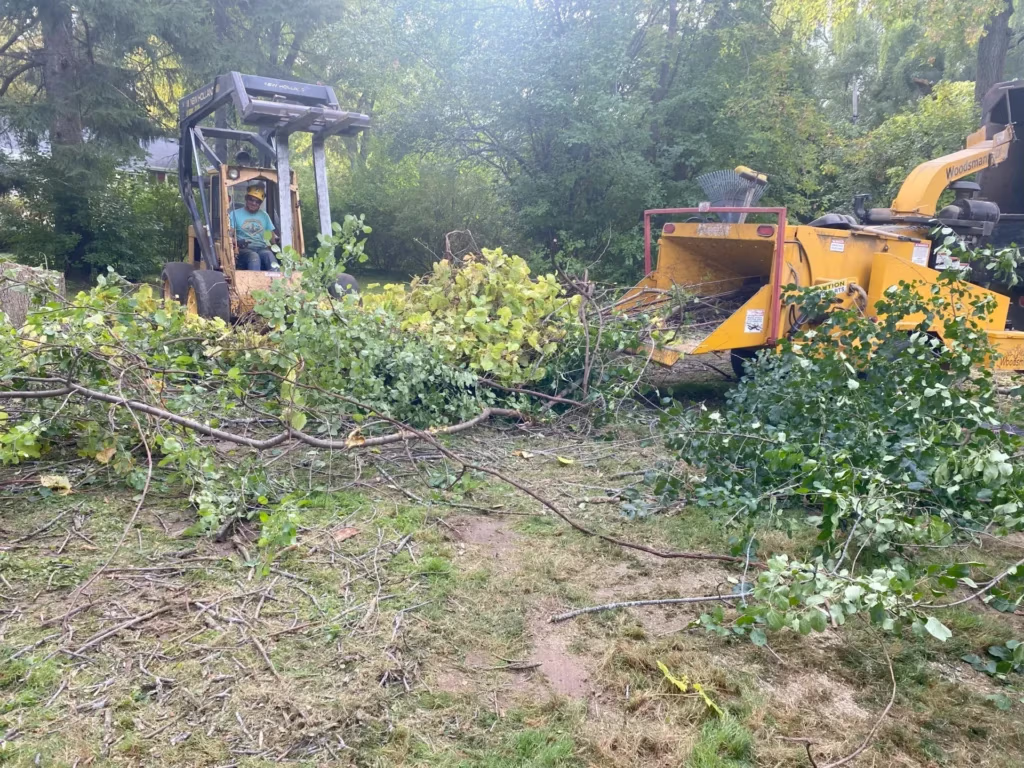
By Chris Dunbar, Dunbar Tree Service
Dunbar Tree Service delivers professional tree care in Hartland, WI, covering removal, trimming, and stump grinding for homes and businesses. The sections below summarise core services, safety practices, and maintenance guidance to help property owners manage tree health and site safety.
Dunbar offers emergency removals, standard removals for dead or hazardous trees, and stump grinding to restore usable landscape areas.
For inquiries, contact Dunbar Tree Service at (262) 271-0189.
ISA-certified arborists apply trained judgment in every removal, combining tree biology knowledge with hazard assessment and industry safety protocols.
Certified arborists also document findings and help ensure local compliance where permits or records are required.
Certified Arborist Assessment for Tree Removal
Has been determined to be such by a certified arborist. If the tree has been determined to be dead, removal is permitted under Section 8.10.050 of the Palo Alto Municipal Code.
Tree Technical Manual, 2001
These professional standards reduce risk and support efficient removal operations.
Removal work follows a clear sequence to protect property and meet requirements.
Understanding these steps helps owners plan scheduling, costs, and any restoration.
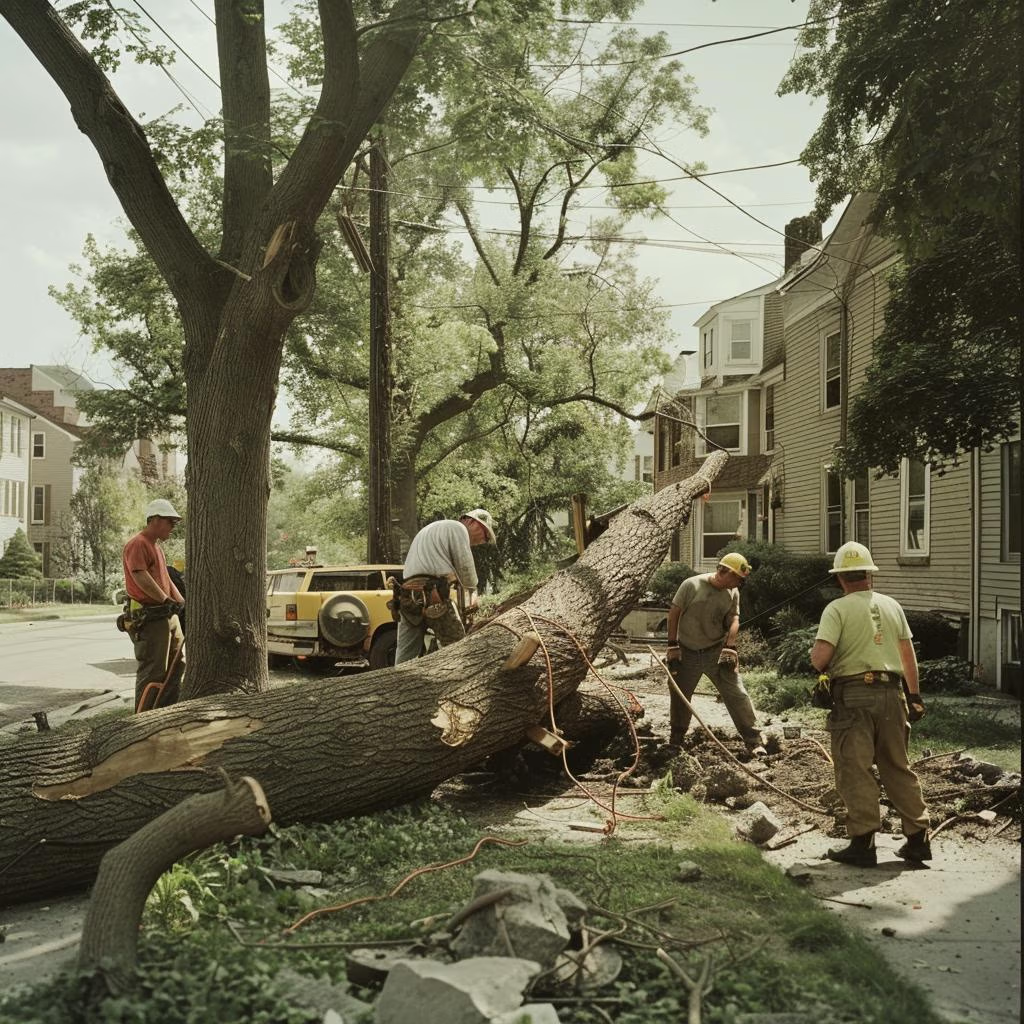
Emergency removal is needed for storm-damaged trees, fallen limbs blocking access, or trees posing imminent collapse risk. Dunbar prioritises site safety and rapid mitigation.
A rapid-response team secures the scene and removes hazards efficiently.
Emergency operations use structured risk assessment and protective measures to safeguard crews and the public.
These protocols minimise injuries and property damage while enabling safe operations.
Dunbar maintains staffing, equipment, and dispatch procedures to respond quickly after storms.
This approach reduces additional damage and speeds site recovery.
Professional trimming corrects structure, removes deadwood, and reduces branch-failure risk to protect people and property.
Regular trimming supports structural stability and long-term tree health.
Certified pruning follows ANSI A300 standards to preserve form and encourage healthy regrowth.
Following certified methods helps maintain safe, resilient trees.
ISA Certified Arborist Pruning & Removal Standards
Onsite would be 193 trees for the significant and non-significant trees removed. The pruning was conducted by an ISA certified arborist following current and applicable ANSI A300 standards.
Arborist Report PRELIMINARY, 2025
Applying these practices preserves structure and supports long-term tree health.
Late winter to early spring, while trees are dormant, is generally best to reduce pruning stress and promote healthy regrowth.
Coordinate timing with an arborist for species-specific recommendations.
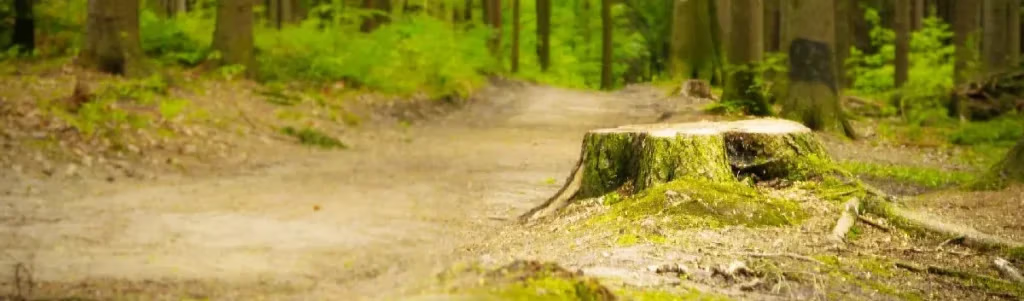
Stump grinding removes visible stumps, improving safety and aesthetics while freeing space for landscaping.
Specialised grinders typically remove the stump to below grade for smooth reintegration with the yard.
| Benefit | Description | Impact Level |
|---|---|---|
| Safety Improvement | Eliminates tripping hazards | High |
| Aesthetic Enhancement | Improves landscape appearance | Medium |
| Usable Space Creation | Allows for new landscaping options | High |
The table summarises the main advantages of stump grinding for property upkeep.
Grinding stumps improves yard safety, reduces pest attraction, and restores a clean visual profile.
These benefits make stump grinding a practical improvement for most properties.
Stump Removal & Property Aesthetics Benefits
The range of non-market benefits (eg biodiversity goals, aesthetics) can and need to be considered.
Can’t climb the trees anymore: social licence to operate, bioenergy and whole stump removal in
Sweden, P Edwards, 2014
Overall, stump grinding supports safer, more usable outdoor space.
Dunbar pairs commercial-grade stump grinders with ISA-certified arborists to remove stumps efficiently while protecting the surrounding site.
This combination minimises disturbance and returns the site to usable condition.
Check certifications, insurance, and references; confirm ISA-certified arborist availability and get written estimates to compare scope and cost.
Typically at least once per year; frequency varies with species, growth rate, and tree condition—your arborist can recommend intervals.
Look for decay, persistent dead limbs, severe lean, major storm or pest damage, or conflict with structures—an arborist should assess and advise.
Homeowners can do minor pruning, but elevated, large, or complex work should be handled by professionals for safety and long-term tree health.
Costs depend on size, location, and condition; residential removals commonly vary widely—obtain multiple quotes to compare services and pricing.
Clear obstacles, notify neighbours if needed, keep pets and children indoors, and confirm whether permits or utility notifications are required.
Chris Dunbar is the founder and lead arborist at Dunbar Tree Service, bringing over 20 years of experience in professional tree care across Hartland, WI, and surrounding areas. As an ISA-certified arborist, Chris combines expert knowledge with industry best practices to ensure the health, safety, and longevity of every tree cared for by his team. His dedication to quality, safety, and environmental stewardship has established Dunbar Tree Service as a trusted name in residential and commercial tree services.