★ ISA-Certified Arborists · Serving Waukesha & Milwaukee County
★ ISA-Certified Arborists · Serving Waukesha & Milwaukee County
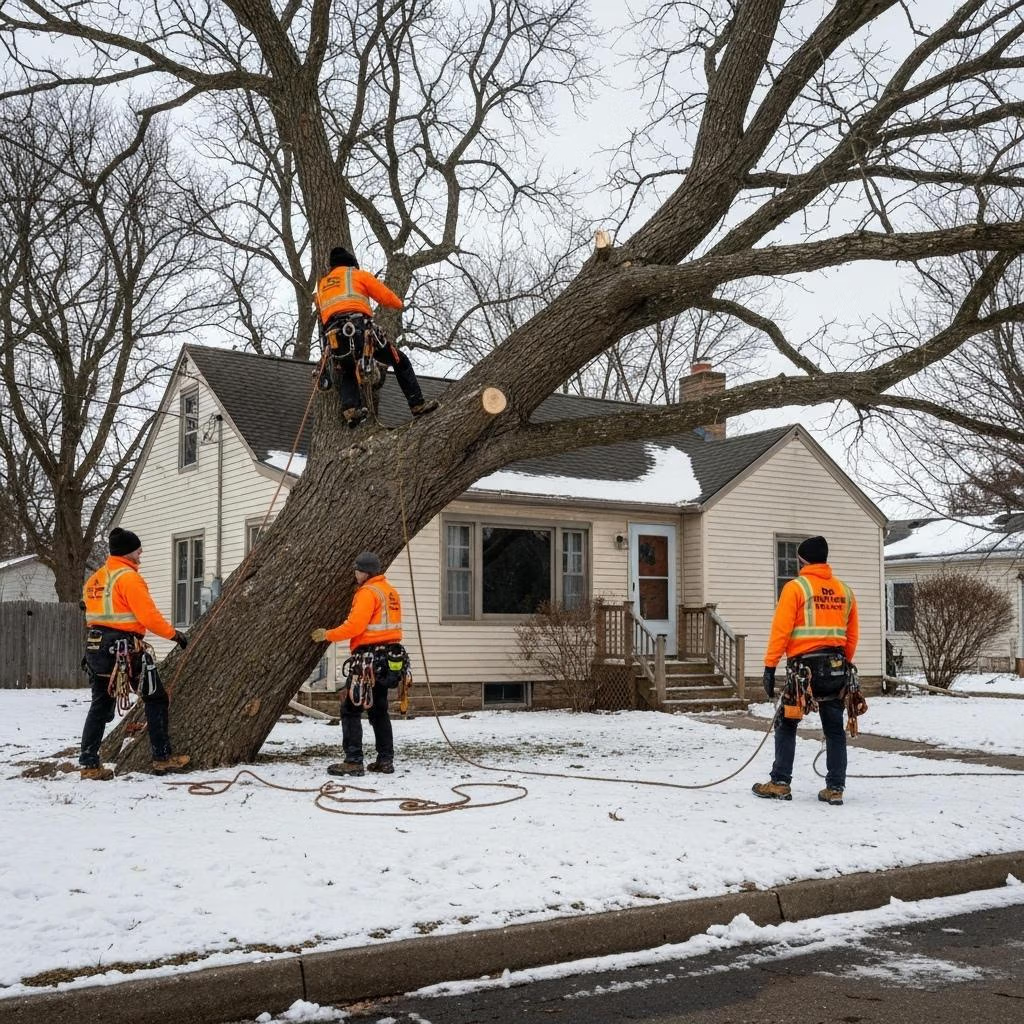
By Chris Dunbar, Owner of Dunbar Tree Service
Proper tree care preserves property health and curb appeal. In Mukwonago, WI, Dunbar Tree Service provides tree removal, pruning, and stump grinding for residential and commercial clients. Below, we outline services, safety and certification details, pricing guidance, and how to schedule an assessment.
Dunbar provides emergency and standard tree removal plus stump removal to address urgent hazards and routine landscape needs with experienced crews.
Safety guides every job: Dunbar performs risk assessments, uses industry‑grade equipment, and requires personal protective equipment to protect workers and property.
The inherent risks of arboricultural work reinforce the need for these strict safety protocols.
Arboricultural Safety: Identifying Operation Hazards
This study aimed to identify and quantify hazards present during arboricultural operations. Analysts reviewed the Occupational Safety and Health Administration Fatality and Catastrophe incident database and Bureau of Labor Statistics sources for incidents over the 17‑year period from 2001 through 2017. The review included 865 fatal and 441 nonfatal incidents. The four leading causes of fatal incidents, in order of frequency, were climber falls; workers struck by a falling tree; workers making indirect contact with an electric current; and workers struck by a falling branch.
A review of United States arboricultural operation fatal and nonfatal incidents (2001–2017):
Implications for safety training, J Ball, 2001
Costs depend on tree size, storm damage, and job complexity. Typical storm‑cleanup jobs and hazardous removals vary widely; understanding these factors helps you budget for necessary work.
Trained crews and industry‑grade equipment allow Dunbar to complete removals efficiently, including complex or time‑sensitive emergency work, while following best practices for safety.
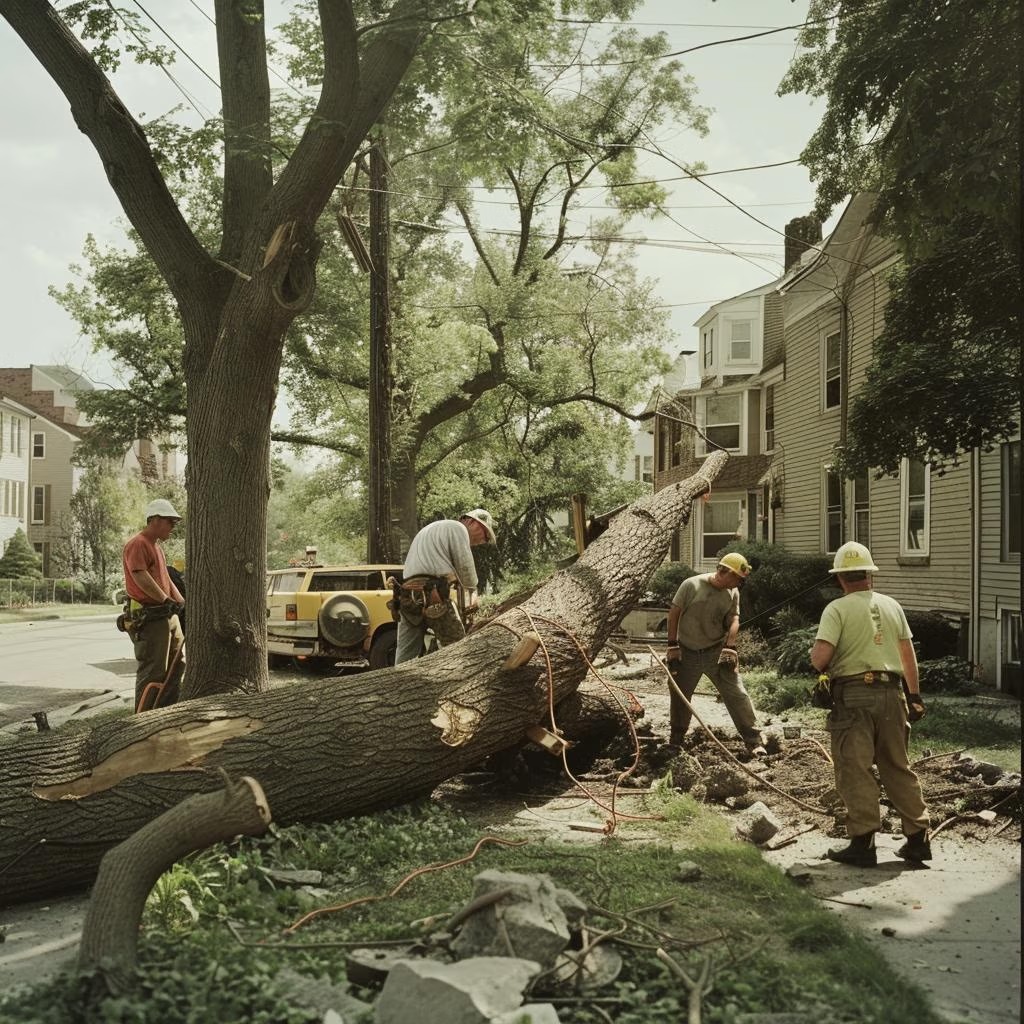
Emergency removal is needed after significant storm damage or when a tree leans, shows severe decay, or otherwise threatens people or property. Prompt action reduces injury and damage risk.
Pruning and trimming by trained arborists preserve tree health and form. Dunbar applies industry‑accepted techniques that reduce stress, improve structure, and encourage healthy growth.
Professional pruning offers clear benefits:
Dunbar’s ISA‑certified arborists use formal knowledge of tree biology to apply correct pruning cuts and timing, supporting long‑term health and demonstrating professional credentials.
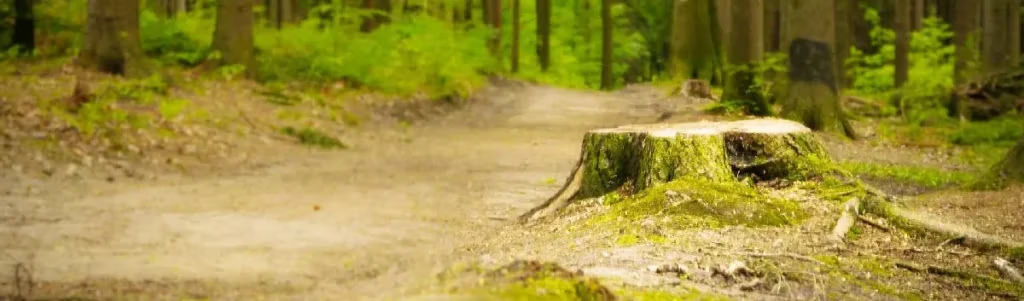
Dunbar performs efficient stump grinding to remove visible stumps, tidy the landscape, and prepare the area for replanting or other landscaping.
Stump grinding matters because it removes tripping hazards, improves yard appearance, and reduces pest‑attraction points that can threaten healthy trees.
Using modern grinders, Dunbar evaluates each stump’s size and location to choose an approach that minimizes disruption and readies the site for future planting.
Contact Dunbar by phone or email to request service or an assessment; inquiries are typically handled promptly.
To schedule: contact Dunbar by phone or email with a brief description; a local arborist will assess the property, recommend services, and arrange a convenient appointment.
Customers may verify ISA certification on the International Society of Arboriculture website; this confirms compliance with recognised industry standards.
Check experience, certifications, licences, insurance, reviews, safety practices, and whether the company provides a clear estimate and scope of work.
Frequency depends on species, age, and health; young trees often need annual attention, while mature trees typically require pruning every three to five years. Immediate pruning is warranted for dead or hazardous branches.
Look for visible decay, large trunk cracks, a pronounced lean, many dead branches, or pest infestations; proximity to structures or power lines can also necessitate removal. Have an arborist assess if unsure.
Homeowners can handle basic watering and mulching, but pruning, removal, and stump grinding are best left to certified professionals who have the training and equipment for safe, effective work.
Timing depends on species: many deciduous trees are best pruned in late winter or early spring, while spring‑flowering trees should be pruned after blooming. Consult an arborist for species‑specific advice.
Clear obstacles near the work area, notify neighbours if needed, and keep children and pets away during operations. Communicate any special concerns or access instructions to the crew in advance.
Chris Dunbar is the owner of Dunbar Tree Service and an experienced, ISA-certified arborist with many years of dedicated service in the Mukwonago area. His certification from the International Society of Arboriculture (ISA) reflects his commitment to professional standards and expert tree care. Chris brings extensive knowledge and expertise to every job, ensuring safe, effective solutions for clients’ tree service needs. Learn more about Chris and the Dunbar team on their About Us page.