★ ISA-Certified Arborists · Serving Waukesha & Milwaukee County
★ ISA-Certified Arborists · Serving Waukesha & Milwaukee County
By Chris Dunbar, Dunbar Tree Service
Understanding the factors that determine the cost of tree trimming and maintenance services is essential for homeowners and property managers. Pricing varies substantially with tree size, species, health, and location. This guide analyzes the principal variables that influence service prices and clarifies the value delivered by professional tree care. Recognizing these cost drivers enables informed budgeting for tree maintenance.
The following sections examine how tree size affects pricing; the implications of species and health; the role of service types; the impact of geographic location; and the effect of practitioner qualifications. The objective is to provide clarity on tree trimming costs, with emphasis on Waukesha and Milwaukee counties.
Tree size significantly affects trimming costs due to increased labor and equipment needs for larger trees.
Tree species and health influence pricing, with complex or unhealthy trees requiring specialized care and higher fees.
Service types like pruning, trimming, and emergency interventions have distinct pricing based on complexity and urgency.
Geographic location and property accessibility impact costs, with urban areas and difficult terrains raising prices.
Certified arborists charge more, reflecting higher service quality, safety standards, and expertise in tree care.
Seasonal demand fluctuations cause price variations, with peak seasons increasing tree trimming fees by 20-30%.
Emergency tree services cost substantially more due to immediate response requirements and higher operational risks.
Tree maturity and growth rate affect maintenance frequency, influencing long-term trimming expenses.
Specialized equipment like cranes adds to costs, especially for large or hard-to-access trees.
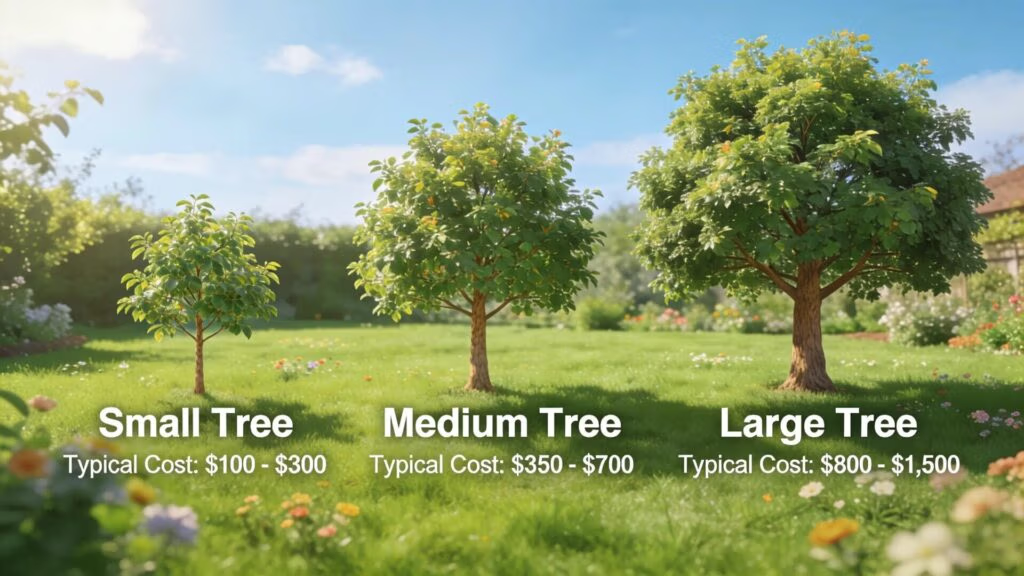
Tree size is a primary determinant of trimming and maintenance costs. Larger trees command higher prices because of the increased logistics and labor required. Height, trunk diameter, and maturity should be considered when estimating service costs.
Industry analyzes indicate that equipment and personnel requirements scale directly with the tree‘s physical dimensions.
An Analysis of Labor and Equipment Expenditure in Arboricultural Services
A substantial portion of arboricultural service costs is attributable to the logistics of mobilizing personnel and equipment to the job site.
Hiring an arborist to care for your landscape trees, 2020
Trim pricing typically varies by height category. Trees under 15 feet commonly cost around $150, whereas 30-foot trees can cost $300 or more. Trunk diameter also affects price; larger diameters necessitate specialized equipment and additional labor. Trees with diameters exceeding 30 inches may incur surcharges, particularly when crane or heavy machinery is required.
Tree maturity and growth stage materially affect pricing. Mature specimens generally require more frequent maintenance than younger trees, increasing long-term expenditure. Growth rate determines trimming frequency; fast-growing species may require annual trimming, while slower-growing species may be serviced every two years or more.
Species and health status are critical determinants of service costs. Certain species present structural or growth complexities that increase labor and time requirements. Additionally, impaired tree health often necessitates more intensive and higher-risk procedures, elevating costs.
Certain species, including oak and pine, require specialized trimming techniques to avoid structural damage or adverse growth responses. These techniques increase labor expertise and therefore cost. For example, trimming a mature oak may range from $300 to $600 depending on size and specific requirements.
A tree‘s health substantially alters maintenance complexity. Diseased or pest-infested trees often require pre-treatment prior to trimming, which increases overall cost. Trees in poor health may necessitate extensive pruning to mitigate failure risk, raising fees—commonly 20% to 50% above standard trimming.
Service type materially influences pricing. Techniques such as pruning, routine trimming, and emergency response entail different resource requirements and therefore distinct cost structures.
Pruning is typically costlier than routine trimming because it requires more precise cuts and planning to promote long-term health. Routine trimming often averages between $200 and $400, whereas emergency tree services—required after storms or incidents—can exceed $600 due to complexity and urgency.
Awareness of these variables is essential for homeowners seeking to balance immediate tree health needs with long-term fiscal planning.
The Economic Impact of Tree Maintenance: A Comprehensive Guide
This document provides a detailed literature review of costs associated with maintained and unmaintained tree care—planting, pruning, removal, and integrated pest and disease management—commonly reflected in municipal budgets. It also summarizes costs for less-documented arboricultural practices, including tree risk management, irrigation, mulching, fertilization and nutrient management, as well as staking and cabling.
The costs of maintaining and not maintaining the urban forest: A review of the urban forestry and arboriculture literature, J Vogt, 2015
Use of specialized equipment, including cranes and stump grinders, increases service costs. For example, crane deployment for tall tree removal can add $100-$300 due to operational and rigging expenses. Such equipment is often necessary for large specimens or trees in hazardous locations, which explains the added cost.
Geographic context significantly affects pricing. Local demand and service availability vary, and property conditions, including site accessibility, influence total cost.
In Waukesha and Milwaukee counties, pricing varies. Basic suburban services commonly range from $100 to $150, while densely populated urban areas may see costs of $400 or higher due to greater demand and higher operating costs. Recognizing regional variation supports accurate budgeting.
Difficult site access—steep slopes or complex landscaping—necessitates additional labor and specialized methods, increasing fees. Trees closely surrounded by vegetation or structures further complicate operations and raise costs.
Certification and experience are principal determinants of pricing. Firms employing certified arborists typically charge higher rates that reflect enhanced expertise and risk mitigation.
Engaging ISA-certified arborists improves service reliability and quality. Their expertise supports effective pruning that promotes long-term health and can reduce future costs. Such services may be 10-20% more expensive, reflecting the reduced risk of subsequent complications.
Compliance with advanced safety and quality protocols increases costs due to training, certification, and specialized equipment. These expenses are typically passed to clients; however, investment in safety reduces worker risk and supports consistent outcomes.
Seasonal timing and urgency affect pricing; fees vary by season and by emergency requirements.
Peak seasons such as spring and summer increase demand and typically raise fees by approximately 20-30%. Awareness of these patterns assists in budget planning.
Emergency services command higher fees due to immediate response requirements and elevated operational risk. Emergency interventions may cost 50% or more above scheduled maintenance.
For further information on our professional care solutions, visit our company page to review service offerings and qualifications.
Seasonal pricing is primarily driven by demand. Peak periods, notably spring and summer, generate higher service volumes and commonly produce a 20-30% fee increase. Seasonal growth patterns also require more frequent maintenance, further influencing costs. Scheduling during off-peak periods can reduce expenses.
Local regulations materially affect costs. Municipal codes may require specific practices, permits, or restrictions that increase planning and labor and may incur permit fees. Clients should verify municipal requirements prior to commissioning services, as compliance adds complexity and cost.
Although homeowners may attempt DIY trimming, professional engagement is generally recommended due to safety and tree health risks. Improper trimming can cause irreversible damage, accelerate decline, and create significant safety hazards. Use of chainsaws and ladders without training presents substantial injury risk. Professional arborists possess the training and equipment to conduct work safely and preserve tree health.
Optimal timing depends on species and health. For most deciduous trees, late winter or early spring—prior to bud break—is preferable to minimize stress and promote healthy growth. Evergreen pruning is typically best in late spring or early summer to encourage growth and remove dead wood. Selecting the appropriate timing improves outcomes.
Routine maintenance reduces long-term costs. Regular inspections and timely trimming prevent escalation to larger interventions and emergencies. Proper watering, mulching, and fertilization support tree vigor and may decrease service frequency. Preventive care yields cost savings and extends tree lifespan.
Hiring a non-certified arborist may yield lower initial costs but can incur greater long-term expense from inadequate work or errors. Certified arborists charge higher rates reflective of training, experience, and adherence to standards. The higher upfront cost typically results in improved tree health and reduced future maintenance. Engaging certified professionals ensures quality and regulatory compliance.
Understanding cost determinants for tree trimming and maintenance enables informed budgeting. Awareness of how size, species, health, and service type affect pricing supports effective long-term planning. Consultation with a certified arborist provides tailored recommendations and expert execution. Review available professional tree care solutions to determine appropriate next steps.