★ ISA-Certified Arborists · Serving Waukesha & Milwaukee County
★ ISA-Certified Arborists · Serving Waukesha & Milwaukee County

By Chris Dunbar, Owner of Dunbar Tree Service
Locating affordable “**tree removal services**” in Waukesha County is a practical requirement for both homeowners and businesses. While trees contribute to property value and visual appeal, those that present safety hazards or create persistent nuisances require timely removal. This article examines available removal options, typical pricing structures, and the advantages of retaining certified professionals such as Dunbar Tree Service. The material outlines the primary cost drivers, emergency safety protocols, and selection criteria for service providers, enabling an informed assessment of why engaging reputable, cost‑effective tree removal specialists is critical to landscape safety and integrity.
Affordable tree removal services in Waukesha County cater to both residential and commercial property needs.
Certified arborists assess tree health and safety to provide accurate and fair removal estimates.
Tree removal costs vary based on size, location, species, and complexity of the removal process.
Emergency tree removal services prioritize safety and quick response to minimize property damage.
Stump grinding prices depend on stump size and accessibility, typically ranging from $120 to $400.
Compliance with local permits and regulations is essential for legal and safe tree removal in Waukesha County.
Safety protocols and professional training ensure efficient and hazard-free emergency tree removal operations.
Customer testimonials highlight professionalism, timely service, and satisfaction with property cleanup post-removal.
Hiring ISA Certified Arborists ensures environmentally responsible and industry-standard tree care practices.
Dunbar Tree Service provides a range of tree removal services designed for both residential and commercial clients. The team specialises in the safe removal of hazardous trees, including those that are diseased, structurally compromised, or poorly sited. The company also delivers “**emergency tree removal services**” with rapid response capabilities for unforeseen incidents. Technicians are ISA Certified Arborists, qualified to assess tree health and implement removal procedures using appropriate equipment. Dunbar Tree Service maintains a focus on customer satisfaction and on-site cleanup to uphold its regional reputation for reliable service.
Understanding tree removal pricing supports accurate budgeting for required services. Primary cost determinants include tree size, location relative to structures and utilities, and the tree‘s health condition. The following table summarizes typical cost ranges for services commonly provided by Dunbar Tree Service:
Service | Cost Range | Description |
|---|---|---|
Tree Removal | $300 – $1,800 | Depends on tree size and complexity of removal. |
Stump Grinding | $120 – $400 | Cost varies based on stump size and accessibility. |
Emergency Tree Removal | $500 – $2,500 | Pricing reflects immediate response needs. |
Dunbar Tree Service provides free estimates to clarify costs prior to authorisation. Selecting Dunbar Tree Service offers cost‑conscious options while retaining standards of workmanship and site restoration that align with established industry practices.
Client feedback documents the company’s responsiveness, professional conduct, and the technical competence of its ISA Certified Arborists. Testimonials commonly reference clear explanations during consultations and satisfaction with post‑service property cleanup. Such documented feedback reinforces Dunbar Tree Service’s operational reliability and commitment to service quality within Waukesha County.
Several variables determine tree removal costs in Waukesha County. Tree dimensions and positioning are primary factors; larger specimens or trees located adjacent to buildings, utilities, or confined spaces require more complex removal strategies and escalate labor and equipment needs. Species and condition affect difficulty and required mitigation measures. Local permitting and regulatory compliance can also add time and expense to a project. These considerations underscore the importance of engaging providers with regulatory knowledge and technical experience.
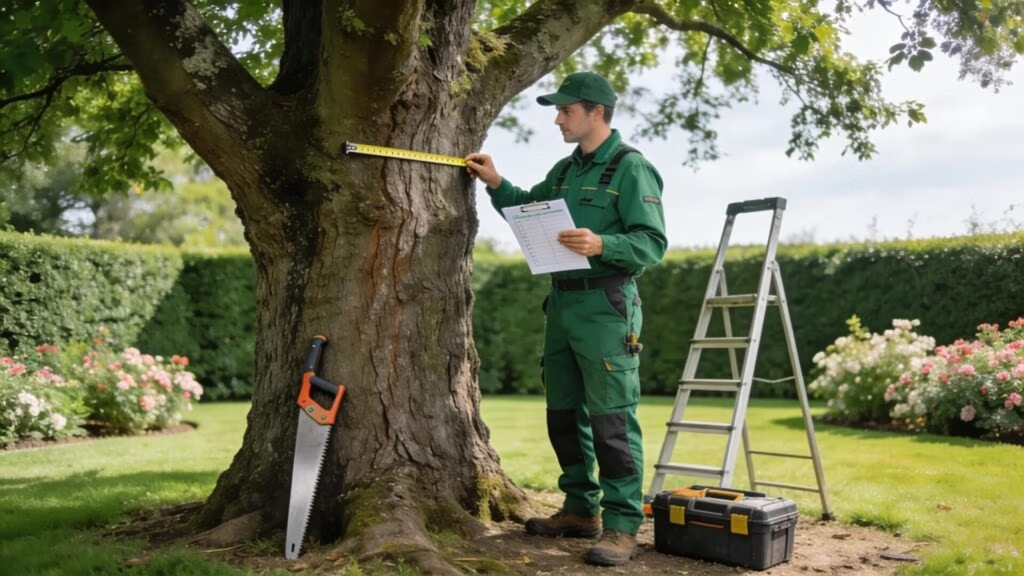
Certified arborists apply a systematic assessment protocol when preparing removal estimates. Relevant criteria include tree height and diameter, structural integrity, health indicators, site access, and surrounding target exposure. Arborists utilise established methodologies to quantify labor requirements, necessary equipment, and any ancillary services such as stump grinding or debris removal. Identified hazards are incorporated into the plan to ensure appropriate safety controls and realistic cost projections.
Such expert evaluations identify potential hazards prior to escalation and reduce liability exposure for the property owner.
Understanding Professional Tree Risk Assessments for Property Owners As trees age or decline due to pest infestation, pathogens, or environmental stressors, property owners or managers must establish acceptable risk thresholds and determine suitable mitigation strategies. Certified arborists support this process through professional risk assessments that quantify the probability of whole‑tree or component failure, assess consequence severity, and identify vulnerable targets. Tree risk assessment methods: A comparison of three common evaluation forms: ENH1226/EP487, 11/2013, AK Koeser, 2013
Costs for stump grinding and emergency tree removal vary according to site conditions. Stump grinding generally ranges from $120 to $400, influenced by stump diameter and accessibility. Emergency tree removal typically ranges from $500 to $2,500, reflecting the urgency, technical complexity, and potential hazards involved. Seasonal conditions and specific risk factors associated with the tree can further affect pricing, reinforcing the need for prompt professional assessment when hazards are present.
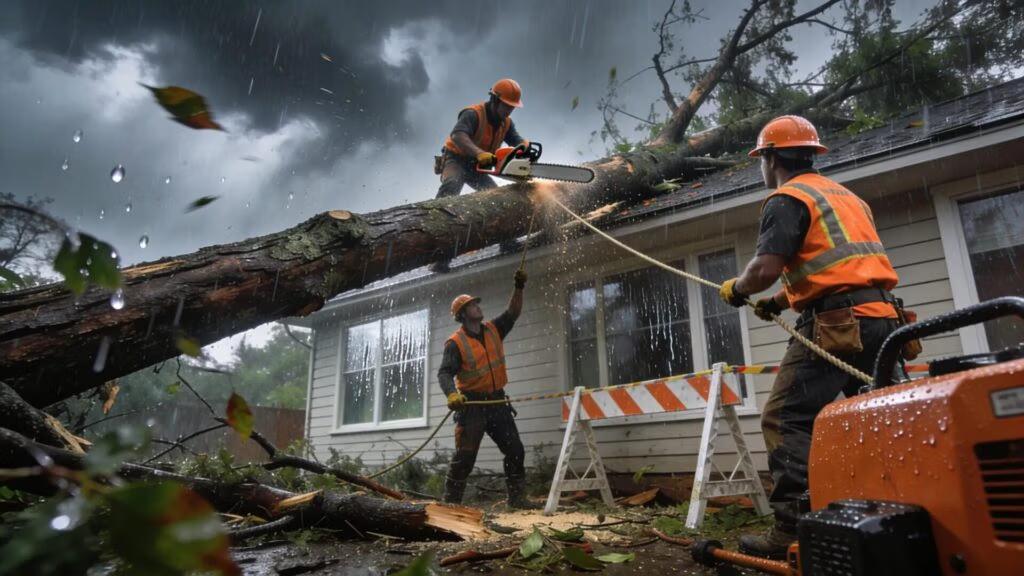
In emergency scenarios, tree removal operations prioritize safety and operational efficiency. Dunbar Tree Service deploys trained personnel equipped to respond rapidly to tree‑fall incidents, particularly during severe weather events. Response protocols are designed to limit additional property damage and remove hazards that threaten occupants or infrastructure. On arrival, crews conduct a structured assessment to determine the safest removal methodology and deploy appropriate equipment to execute the work in a controlled manner.
Managing high‑risk incidents requires an established understanding of risk perception and consistent application of safety standards to protect property and the public.
Managing Residential Tree Risk and Public Safety Where targets are present, tree failures can cause property damage, service interruptions, or risks to public safety. Various qualitative methodologies have been developed to provide a systematic framework for tree risk assessment and management. The consistency and accuracy of these methodologies, the assessed value of both the subject tree and its potential targets, and the risk perceptions and acceptance thresholds of evaluators and property owners all influence risk management outcomes. Risk assessment and risk perception of trees: A review of literature relating to arboriculture and urban forestry, RW Klein, 2019
Safety protocols are fundamental to emergency tree removal operations to protect workers, clients, and surrounding environments. Protocols include mandatory use of personal protective equipment (PPE), adherence to established operational procedures, and formal hazard recognition training for arborists. Compliance with applicable safety regulations and industry standards supports operational efficiency while reducing the likelihood of incidents during high‑risk removals.
Dunbar Tree Service provides emergency removal solutions for both residential and commercial properties. The organization maintains a multidisciplinary crew capable of addressing diverse site conditions and property types. Services emphasize rapid assessment, timely mobilisation, and solutions scaled to the specific operational and safety requirements of each client, thereby optimizing response effectiveness and resource allocation.
Engaging ISA Certified Arborists delivers technical benefits, including accurate diagnosis of tree health issues and selection of appropriate removal or remedial procedures. Certification indicates adherence to industry best practices, which helps protect property and supports the health of surrounding vegetation. Retaining certified professionals such as those at Dunbar Tree Service ensures that tree care follows established arboricultural standards and regulatory expectations.
Local regulations and permit requirements influence the conduct and scheduling of tree removal projects in Waukesha County. Compliance with municipal ordinances ensures legal execution and protects community and ecosystem standards. Permit procurement can extend project timelines and incur additional steps in project planning. Certified arborists provide value by navigating local regulatory frameworks and ensuring that work proceeds in accordance with applicable requirements.
Essential tree health and safety practices include routine preventive assessments to detect early signs of decline, application of correct pruning techniques, timely removals when indicated, and measures to protect adjacent vegetation. Responsible tree care integrates site‑appropriate cultural practices and adheres to community standards to maintain a safe environment for residential and commercial properties.
Customer testimonials combined with demonstrable local experience substantiate trust in Dunbar Tree Service. Positive client feedback documents the company’s service delivery and operational competence. Local experience provides familiarity with regional species, climatic conditions, and regulatory requirements. Prospective clients are encouraged to submit inquiries to obtain transparent information about processes and to evaluate the company’s capabilities.
Prior to tree removal, conduct a technical assessment of the tree’s condition and its proximity to structures, utilities, and landscape features. Determine whether the tree presents a safety hazard or causes material damage. Verify municipal permitting requirements. Also evaluate the tree’s ecological contributions such as shade provision, habitat value, and erosion control. Consultation with a certified arborist provides a professional determination based on practical and environmental criteria.
After tree removal, assess the health of remaining trees and implement cultural practices that support recovery and vigor. Ensure adequate light exposure, irrigation, and nutrient management. Schedule routine pruning and monitor for pests and pathogens. Apply mulch appropriately to improve soil moisture retention and structure. Retain a certified arborist for species‑specific recommendations and long‑term maintenance planning.
Environmentally responsible practices are available and include using climbing and hand‑work techniques to reduce soil compaction and collateral damage, minimizing disturbance to adjacent flora and fauna, and recycling removed wood into mulch or chips. Certified arborists prioritize methods that limit ecological impact while addressing safety and operational requirements.
Request proof of general liability insurance and workers’ compensation coverage when selecting a tree removal contractor. General liability protects property owners against damages that may occur during operations; workers’ compensation covers employee injuries. Verifying current insurance documentation confirms the contractor’s compliance with industry standards and reduces client exposure to potential liabilities.
Indicators of tree disease include discoloured or wilting foliage, visible fungal fruiting bodies, brittle or dead branches, bark splitting or peeling, and structural cracks in the trunk. When such symptoms are observed, engage a certified arborist for a diagnostic assessment. Early evaluation permits consideration of treatment options and informs decisions regarding removal when necessary.
Clients on a limited budget should obtain multiple written estimates to compare scope and cost. Seasonal promotions or scheduled maintenance programs can reduce expense relative to emergency removal. Performing preparatory site clearance where safe and feasible may lower labor costs. Discuss budget constraints with prospective contractors; many providers can propose scaled or phased solutions that align with financial limitations.
Selecting affordable tree removal services in Waukesha County enhances property safety while preserving landscape integrity. Engaging certified professionals such as Dunbar Tree Service ensures technical expertise and adherence to industry best practices. Prioritizing safety protocols and regulatory compliance contributes to efficient project execution. Contact Dunbar Tree Service to arrange an assessment and obtain a detailed estimate.