★ ISA-Certified Arborists · Serving Waukesha & Milwaukee County
★ ISA-Certified Arborists · Serving Waukesha & Milwaukee County
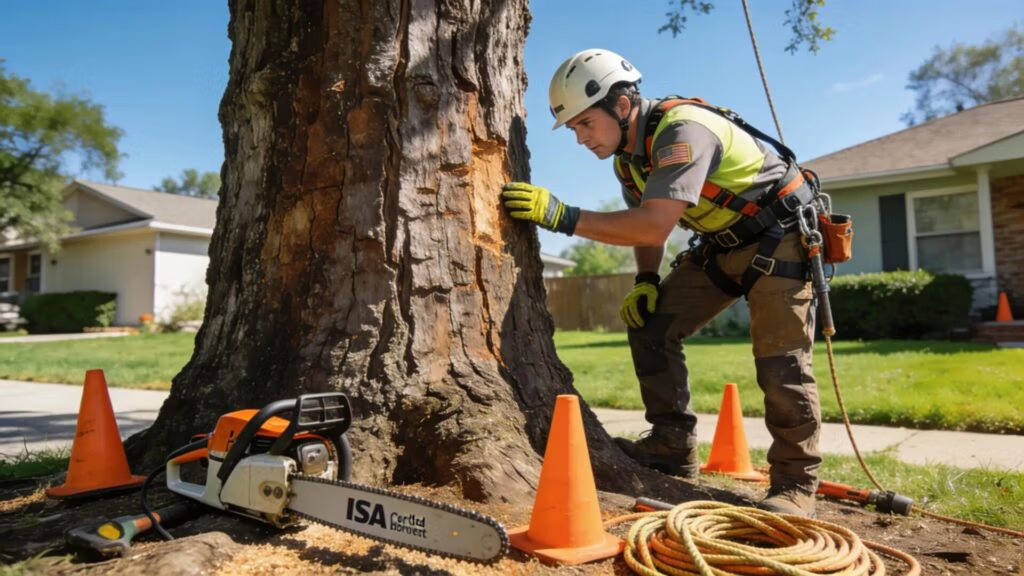
By Chris Dunbar, Owner of Dunbar Tree Service
Engaging an **ISA Certified Arborist** for tree removal provides verifiable benefits: hazard mitigation, adherence to regulatory requirements, and preservation of property aesthetics. Certified arborists apply technical expertise, industry-standard equipment, and formal procedures to assess risk, develop removal plans, and execute work in accordance with local codes. In Waukesha County, where municipal regulations and ecological considerations affect scope and permitting, employing certified professionals reduces legal exposure and improves operational outcomes. This article examines the advantages of hiring ISA-certified personnel, outlines the removal workflow, identifies cost drivers, and summarizes compliance considerations.
Certified arborists apply structured assessment protocols and validated inspection methods to determine tree stability and identify hazards that may necessitate removal.
The Role of ISA Certified Arborists in Professional Tree Risk Assessment Qualified arborists facilitate informed decision-making by conducting formal risk assessments that estimate the probability of whole or partial tree failure, quantify likely consequences, and identify potential targets. Standardised assessment frameworks guide practitioners through systematic tree inspection and documentation. Tree risk assessment methods: A comparison of three common evaluation forms: ENH1226/EP487, 11/2013, AK Koeser, 2013
ISA Certified Arborists provide expert tree removal services ensuring safety, compliance, and property aesthetics in Waukesha County.
Certified arborists conduct thorough risk assessments using standardized methodologies to evaluate tree hazards effectively.
Professional tree removal involves careful planning, safety protocols, and advanced equipment for precise and secure execution.
Tree removal costs vary based on tree size, species, location, accessibility, and emergency service requirements.
Emergency tree removal services in Waukesha typically incur higher costs due to urgency and resource demands.
Local regulations require permits for tree removal, and certified arborists facilitate compliance and streamline approval processes.
Post-removal care by arborists includes stump grinding, pruning, and long-term maintenance to promote landscape health.
Recognizing hazardous tree indicators like decay and instability helps property owners request timely emergency removal services.
Hiring ISA Certified Arborists ensures adherence to safety standards, legal requirements, and expert guidance throughout tree management.
Retaining an ISA Certified Arborist for **tree removal** confers measurable advantages: certified training, adherence to accepted arboricultural practices, and documented competency in risk evaluation and mitigation.
Expertise and Training: ISA Certified Arborists have pursued extensive education and practical experience that equip them with the necessary skills to manage tree health and safety.
Safety Adherence: These professionals are well-versed in safety protocols, reducing risks for themselves and property owners during the tree removal process.
Long-term Care Advice Post-Removal: Certified arborists can offer valuable guidance on tree care and maintenance following the removal, ensuring the health of remaining trees.
Dunbar Tree Service functions as a specialised provider of ISA Certified Arborist tree removal in Waukesha County, delivering services that combine technical competence with operational reliability.
ISA certification denotes completion of a formal credentialing process and adherence to recognized professional standards in arboriculture. Certified practitioners maintain current knowledge of applicable local regulations and environmental requirements, which facilitates compliant project execution and reduces administrative risk.
The application of systematic assessment protocols enables arborists to produce consistent safety ratings across species and site conditions, improving comparability and decision quality.
Understanding Tree Risk Assessment Methodologies for Property Safety Tree risk assessment methodologies have been developed to assist arborists in conducting rigorous and systematic inspections of trees and the potential hazards they pose to persons or property. While these methodologies share several commonalities, they also exhibit key distinctions that may influence the decision-making processes of those employing them. Evaluating the reproducibility of tree risk assessment ratings across commonly used methods, RW Klein, 2023
Professional tree cutting services contribute to property value through improved landscape condition and by ensuring compliance with local tree protection ordinances, thereby reducing exposure to fines and liability. Proactive management also decreases the probability of damage from structural failure and falling debris.
Certified arborists execute tree removal via a defined workflow: condition assessment, documented risk analysis, removal planning, implementation with appropriate rigging and equipment, and post-operation site remediation. Each phase emphasizes safety, regulatory compliance, and minimization of collateral impact.
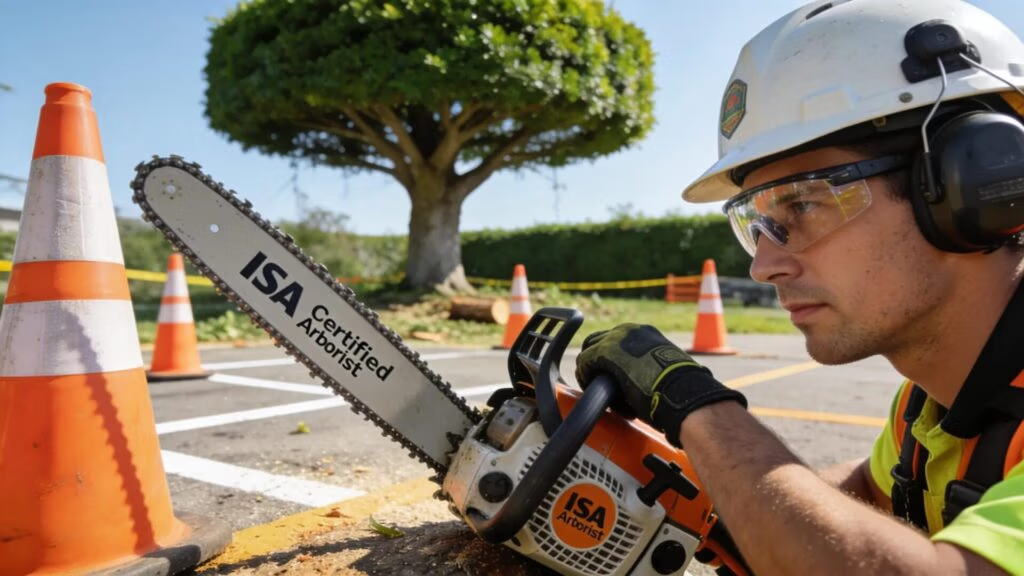
Arborists implement formal safety protocols, including mandatory personal protective equipment (PPE), pre-job hazard analysis, exclusion zones, and emergency response planning. These measures protect personnel and adjacent structures throughout the removal operation.
Certified arborists deploy industry-standard equipment—chainsaws, rigging systems, cranes, and specialised cutting tools—and apply controlled rigging and directional felling techniques to manage loads and protect assets during complex removals.
Cost determinants for hazardous tree removal include tree dimensions and species, site accessibility, proximity to structures and utilities, required equipment, and whether the service is provided as an emergency response.
Tree Size and Species Considerations: Larger trees and certain species that are more difficult to remove can significantly increase costs due to the complexity of the job and the equipment needed.
Location and Accessibility: If a tree is in a hard-to-reach area, labor costs may rise to account for additional time and effort needed to safely conduct the removal.
Emergency Service Pricing Differences: Emergency removals typically carry higher price tags due to the immediacy of the situation, necessary resources, and readiness to respond outside normal business hours.
Removal costs increase with tree height and canopy spread, restricted access, and structural defects that require specialised rigging or additional personnel. Proximity to buildings or infrastructure elevates mitigation measures and therefore total expense.
Maintaining an urban canopy requires assessing the cost-benefit of routine maintenance versus the higher expenses associated with emergency interventions and failure mitigation.
Essential Costs and Benefits of Professional Arboricultural Maintenance This document provides a comprehensive literature review regarding the expenditures associated with both the implementation and neglect of standard arboricultural practices commonly integrated into municipal budgets, including planting, pruning, removal, and integrated pest and disease management. It also offers a preliminary analysis of costs related to less-quantified tree care practices, such as risk assessment and mitigation, irrigation, mulching, fertilization and nutrient management, and structural support systems including staking and cabling. The costs of maintaining and not maintaining the urban forest: A review of the urban forestry and arboriculture literature, 2015
Yes. Emergency tree removal typically incurs premium pricing due to the requirement for rapid mobilisation of trained crews, specialised equipment, and extended operational hours to address imminent hazards.

Timely identification of hazardous trees is critical for occupant safety and asset protection. Specific indicators warrant expedited evaluation and potential emergency removal.
Indicators of Hazardous Trees: Homeowners should be vigilant for signs of decay, damage, or instability which might signal the need for emergency removal.
Risk Assessment Strategies: Regular assessments by certified arborists can help in early detection of potential hazards, allowing for timely intervention.
Emergency Response Timelines: Knowing how quickly arborists can respond to emergencies can inform property owners’ decisions when choosing a service provider.
Visual indicators that a tree may require urgent removal include extensive decay, a significant proportion of dead crown material, large trunk fissures, fungal conks at the root collar, or pronounced leaning attributable to structural compromise. These conditions increase the probability of failure and warrant professional assessment.
Response intervals for emergency **tree removal** typically range from several hours to a day, subject to crew availability and situational complexity. Clear communication with the service provider informs expected mobilisation time and operational constraints.
Municipal regulations influence permitted removal practices, protected-species designations, and permit requirements; understanding these requirements reduces project delays and non-compliance risk.
Residential and commercial removals frequently require tree removal permits where ordinances protect specific species, heritage trees, or regulated zones. Permit submission commonly includes a site plan, species identification, and justification for removal.
Engaging ISA Certified Arborists streamlines permitting because certified professionals are familiar with local submission requirements, can prepare technical documentation, and provide objective assessments that support regulatory review and approval.
Following removal, certified arborists provide services to restore and sustain landscape health, including stump grinding, selective pruning of retained trees, soil amendment, and recommendations for species selection and replanting.
Importance of Ongoing Tree Health Assessments: Routine assessments can catch issues before they escalate, ensuring the health of remaining trees.
Services Like Stump Grinding and Tree Pruning: Arborists often offer stump grinding to eliminate remnants and pruning services to promote tree vigor.
Long-term Care Strategies Explained: Implementing a structured maintenance plan aids in sustaining a vibrant landscape, improving property aesthetics.
Targeted pruning interventions—crown thinning, removal of deadwood, and corrective cuts—improve light penetration, reduce wind resistance, and limit pathogen entry points, thereby extending tree longevity and decreasing future failure risk.
Recommended follow-up actions include stump grinding, soil testing and amendment, and replanting with appropriate species to restore canopy cover and ecological function. These measures support landscape recovery and long-term site stability.
Prepare the site by removing movable obstructions such as vehicles and outdoor furniture, and by notifying adjacent property owners if work occurs near property lines. Confirm specific site requirements with the contractor and ensure any required permits are obtained prior to mobilization to avoid operational delays.
Indicators warranting removal include substantial trunk damage, significant cracks, a notable lean, and cases where over 25% of the crown is dead. Presence of fungal growths at the base or root collar also signals advanced decay. A formal risk assessment by an ISA Certified Arborist provides an objective determination.
Small, non-hazardous trees may be removed by homeowners; however, larger or structurally compromised trees present significant safety and liability risks and should be managed by qualified professionals who possess the necessary equipment, training, and regulatory knowledge.
The process begins with a risk assessment to define the removal plan, followed by establishment of safety controls and exclusion zones. Removal may employ sectional dismantling, rigging, or crane support depending on complexity. The crew will perform debris removal and may offer ancillary services such as stump grinding upon completion.
Post-removal landscape maintenance includes soil assessment and amendment, selection and planting of appropriate replacement species, and routine care—watering, mulching, and fertilisation—to promote establishment and long-term health. Consult the arborist for a site-specific maintenance schedule.
Tree removal may occur year-round; however, dormant-season operations in late autumn and winter often facilitate clearer structural assessment due to reduced foliage and can minimize disturbance to breeding wildlife. Local climate and project-specific factors should inform timing decisions.
Verify that contractors carry both general liability insurance to cover potential property damage and workers’ compensation to cover employee injuries. Request current certificates of insurance prior to engagement to confirm coverage limits and validity.
Engaging an ISA Certified Arborist for tree removal in Waukesha County ensures adherence to professional safety standards, regulatory compliance, and effective hazard mitigation. Certified practitioners provide technical assessments, documented removal plans, and post-operation recommendations that support landscape health and asset protection. Contact a certified provider to review options, confirm permitting requirements, and schedule a consultation through the company website.