★ ISA-Certified Arborists · Serving Waukesha & Milwaukee County
★ ISA-Certified Arborists · Serving Waukesha & Milwaukee County
By Chris Dunbar, Owner of Dunbar Tree Service
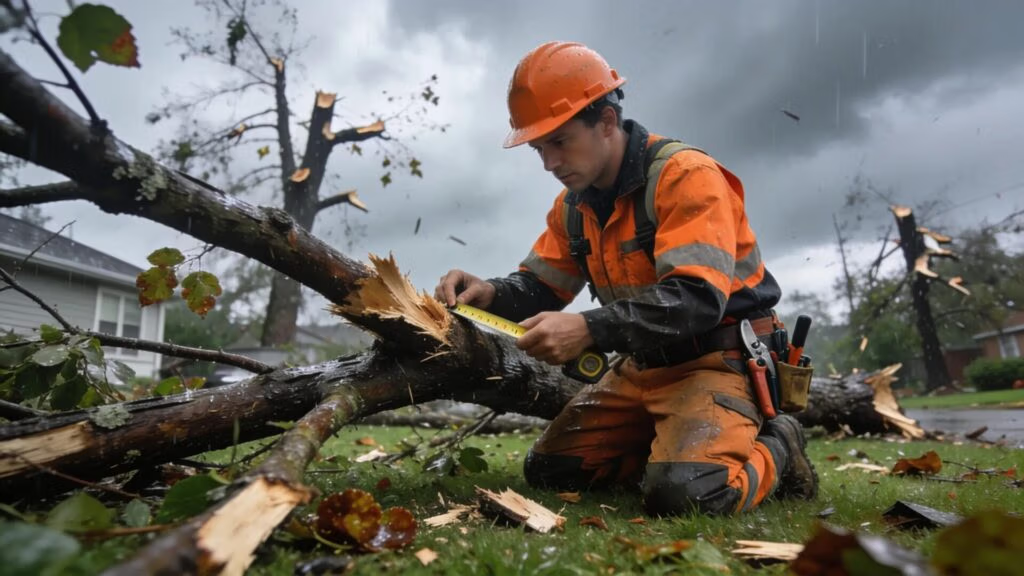
Storm events frequently produce fallen branches that create immediate safety hazards and require prompt removal. In Waukesha, property owners must manage storm debris to protect structures and public safety. This guide summarizes professional tree-cleanup service options, expected cost ranges, applicable safety protocols, and the role of expert “**tree** services like Dunbar **Tree** Service” in post-storm remediation. The information supports objective decision-making during weather-related emergencies and outlines preventative practices to reduce future risk.
Professional emergency tree cleanup services in Waukesha address fallen branches and storm damage efficiently and safely.
Emergency tree removal prevents further property damage and safety hazards by addressing structurally compromised trees promptly.
Storm damage cleanup involves debris removal, risk assessment, and restoring property safety and aesthetics.
Costs for storm debris cleanup range from $200 to $1,500, while emergency tree removal costs vary between $300 and $1,800.
Homeowners should verify insurance coverage as many policies often cover emergency tree cleanup expenses.
Safety guidelines emphasize professional risk assessments to avoid accidents during storm-damaged tree management.
Preventative tree care, including regular pruning and health assessments, reduces the risk of fallen branches during storms.
Dunbar Tree Service offers 24/7 emergency response and ISA-certified arborist evaluations for effective storm damage mitigation.
Timely cleanup of fallen branches mitigates environmental hazards, property damage, and personal injury risks.
Professional tree services provide critical operational capacity to remove fallen branches and manage debris following storms. Services commonly include “**emergency tree removal**” and comprehensive storm-damage cleanup intended to restore safety and function. Understanding the available service scope enables property owners to select appropriate interventions that protect occupants and structural integrity.
Emergency tree removal addresses fallen or structurally compromised trees that present imminent risk of failure after storm events. The service typically comprises hazard evaluation, stabilization when feasible, and safe removal to prevent secondary damage. Delays increase the probability of additional property loss and personal injury. Engaging qualified professionals ensures operations are performed with suitable rigging, equipment, and safety controls to minimize risk to people and adjacent structures.
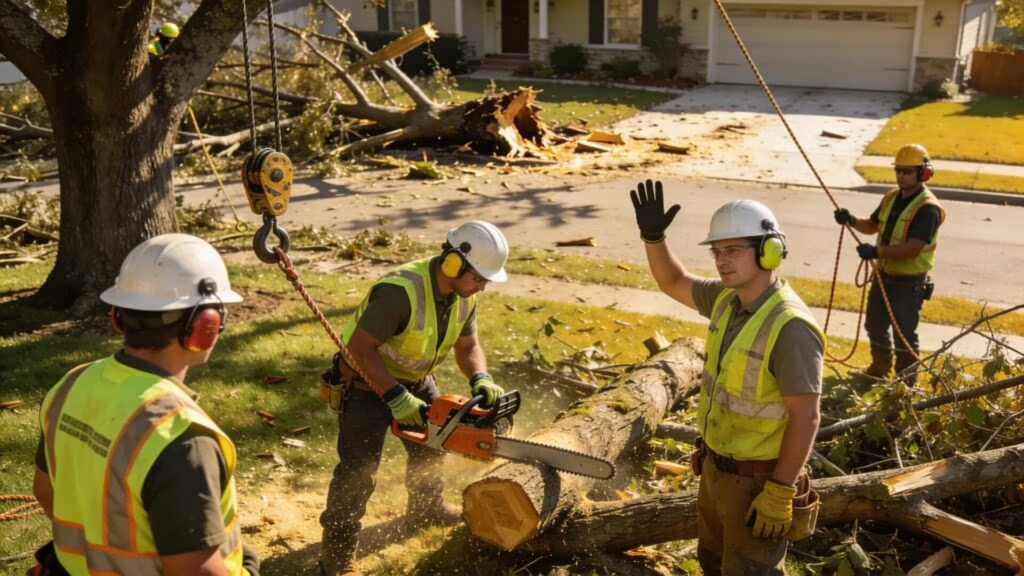
Storm damage cleanup follows a systematic protocol: assess structural impacts to trees and property, remove fallen branches and debris, and restore site safety and cleanliness. A comprehensive cleanup reduces environmental hazards and returns the landscape to a functional condition. Utilising professional services ensures execution by trained personnel, allowing property owners to focus on broader recovery tasks.
Cost estimates depend on scope, tree size, site access, and required services. Typical ranges are $200–$1,500 for standard storm debris cleanup and $300–$1,800 for emergency tree removal, contingent on tree condition and operational complexity. Homeowners are advised to confirm coverage options with their insurance provider.
Service | Cost Range | Insurance Coverage |
|---|---|---|
Storm damage cleanup | $200 – $1,500 | Often covered |
Emergency tree removal | $300 – $1,800 | Typically covered |
Hazardous tree removal | $500 – $2,500 | Usually covered |
From a financial perspective, contracting professional services can reduce long-term costs and liability compared with unmanaged or improperly executed debris removal.
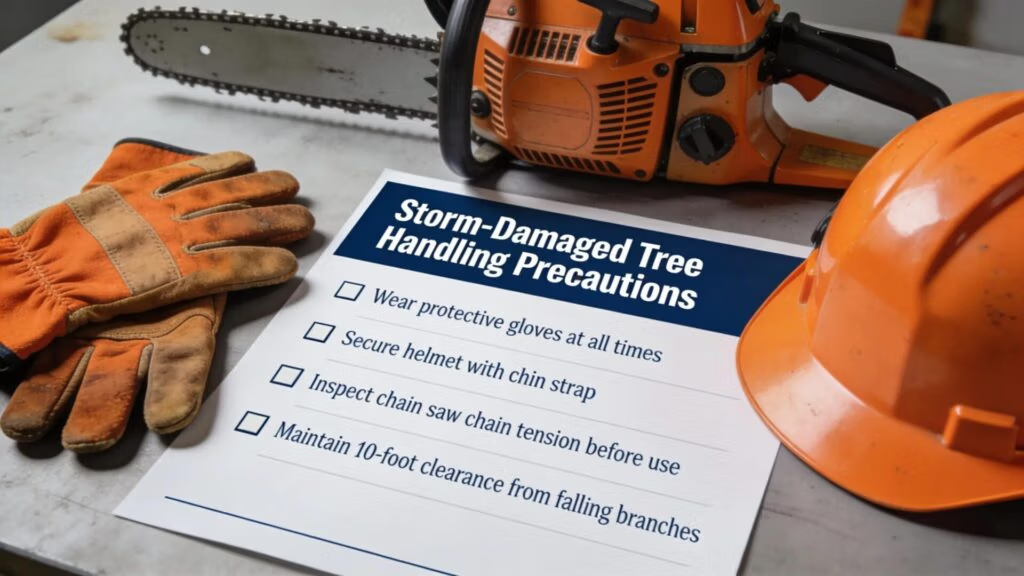
Prioritize safety when addressing storm-damaged trees. Conduct an initial visual inspection from a safe distance to identify unstable trees or hanging limbs. Engage certified arborists for comprehensive risk assessments and mitigation planning; do-it-yourself attempts may increase the likelihood of injury or additional property damage. Retain professional services to ensure compliance with industry safety standards during removal operations.
Arborist evaluations establish a technical framework to assess tree stability and likely failure mechanisms following severe weather.
Professional Tree Risk Assessment for Storm-Damaged Properties Experienced arborists conduct professional risk assessments that quantify the probability of whole- or partial-tree failure, the potential consequences of such failure, and the specific targets at risk. Multiple risk-assessment methodologies exist to guide professionals through a systematic inspection process.Tree risk assessment methods: A comparison of three common evaluation forms: ENH1226/EP487, 11/2013, AK Koeser, 2013
Fallen branches and trees create measurable risks including personal injury, structural damage, and environmental impacts. Unaddressed hazards increase liability exposure and can obstruct drainage or harm local ecosystems. Prompt, professional removal reduces these risks and protects both residents and the environment.
High winds, soil saturation from heavy precipitation, and snow or ice loading impose mechanical stresses that can cause limb or whole-tree failure. Identifying these failure modes is necessary to implement targeted risk-reduction measures.
Delay in debris removal elevates safety risks and the potential for increased property damage. Decaying material may attract pests and accelerate structural deterioration, raising the probability of subsequent failures. Extended exposure of debris also increases accident risk for occupants and passersby; timely professional remediation mitigates these hazards.
Dunbar Tree Service implements a structured protocol for emergency cleanup in Waukesha, emphasizing rapid response and comprehensive risk assessment. Their 24/7 emergency availability provides on-site evaluation, hazard mitigation, and removal operations intended to restore safety and functionality in an efficient manner.
Industry-standard assessment protocols are applied to evaluate damage severity across affected properties and to inform appropriate mitigation actions.
Understanding Systematic Post-Storm Tree Inspections Tree risk-assessment methodologies enable arborists to perform rigorous evaluations of trees and their hazard potential. Although methodologies share core elements, differences in approach can influence assessment outcomes and professional decision-making. Evaluating the reproducibility of tree risk assessment ratings across commonly used methods, RW Klein, 2023
The standard workflow for branch removal and debris cleanup comprises the following phases:
Initial Site Assessment: Experts evaluate the damage, identifying hazardous conditions.
Branch Removal: Using specialized equipment, the team removes fallen branches safely.
Post-Removal Cleanup: All debris is cleared away, ensuring a safe environment.
This methodical sequence reduces operational risk and supports comprehensive landscape restoration.
ISA certification indicates conformity with recognized industry standards for safety and risk assessment. Certified arborists possess technical knowledge of tree physiology and failure mechanisms. Certification supports delivery of expert evaluations, documented safety measures, and reliable condition assessments that improve cleanup effectiveness.
Cost determinants include tree size, site access, and response urgency. Emergency removal typically ranges from $300 to $1,800 depending on operational complexity. Homeowners should consult their insurance provider to verify coverage terms related to storm-damage removal.
In Waukesha, storm debris removal typically ranges from $300 to $1,500. Price variability reflects service complexity, site access, and labor requirements. Obtain detailed written estimates from providers to establish accurate cost expectations.
Homeowners’ insurance policies frequently cover emergency tree cleanup when damage results from covered perils such as storms or high winds. Review policy documentation and consult the insurance agent to determine applicable limits and exclusions.
The following proactive measures reduce the likelihood of storm-related branch failures:
Regular Health Assessments: Conducting seasonal evaluations can help identify weak trees or branches at risk.
Proper Pruning Techniques: Ensuring healthy growth through “proper **pruning**” promotes stability and reduces limb breakage.
Tree Support Systems: Installing support systems such as cabling or bracing can help sustain vulnerable trees.
Implementation of these practices strengthens tree resilience, reduces failure probability, and supports long-term landscape safety.
Regular pruning removes structurally deficient or diseased limbs, improving canopy balance and reducing failure risk under meteorological stress. Pruning contributes to long-term structural integrity and reduces decay progression, thereby enhancing storm resilience.
Property owners should schedule certified-arborist risk assessments before storm seasons. Periodic evaluations identify hazardous trees and enable timely mitigation. Annual or condition-based assessments maintain landscape health and reduce storm-related risks.
Client feedback for Dunbar Tree Service typically notes rapid response and professional execution of cleanup operations, resulting in effective restoration of affected properties.
Client testimonials emphasize prompt response and consistent cleanup quality. Homeowners report reduced operational disruption resulting from timely service availability.
Multiple case studies document Dunbar Tree Service’s storm-mitigation interventions across Waukesha communities. These instances demonstrate the company’s ability to execute comprehensive cleanup and restore safety within expected operational timeframes.
After a storm, perform a visual inspection from a safe distance to identify fallen branches and damaged trees. Do not approach unstable trees or hanging limbs. Note indicators such as trunk cracks or root-plate uplift and document visible hazards affecting your property and adjacent parcels. Engage a certified arborist for a comprehensive risk assessment and recommended remedial actions.
Select providers with ISA certification and verifiable credentials. Review customer references and ratings, confirm insurance coverage, and request multiple written estimates to compare scope and cost. A reputable contractor will disclose methodologies, safety protocols, and equipment deployed for emergency cleanup.
Removing small debris may be feasible for some property owners; however, professional services are recommended for emergency scenarios. Certified arborists possess specialised equipment and training to manage hazards such as utility lines and unstable trees. Inappropriate techniques can cause injury or additional property damage and create liability exposure. Assess risks before undertaking any DIY remediation.
If a tree originating on your property falls onto neighboring land, consult local statutes regarding liability. Typically, removal responsibility rests with the property owner of origin. Communicate with the affected neighbor and arrange for professional removal. Notify your insurance provider as required to determine coverage for any damages.
Regular maintenance improves tree health and storm resilience. Pruning and health assessments reduce the likelihood of limb failure, can enhance property value and aesthetics, and often decrease frequency and cost of emergency interventions over time.
Schedule certified-arborist assessments at least annually, preferably before storm seasons. Properties with mature or high-density tree cover may require more frequent inspections. Regular evaluations enable timely mitigation and reduce the likelihood of storm-related damage.
Waukesha may require permits for certain tree removals, particularly for large specimens or those in regulated zones. Consult municipal regulations to confirm permitting requirements. Many professional tree services are experienced with local permitting processes and can assist with applications to ensure compliance.
Engaging professional tree services ensures safe and efficient hazard mitigation following storm events. Systematic debris removal and risk assessment protect property and reduce liability exposure. Ongoing maintenance further enhances landscape resilience against future storms. Schedule an assessment with a certified arborist to safeguard your property.