★ ISA-Certified Arborists · Serving Waukesha & Milwaukee County
★ ISA-Certified Arborists · Serving Waukesha & Milwaukee County
By Chris Dunbar, Owner of Dunbar Tree Service
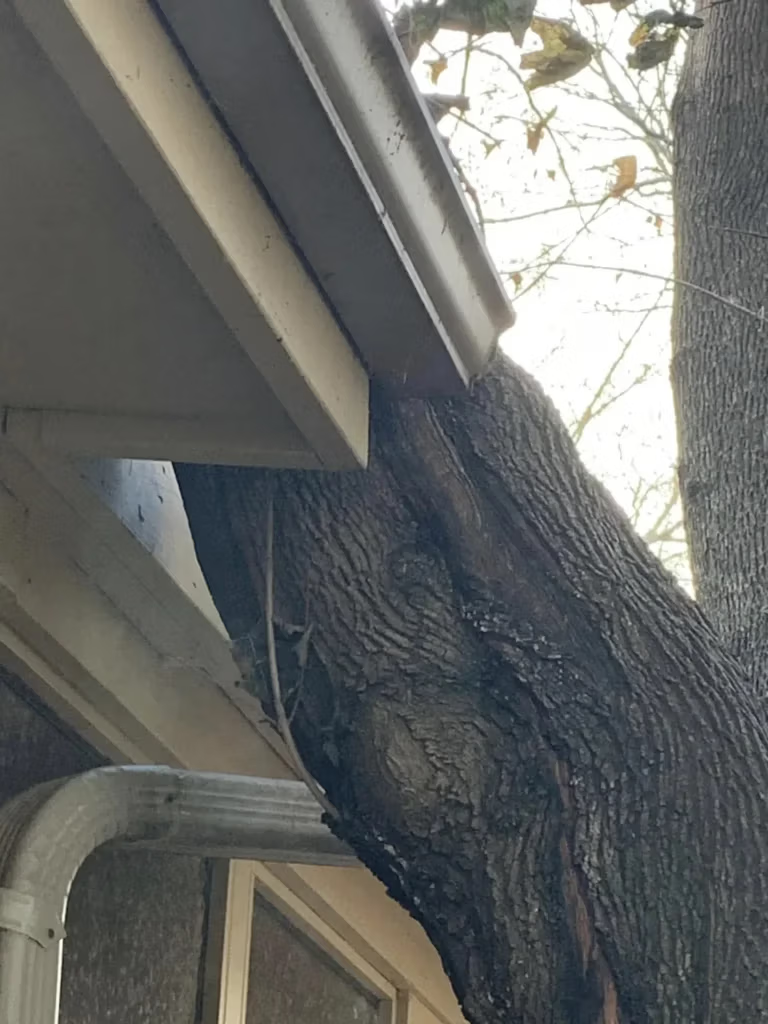
Tree removal protects safety and preserves your landscape. In Pewaukee, WI, certified arborists are essential when trees pose structural risks or show disease. This article explains why ISA certification matters, outlines service and emergency options, and summarises pricing and complementary services so homeowners can decide with confidence.
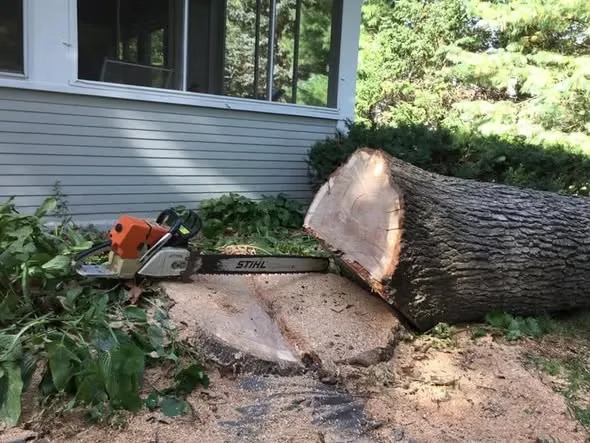
ISA Certified Arborists perform structured health assessments, choose appropriate removal methods, and apply safety controls that reduce risk to people and property. Their expertise minimises landscape damage and improves project efficiency, often lowering overall costs compared with ad-hoc work.
Certification signals technical knowledge, ethical practice, and continuing education in arboriculture.
ISA Arborist Certification & Professional Credentialing
Professional credentialing is the process of obtaining certification or licensure that validates an individual’s knowledge, skills, and competence against industry-accepted standards and ethical guidelines. The International Society of Arboriculture (ISA) administers professional arborist certification and related credentials.
Motivations and barriers of professional certification for tree workers, JS Gordon, 2005
For reliable removal, Dunbar Tree Service staffs ISA Certified Arborists who follow documented safety protocols and operational standards.
Scheduled pruning and periodic inspections identify defects and disease early, reducing branch failure and the need for emergency removal. Well-maintained trees improve site safety, curb appeal, and long-term landscape value.
Hiring certified arborists provides clear benefits:
ISA certification requires examination and continuing education, keeping arborists current on safety procedures, assessment methods and best practices. Certified professionals use standardised methods and compliant removal techniques to protect workers and property.
Dunbar Tree Service’s certified arborists combine decades of field experience with ongoing professional development and consistent safety measures. Customer feedback highlights reliable, quality work. For immediate assistance, contact 262-271-0189.
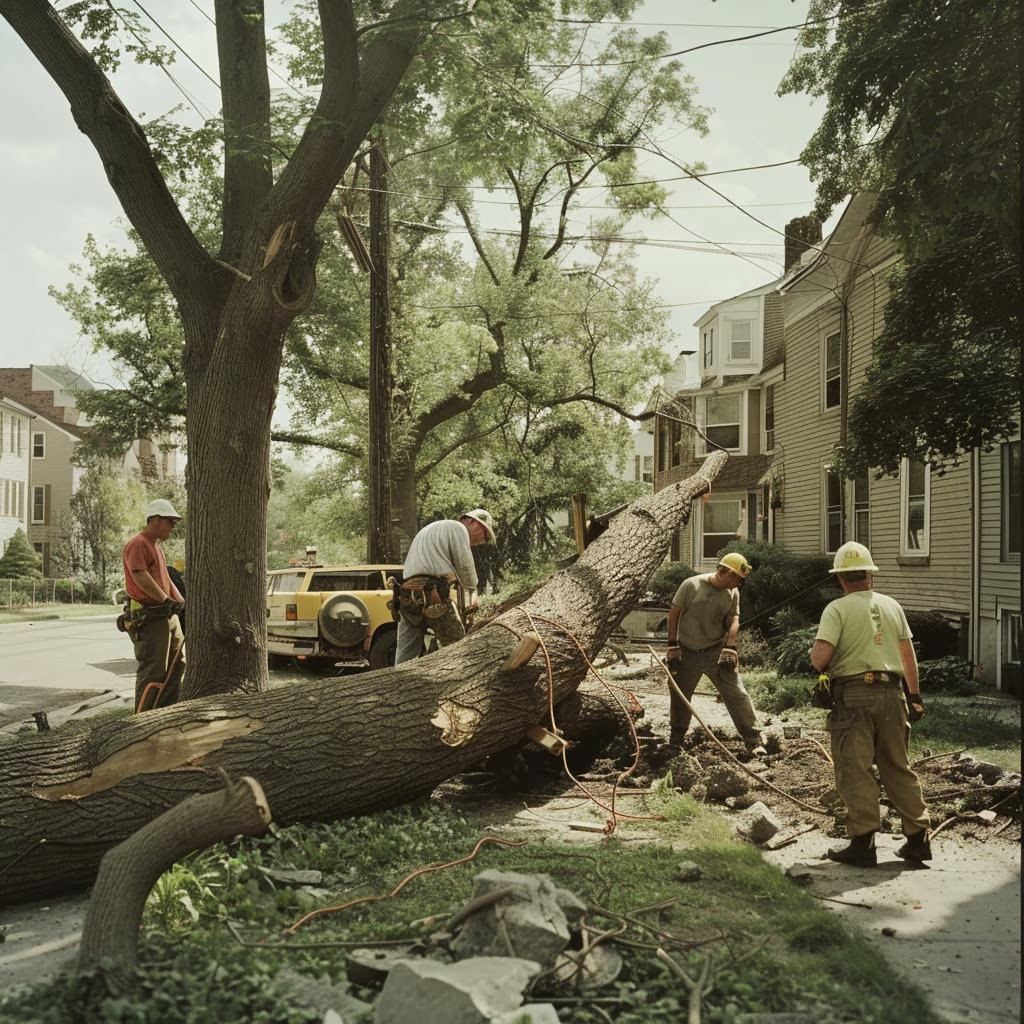
Emergency removal focuses on rapid site assessment and controlled execution. Arborists evaluate hazards, select the safest removal technique, and deploy crews and rigging to stabilise the area while minimising additional risk.
Systematic tree risk assessment is a core part of preventing property damage and public safety threats in urban forestry.
Tree Risk Assessment for Property Safety
In the presence of a target, tree failures have the potential to damage property, disrupt services, or threaten public safety. Worldwide, several qualitative methods have been developed to provide a systematic approach for tree risk assessment and management.
Risk assessment and risk perception of trees: A review of literature relating to arboriculture and urban forestry, RW Klein, 2019
Immediate removal is needed when trees pose imminent danger, show acute structural instability (severe lean or trunk failure), or suffer destructive storm damage that makes the site unsafe.
Emergency work follows a set protocol: perform a formal risk assessment, use appropriate PPE, and apply safe rigging and work practices to protect personnel and adjacent property. We offer emergency tree services if needed.
Homeowners can select cost-managed options that fit site conditions and budgets. Pricing reflects a cost–benefit approach weighing tree risks against the benefits trees provide to the property.
Tree Risk Management & Cost-Benefit Analysis
There is a need for any risk management process involving trees, not only to assess the risk, but to weigh the benefits provided by trees by a risk-based cost-benefit analysis. Tree risk assessors should rely on benchmarks to ensure that their assessment is not outside of the realms of reality or scientific rigor.
Review of QTRA and risk-based cost-benefit assessment of tree management, MG Stewart, 2013
| Service Type | Cost Range | Description |
|---|---|---|
| Standard Tree Removal | $300 to $1,500 | Removal based on size and complexity. |
| Stump Grinding | $75 to $300 | Grind stumps to ground level. |
| Emergency Tree Removal | $500 to $2,000 | Rapid response for imminent threats. |
The table summarises typical service categories and price ranges to help homeowners choose the right option for site and budget.
Pricing depends on tree diameter and condition, access and site complexity, equipment and crew needs, and whether service is routine or emergency. These variables affect labour, time on site, and safety measures required.
Many providers offer written estimates and financing to spread costs. A site inspection and detailed quote let homeowners compare scope, safety measures and price before deciding.
Complementary services support tree health and landscape function: pruning to correct defects, stump grinding to remove hazards, and emergency care to stabilise or remove damaged trees after events. For more information, visit emergency tree services.
Professional stump grinding and trimming reduce trip hazards, remove structural defects, limit pest habitat, improve sightlines, and support overall tree vigour and safety. tree trimming
Targeted maintenance and removals reduce failure points and visible decline, creating a safer site, enhancing curb appeal, and supporting property marketability and long-term value.
Verify ISA or similar credentials, confirm insurance, read testimonials, and get multiple written quotes that specify scope, safety practices and cleanup.
Look for persistent decline, extensive deadwood, fungal fruiting bodies, major trunk defects or an unsafe lean. A certified arborist can assess and recommend retention, pruning or removal.
Timing varies by species, but late fall and winter dormancy often simplifies removals. Urgent hazards should be addressed immediately regardless of season.
Removal affects habitat, microclimate and soil. Responsible practice—selective removal, proper disposal and recommended replanting—mitigates ecological impacts and aids recovery.
Local ordinances may require permits for significant or protected trees. Check municipal rules or consult a certified arborist before work starts.
Remove debris, consider stump grinding to enable replanting, inspect for exposed roots, and consult a landscaper or arborist to plan restoration or replacement planting.
Chris Dunbar is the owner of Dunbar Tree Service and an ISA Certified Arborist with over 20 years of experience in professional tree care. His commitment to industry standards, safety, and ethical arboriculture practices ensures quality service for homeowners in Pewaukee, WI. Chris’s expertise includes tree assessments, removals, and comprehensive landscape care, backed by continuous professional education and a dedication to preserving both safety and the natural environment.