★ ISA-Certified Arborists · Serving Waukesha & Milwaukee County
★ ISA-Certified Arborists · Serving Waukesha & Milwaukee County
By Chris Dunbar, owner of Dunbar Tree Service
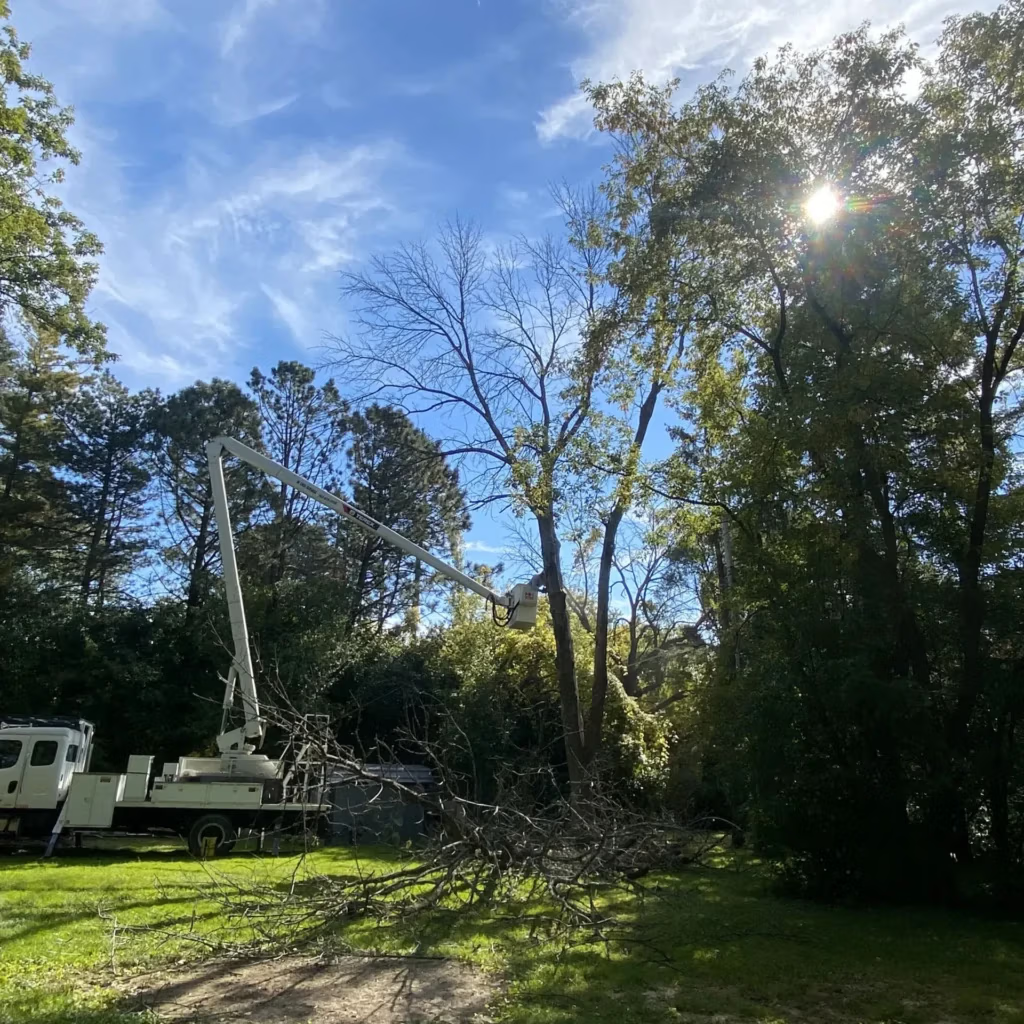
Dunbar Tree Service in Franklin, WI provides professional tree care—pruning, emergency removal, and health assessments. This article summarizes core services, ISA credentials, recommended pruning windows, and emergency response procedures for homeowners and commercial clients.
Dunbar provides targeted pruning to improve tree form, vitality, and safety, following accepted arboricultural standards.
Correct cuts remove dead or diseased wood, limit pests and storm damage, and support long-term health.
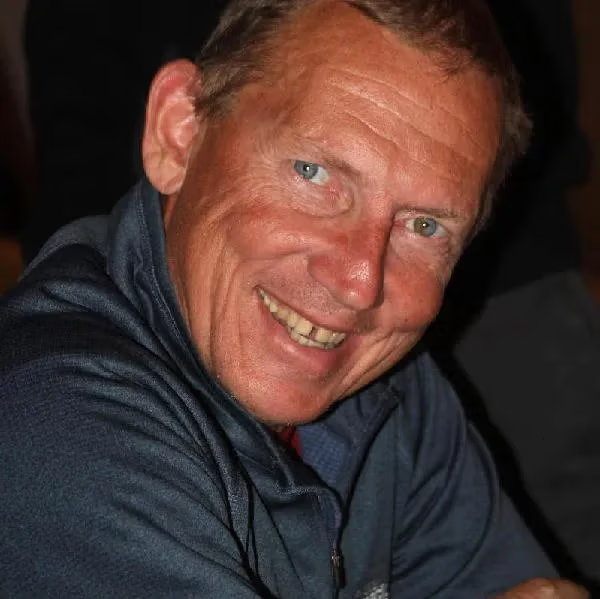
ISA certification verifies technical knowledge of tree biology, pruning standards, and safety. Certified arborists complete continuing education to stay current and make evidence-based recommendations for maintenance or mitigation.
Research on certification highlights both the value and the barriers professionals encounter when seeking these credentials.
Professional Arborist Certification & Credentials
The International Society of Arboriculture (ISA) confers and manages professional arborist certification as well as other arborist credentials. However, many communities, such as in the southern United States, have few if any credentialed commercial tree care professionals. This study explores the motivations and barriers commercial tree care workers place on professional arborist certification.
Motivations and barriers of professional certification for tree workers, JS Gordon, 2024
Late winter to early spring is generally best in Franklin: dormancy improves branch visibility, and pruning before active growth promotes faster wound closure and reduced stress. Species and site conditions can alter timing—consult an arborist for specifics.
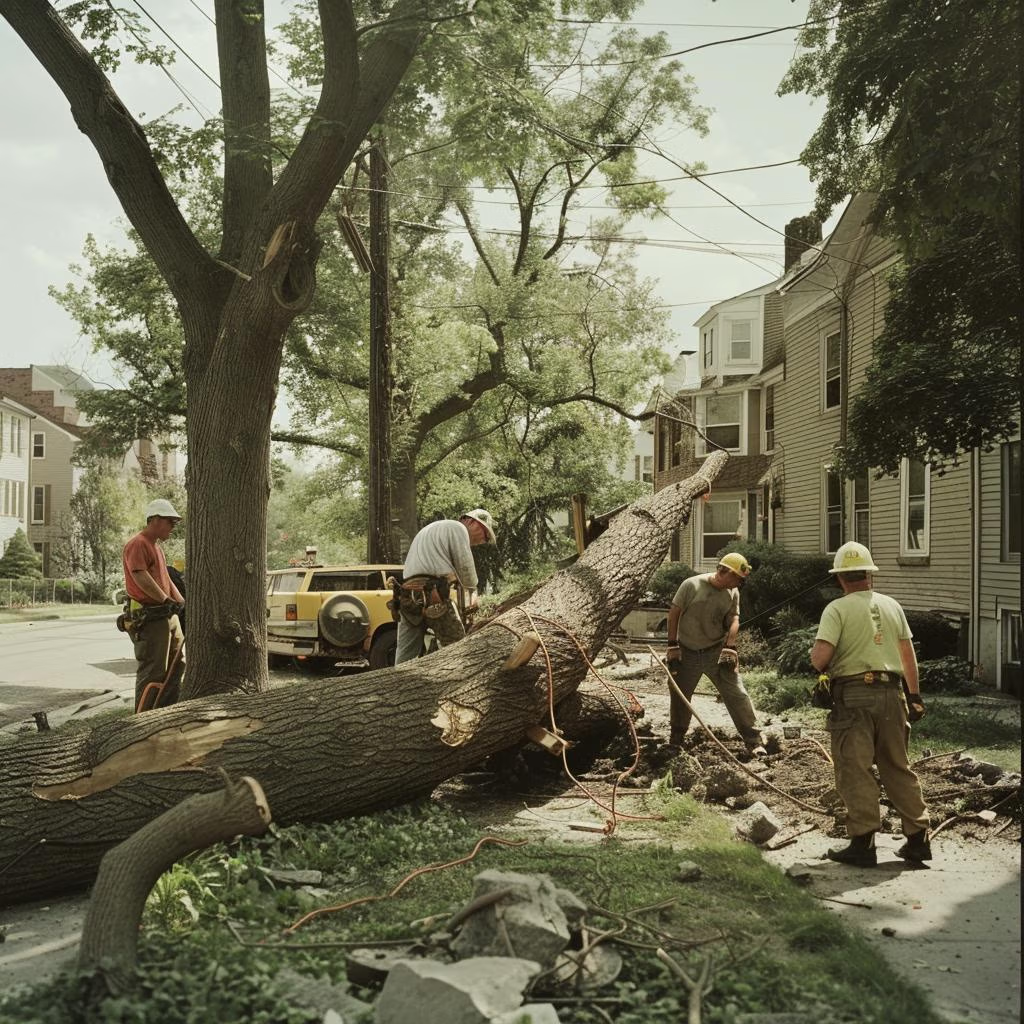
Dunbar maintains rapid-response readiness after storms or sudden failures. Crews secure the site, evaluate hazards, and remove or stabilize trees using appropriate equipment to limit further damage.
Typical sequence:
Teams prioritise safe, efficient mitigation to reduce risk to people and property.
Safety underpins all emergency work. Dunbar performs site evaluations and follows operational standards before any removal.
These measures protect crews, residents, and nearby structures while minimising environmental impact.
After storms, Dunbar rapidly evaluates trees for removal, stabilization, or monitoring. Quick triage reduces secondary damage and guides recovery planning.
Dunbar offers scalable programs for homes and businesses, tailored to property size and operational needs.
Plans are configured for each property’s management needs and regulatory considerations.
Commercial clients receive documented maintenance schedules, risk mitigation, and regulatory alignment to minimise disruptions to operations.
Routine assessments detect issues early, provide professional recommendations, and support preventative actions that reduce long-term costs and safety risks.
Dunbar combines transparent estimates, workmanship guarantees, and local species knowledge to deliver dependable removals at predictable cost.
Primary cost drivers are tree size/height, site accessibility, and tree condition; each affects crew size, time, and equipment needs.
Understanding these variables helps homeowners plan and budget appropriately.
Dunbar balances cost control with professional standards, offering flexible pricing, consistent service quality, and strong customer focus to ensure predictable outcomes.
Clients receive a clear scope of work and expectations before any job begins.
Act promptly: look for discoloured foliage, abnormal growths, or dead limbs and contact an ISA-certified arborist for diagnosis and treatment recommendations. Early action improves recovery chances and limits spread.
Monitor regularly, water during dry spells, apply mulch, and remove small dead branches safely. Avoid disturbing root zones and schedule periodic professional assessments.
Some species (e.g., Ash or Maple) are more vulnerable to pests or drought. Choose species suited to local conditions and follow species-specific maintenance guidance from an arborist.
Look for extensive dead canopy, major trunk damage, fungal growth at the base, severe lean, or exposed roots. Trees affecting utilities or structures may also need removal—seek a professional assessment.
For large sites, Dunbar creates an inventory-driven maintenance programme with scheduled inspections, prioritized hazard mitigation, and repeat contracts to manage tree health across the property.
An arborist inspects trunk and branch structure, root-zone condition, and soil/moisture factors, then provides a written report with prioritized recommendations.
Homeowners can remove small dead branches safely, but significant pruning or structural work should be done by certified arborists to avoid long-term damage and safety risks.
Chris Dunbar is the owner and lead ISA-certified arborist of Dunbar Tree Service. With over two decades of professional experience in tree care, Chris combines expert knowledge with a commitment to safe, sustainable, and high-quality services. His ISA certification ensures up-to-date technical skills and adherence to the best industry practices. Learn more about Chris and the Dunbar Tree Service team on their About Us page.