★ ISA-Certified Arborists · Serving Waukesha & Milwaukee County
★ ISA-Certified Arborists · Serving Waukesha & Milwaukee County
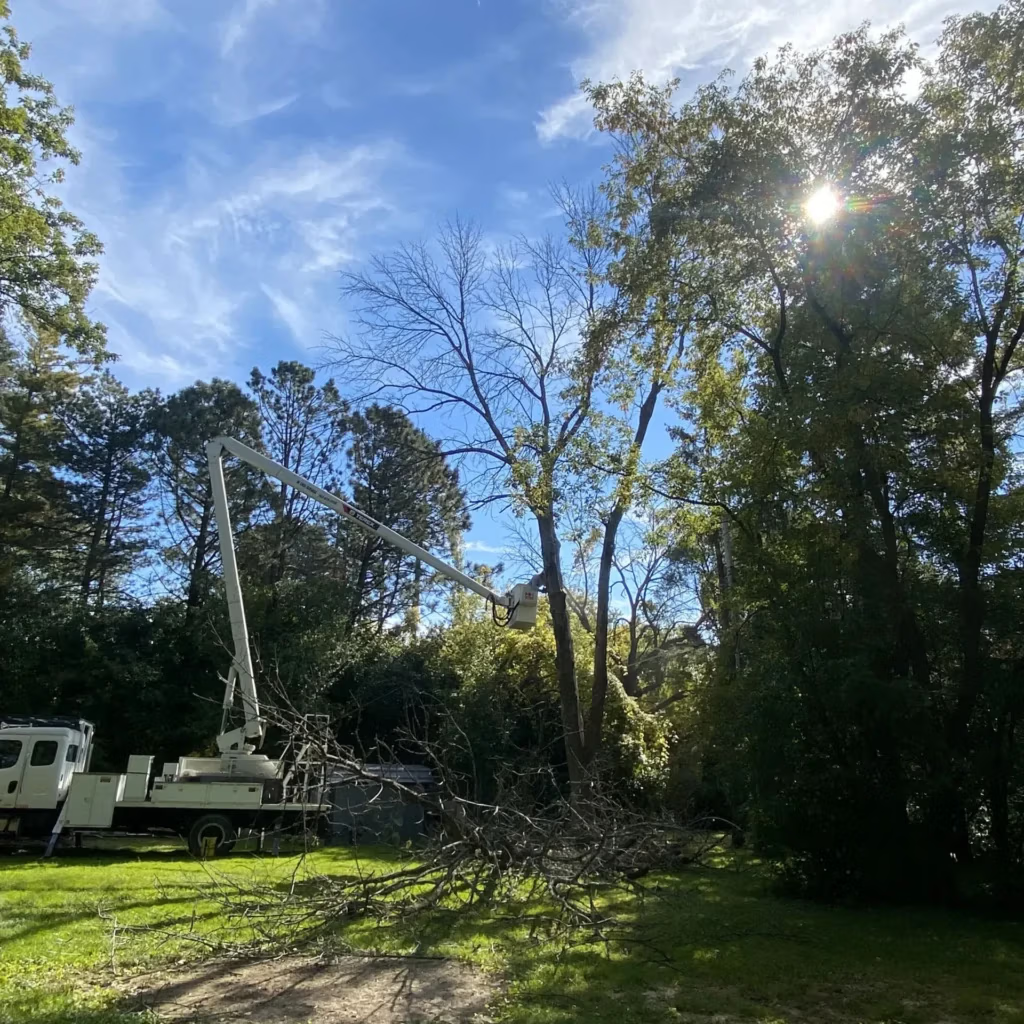
By Chris Dunbar, Owner of Dunbar Tree Service
Trees on residential and commercial properties need regular, professional care to remain safe and attractive. Dunbar Tree Service in Pewaukee, WI provides trimming, removals, and emergency response. Below we summarize services, certification benefits, cost drivers, emergency criteria, and commercial care options in Waukesha County.
Dunbar provides certified trimming for homeowners and businesses in Pewaukee, focusing on targeted pruning to improve tree form and safety.
All work is performed with species-appropriate practices and industry-standard pruning techniques.
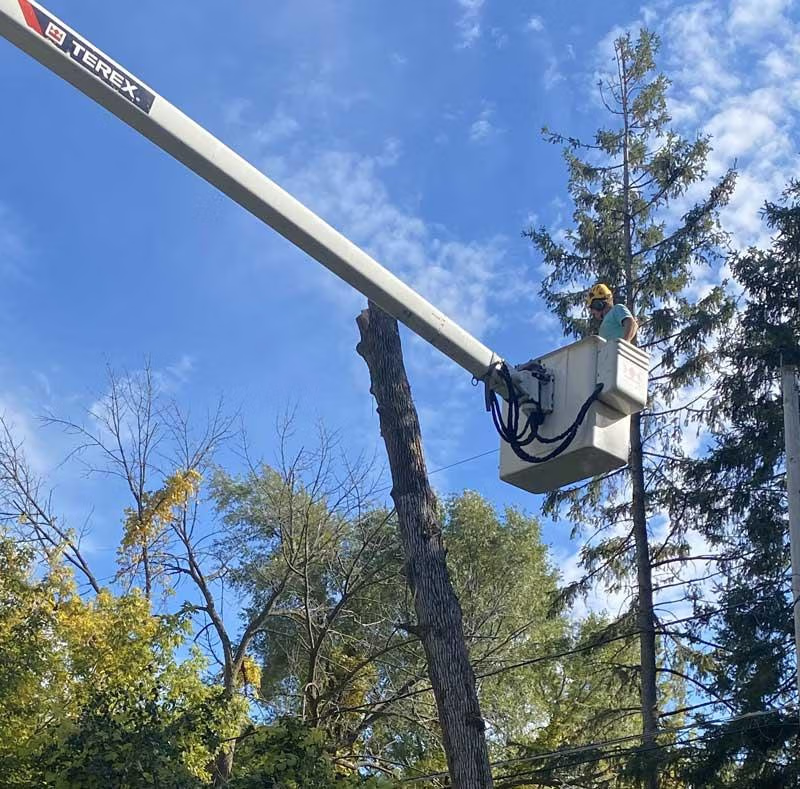
ISA certification denotes formal training in tree biology, pruning standards, and safe work practices. Certified arborists are trained to protect tree health while reducing risk during operations.
Advantages of hiring certified professionals include:
Certified arborists are recognized for maintaining high industry standards and delivering work that conforms to accepted best practices.
Benefits of ISA Certified Arborists
The ISA and TREE Fund report (2015) documents public awareness of the benefits of certified arborists compared with non-certified practitioners and discusses how committees can influence communication of research quality and quantity.
International Society of Arboriculture (ISA) and TREE Fund, 2015
Regular pruning maintains structure, reduces failures, and improves appearance.
Scheduled pruning reduces long-term maintenance needs and helps prevent costly failures.
Pruning is fundamental to professional arboriculture and directly affects both the health and structure of trees.
The Importance of Professional Tree Pruning for Health & Structure
Pruning is central to arboriculture. As Alex Shigo (1989) noted, pruning can be one of the best or one of the worst actions an arborist performs; it directly affects tree health and structural form.
The research foundation to tree pruning: A review of the literature, N Matheny, 2010
Removal pricing depends on several core factors. Understanding them helps you budget and plan.
Deciding to remove trees requires balancing risk mitigation against the loss of valuable natural assets.
Factors Influencing Tree Removal Decisions & Risks
This paper examines decision-making practices for existing trees in development areas, identifying factors that influence removal decisions and noting the trade-offs between avoiding risks and preserving valuable trees.
Decision-making for tree removal in urban development: insights from local authorities in Malaysia, K Hassan, 2024
Additional local drivers include emergency response needs, permit requirements, and insurance coordination.
Dunbar uses a safety-first workflow: evaluate, plan, and execute with trained staff and professional equipment.
These controls reduce disruption and help complete work to professional standards.
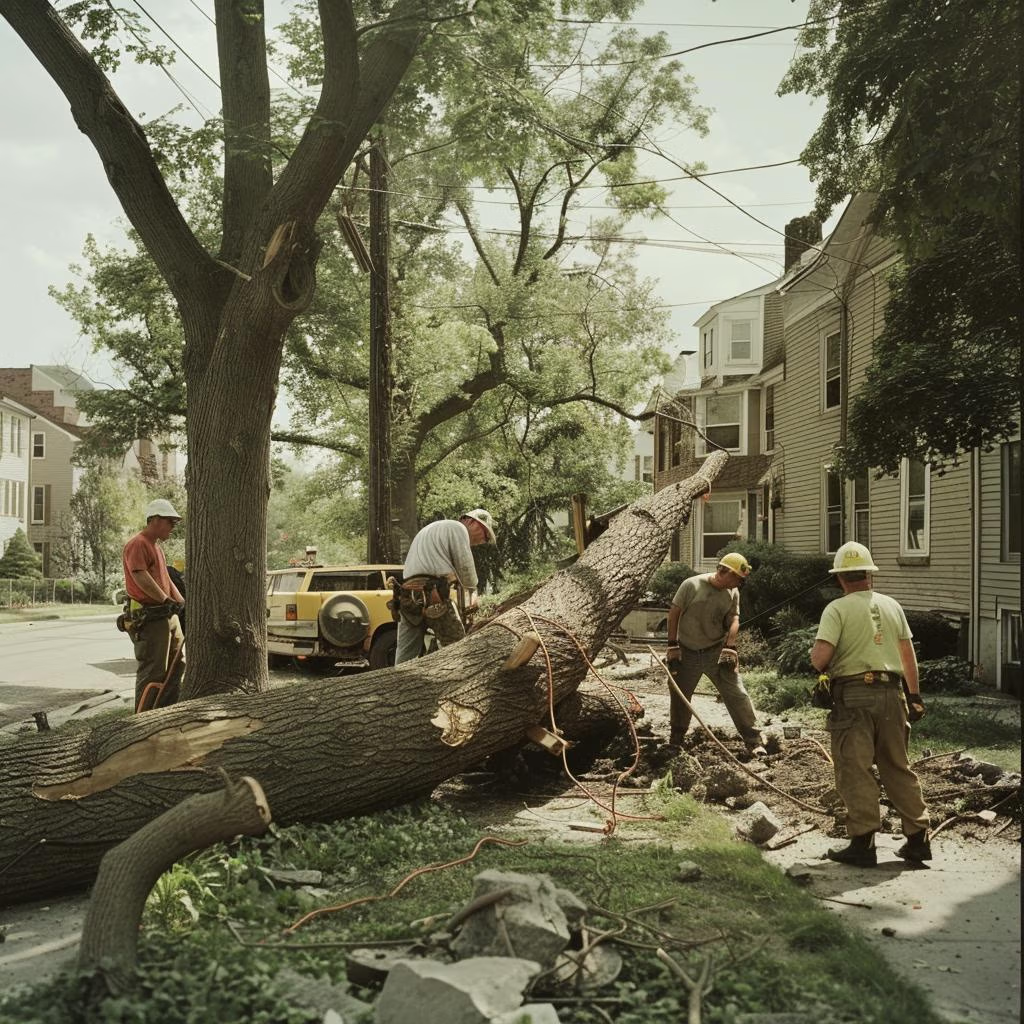
Request emergency removal when a tree poses an immediate threat to life or property. Common scenarios are:
Prompt identification and rapid response reduce further damage and liability.
After storms, inspect trees for instability and hazards that need quick attention.
Timely action limits secondary damage to property and people.
Dunbar offers 24/7 response, on-site assessment by experienced arborists, and help with insurance documentation when needed. Rapid triage and safe removal are priorities.
Dunbar supports businesses with scheduled and on-demand tree care to maintain safety and landscape value.
Services are scaled for commercial sites to reduce operational disruption.
Large projects rely on planning, risk assessment, and proper rigging to control hazards and protect assets.
Commercial providers must follow safety protocols, local regulations, and training standards to protect workers and the public.
Compliance and training maintain service quality and reduce liability.
Check ISA or equivalent certification, insurance, references, written estimates, and clear safety protocols before hiring.
It varies by species and age: young trees may need annual shaping; mature trees often need pruning every 3–5 years. A certified arborist can advise a schedule.
Look for major decay, large trunk splits, severe lean, or irreversible pest and disease issues. If the tree threatens structures or safety, consult an arborist promptly.
Light pruning of small branches is possible for homeowners, but use a professional for major cuts, work at height, or when tree health or safety is at risk.
Timing depends on species: many deciduous trees are pruned in late winter to early spring; flowering trees after bloom; evergreens late spring to early summer. Ask an arborist for species-specific timing.
Clear vehicles and fragile items, inform neighbors if work affects shared spaces, and keep pets and children away. Confirm the removal plan with your provider.
Consider stump grinding, plan for replacement planting or landscaping, and monitor the site for erosion or soil compaction. Engage a landscaper if remediation is needed.
Chris Dunbar is the owner of Dunbar Tree Service and a certified arborist with the International Society of Arboriculture (ISA). With over 20 years of hands-on experience in professional tree care, Chris brings expert knowledge in tree biology, safe pruning, and removal practices to every project. His commitment to quality and safety ensures that residential and commercial properties in Pewaukee receive the highest standard of arboricultural services. Learn more about Chris and the team at our About Us page.