★ ISA-Certified Arborists · Serving Waukesha & Milwaukee County
★ ISA-Certified Arborists · Serving Waukesha & Milwaukee County

By Chris Dunbar, Owner of Dunbar Tree Service
Tree stump grinding is a standard arboricultural service for removal of unwanted stumps from residential and commercial properties. The procedure delivers measurable benefits, including improved site aesthetics and reduced safety hazards. In Waukesha, property owners frequently seek affordable stump grinding estimates from reputable providers such as Dunbar Tree Service. This guide examines the factors that influence stump grinding costs in Waukesha and provides the information required to obtain accurate estimates.
This article addresses the factors that influence stump removal pricing, applicable local regulations, typical grinding methods, and procedures to request precise estimates. Understanding these elements enables informed decision-making when selecting stump grinding services.
Tree stump grinding in Waukesha improves landscape safety and aesthetics by removing unwanted stumps efficiently.
Stump grinding costs vary from $100 to $500 based on stump size, accessibility, and tree type.
Additional pricing factors include stump condition, extra services like debris removal, and emergency service needs.
Local regulations and permits can increase stump grinding costs due to compliance and environmental standards.
The stump grinding process involves site assessment, specialized equipment use, and thorough post-grinding cleanup.
Certified arborists provide expert stump grinding services that ensure safety, quality, and long-term landscape health.
Emergency stump grinding services in Waukesha offer rapid response but typically incur higher fees.
Professional stump grinding prevents pests, enhances property appearance, and can reduce future landscaping expenses.
Free, transparent stump grinding estimates are available from local companies, online directories, and community recommendations.
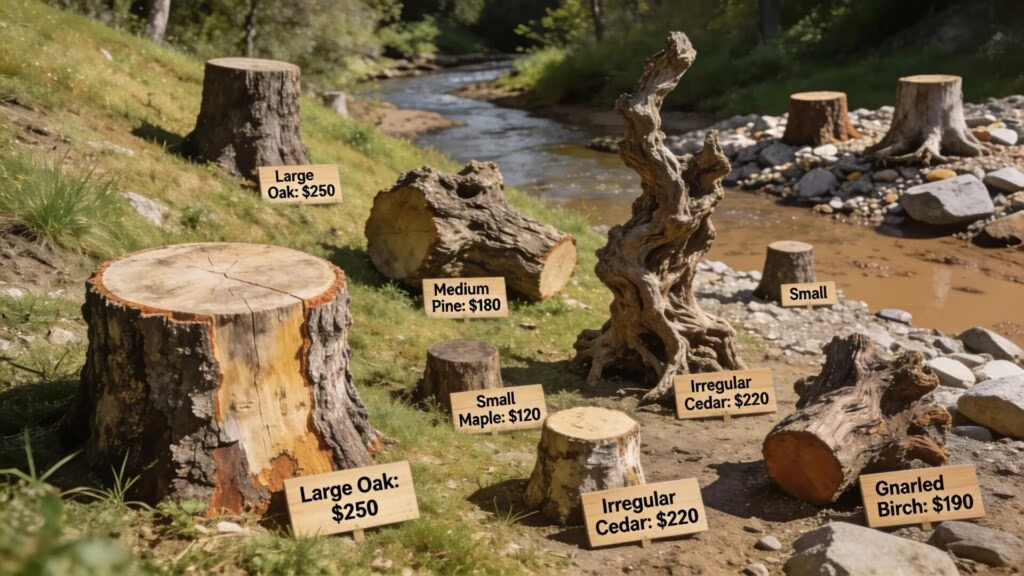
Multiple variables affect stump grinding costs in Waukesha. Identifying these variables supports accurate estimation and effective budget planning.
Cost Factor | Description | Influence on Pricing |
|---|---|---|
Size of the stump | Larger stumps require more labor and time. | Directly impacts time and equipment needed. |
Accessibility issues | Hard-to-reach stumps may incur additional charges. | Affects labor costs and time efficiency. |
Type of tree | Different tree species vary in density. | Denser wood requires more effort to grind. |
Typical estimates for stump grinding in Waukesha range from $100 to $500 per stump, contingent on the factors above. Larger diameters or limited access commonly increase costs toward the upper range. This framework clarifies expected pricing and service scope.
Research indicates physical attributes—notably tree diameter and stump volume—significantly determine labor and equipment requirements for removal.
An Analysis of Stump Removal Cost Variables by Tree Diameter
Participants were surveyed on costs for tree extraction and stump removal across five size classifications. The analysis also considers community ash densities and the economic impact potential of emerald ash borer (Agrilus planipennis) in four Midwestern states (2011).
Stump removal pricing depends on specific components that are not always apparent to customers, including stump condition, optional ancillary services, and emergency service requirements.
Condition of the Stump: Severely decayed or damaged stumps may require extra work and thus increase costs.
Additional Service Options: Options such as debris removal or soil filling after grinding can also affect the final price.
Emergency Service Factors: If stump grinding services are required on short notice, expect to incur additional fees.
For example, standard stump removal costs can range from $200 to $600 depending on these variables. Provide service providers with all relevant site details to ensure accurate estimates.
Local regulations significantly influence overall stump grinding costs in Waukesha. Compliance with applicable legal requirements reduces the risk of unanticipated expenses.
Permit Requirements: Some localities require permits for tree removal, which can lead to added costs. Fees range from $50 to several hundred dollars, depending on the location and extent of the work involved.
Impact of Environmental Regulations: Compliance with environmental standards can necessitate additional measures during the stump grinding process, further affecting pricing.
Possible Additional Expenses: Not adhering to these regulations can result in fines, indicating the importance of choosing a compliant service provider.
Familiarity with local regulations facilitates budgeting and ensures the project complies with legal and environmental standards.
Stump grinding follows a defined sequence of steps designed to deliver efficient and effective results.
Site Assessment Steps: Before grinding begins, professionals will conduct a site assessment to evaluate any obstacles and hazards. This ensures safety and efficiency throughout the process.
Equipment Used in Grinding: The process utilizes a specialized stump grinder to chew through the wood. Companies like Dunbar Tree Service employ state-of-the-art equipment to achieve the best results.
Cleanup Procedures After Grinding: Post-grinding cleanup is essential. Professionals will often handle debris removal and fill in the hole left by the stump to restore the landscape.
Understanding the process clarifies expected timelines and underscores the value of professional services in achieving consistent results.
Selecting affordable stump grinding services in Waukesha is facilitated by local resources. Options include the following:
Local Tree Care Companies: Several companies specialize in stump grinding and offer free estimates and consultations. These services often provide competitive pricing tailored to your budget.
Online Directories: Websites and online platforms allow you to compare local services, customer reviews, and pricing.
Community Recommendations: Asking neighbors or community members can yield valuable leads on reliable stump grinding services at reasonable prices.
These resources assist in identifying qualified providers and comparing service offerings and pricing.
Select providers that employ certified arborists. Certified professionals possess technical knowledge of tree health and management, ensuring stump work is conducted safely and effectively.
Built-in Expertise: Arborists are trained to understand the intricacies of tree care, which includes stump management. Their expertise can prevent future landscaping issues.
Safety Measures: A certified arborist adheres to safety regulations that can mitigate hazards during stump removal, leading to smoother project execution.
Quality Assurance: Working alongside professionals ensures high-quality workmanship and adherence to best practices.
Engaging services such as Dunbar Tree Service provides assurance regarding safety and operational efficacy.
Approaches to stump grinding differ between commercial and residential contexts.
Scope of Work: Commercial services often handle larger stumps and extensive projects, necessitating advanced equipment and personnel. Residential services typically focus on smaller jobs and individual customer needs.
Pricing Structures: Pricing may differ considerably between the sectors due to the scale and complexity of projects.
Service Timeframes: Commercial jobs may require longer lead times and extensive workforce involvement, while residential services can often be scheduled quickly.
Understanding the distinctions helps you choose the most suitable option for your project’s scale.

Emergency conditions may necessitate urgent stump grinding. Awareness of available options supports timely mitigation.
Same-Day Services: Some companies offer same-day services for urgent cases, ideal for instances where stumps pose an immediate hazard.
Rapid Response Teams: Specially trained teams are typically dispatched for emergency situations, ensuring quick and effective action.
Cost Considerations: While emergency services provide convenience, they often come with additional costs that should be factored into your budget.
In urgent situations, engage professional emergency tree services to mitigate risks promptly.
Identifying triggers for emergency stump grinding assists in reducing landscape hazards.
Post-Storm Situations: Following severe weather conditions, uprooted stumps can lead to dangerous conditions that require immediate attention.
Pest Infestation: Stumps attracting pests or disease should be removed quickly to prevent broader environmental issues.
Safety Hazards: Any stumps obstructing foot traffic or presenting tripping risks warrant immediate service.
Understanding these triggers ensures timely interventions that improve landscape safety.
Emergency stump grinding typically carries higher fees than standard services. This pricing differential reflects multiple contributing factors.
Urgency of Service: The need for immediate action typically commands a premium. Companies often charge extra for rapid response times.
Increased Labor Costs: Emergency services may require additional personnel or extended work hours, which can drive up costs.
Specialized Equipment: Some emergency scenarios may necessitate more complex machinery that can incur added expenses.
Awareness of these differences supports accurate budgeting and operational planning.
Investment in professional stump grinding delivers environmental and economic benefits.
Promotes Landscape Health: Proper stump removal prevents pest infestations and encourages healthy plant growth by removing decaying wood that can harbor diseases.
Safety Improvements: Removing stumps minimizes tripping hazards and improves the overall aesthetics of your property.
Cost Savings: Regular maintenance can potentially save money in the long run by avoiding more extensive landscaping issues down the line.
These outcomes demonstrate the value of professional services in maintaining landscape health and optimizing long-term maintenance costs.
Stump removal contributes to outdoor health and safety through several mechanisms.
Prevention of Pests and Diseases: Decaying stumps attract insects and can harbor diseases that threaten other plants in your garden.
Improved Aesthetics: Removing stumps enhances the visual appeal of your landscape, creating a cleaner and more organized appearance.
Enhanced Accessibility: Clearer walking paths free of hazards promote safety for family, visitors, and pets.
Addressing these factors yields a healthier landscape and a more functional, presentable environment.
Engaging certified arborists for stump grinding can produce measurable long-term cost savings.
Expert Insights: Arborists bring expertise that helps identify potential issues before they necessitate costly repairs or other services.
Quality Work: Professional services reduce the need for future corrections due to poor workmanship, which can save additional expenses.
Long-Term Prevention: Regular services contribute to overall landscape health, thereby avoiding significant costs associated with larger issues.
Contracting certified professionals ensures efficient stump management and reduces the need for corrective work, yielding future cost avoidance.
When evaluating long-term maintenance costs, compare strategic investment in professional arboricultural services with expenses associated with neglected or deferred landscape care.
Budgeting for Arboricultural Maintenance: Stump Removal and Operational Costs
This synthesis reviews literature on costs of active and deferred maintenance for municipal tree care, including planting, pruning, removal, and integrated pest and disease management.
The costs of maintaining and not maintaining the urban forest: A review of the urban forestry and arboriculture literature, J Vogt, 2015
Obtaining reliable, no-cost stump grinding estimates is essential for planning landscaping projects.
Local Companies: Many local services offer free estimates through online requests or phone inquiries, making it easy to compare options.
Community Resources: Local forums and community groups can provide information on reliable services and personal experiences.
Online Reviews: Exploring customer reviews can also guide you toward established companies that offer fair pricing.
Using these channels facilitates cost comparison and engagement with reputable local providers.
Requesting a clear, no-cost stump grinding estimate is straightforward when following a structured approach.
Be Prepared: Gather relevant information about your property, including the size and number of stumps to be removed.
Ask Specific Questions: Inquire about what factors are included in the estimate to ensure there are no hidden charges.
Compare Estimates: Collect estimates from multiple providers to assess overall value based on service quality and price.
For inquiries, request a quote directly from local providers to get started.
Professional providers use specialized stump grinders equipped with heavy-duty cutting wheels to reduce stumps to coarse wood chips. Larger operators may deploy higher-capacity models for wide diameters or hard wood. Auxiliary equipment, such as excavators and chippers, is used for debris removal and site restoration to complete the service.
Stump grinding is not generally harmful to adjacent lawn or garden when executed by trained professionals. The procedure targets the stump and minimizes disturbance to surrounding soil and roots. Technicians implement measures to limit soil compaction, and removal of the decaying stump material can reduce pest and disease vectors, supporting healthier plant growth.
Duration depends on stump diameter, wood density and site accessibility. Small to medium stumps are often completed within 30 to 60 minutes, while large or constrained stumps may require several hours. A pre-job site assessment allows arborists to provide a more precise timeframe based on observed conditions.
Replanting on the same site is possible after stump grinding; allow several months for soil settlement and decomposition of residual stump material. Remove remaining roots and debris to improve establishment conditions. Consultation with a certified arborist will identify optimal timing and site preparation measures.
After stump grinding, expect the stump to be reduced typically to 6 to 12 inches below ground level. Professionals commonly perform debris removal, though wood chips may remain as residual material. Discuss site restoration options—such as backfilling or reseeding—with the provider to achieve the desired post-service condition.
When performed by qualified professionals, risks are minimal. Improper techniques can damage surrounding landscaping, structures or underground utilities, and may present hazards from flying debris. Engaging certified arborists ensures adherence to safety standards and mitigates potential risks through appropriate controls and equipment.
Effective stump grinding improves landscape safety and aesthetics and represents a prudent investment for property owners in Waukesha. Understanding cost drivers and operational considerations enables informed selection of reputable providers and accurate budgeting. Contact local professionals for no-cost estimates that align with project requirements. Professional stump removal enhances property appearance and supports long-term landscape health.