★ ISA-Certified Arborists · Serving Waukesha & Milwaukee County
★ ISA-Certified Arborists · Serving Waukesha & Milwaukee County
By Chris Dunbar, Owner of Dunbar Tree Service
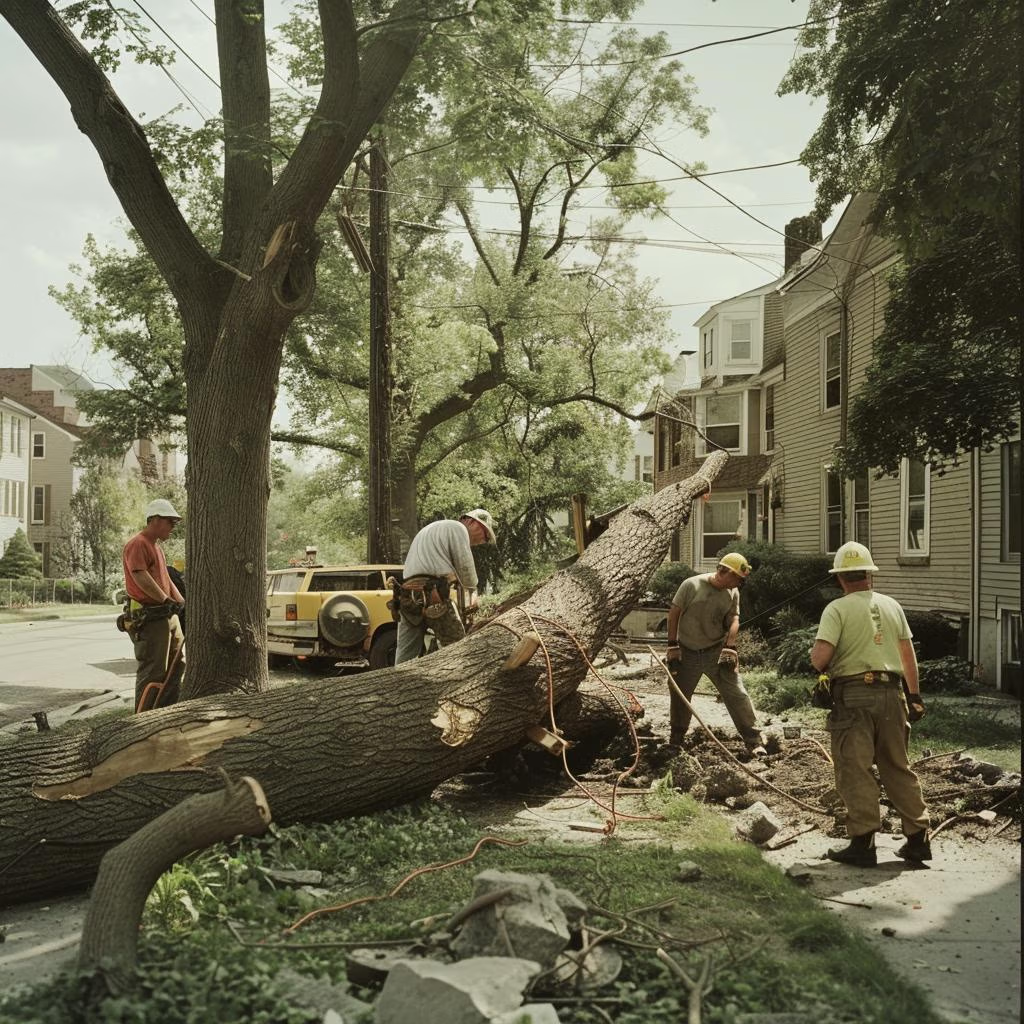
Storms can leave trees that pose immediate hazards to people and property. Dunbar Tree Service provides around-the-clock emergency tree removal, focusing on rapid assessment, safe operations, and clear communication so property owners know what to expect during a call‑out.
Tree removalafter extreme weather presents significant hazards, reinforcing the need for professional, safety‑driven services.
Tree Removal Injuries After Extreme Weather Events
Extreme weather events necessitate extensive tree removal and are associated with an increase in tree‑related injuries among personnel handling downed and damaged trees. A major hurricane was linked to a measurable rise in such injuries for those involved in response and recovery operations.
Tree-related injuries associated with response and recovery from Hurricane Sandy, New Jersey, 2011-2014, AO Williams, 2011
Dunbar maintains 24/7 emergency availability for homeowners and commercial clients in Waukesha and Milwaukee counties. This readiness helps limit property damage and quickly restore site safety after storms.
After an emergency call, Dunbar expedites an on‑site assessment and dispatches the appropriate crew and equipment. Fast assessment and mobilization reduce the time hazards remain unaddressed.
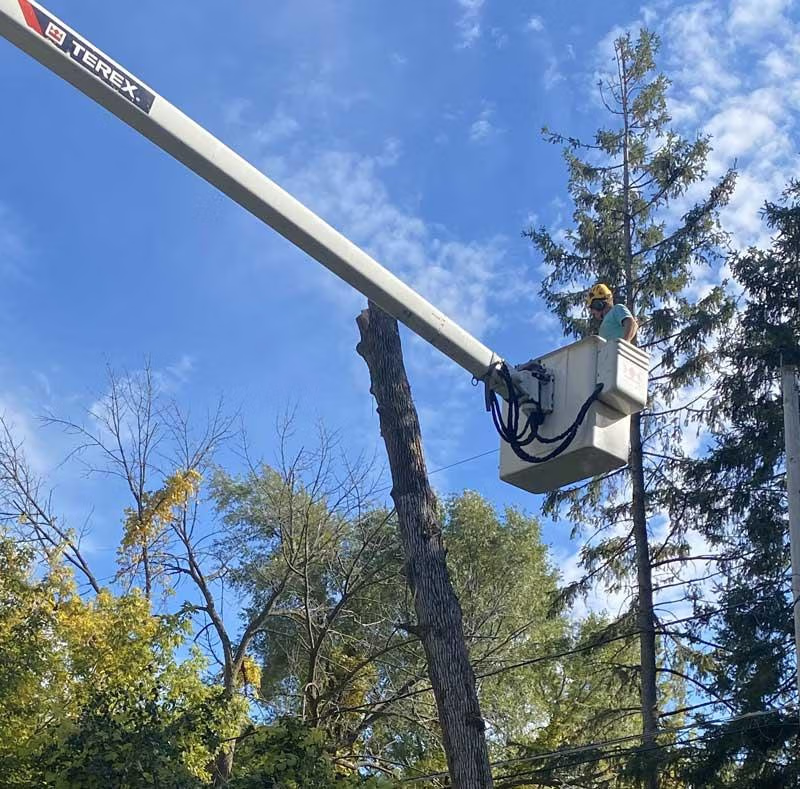
All emergency operations follow strict safety protocols. Licensed, insured crews use professional tools and personal protective equipment, and work under documented procedures to protect workers and property.
Recognising the inherent hazards of tree work underscores why strict safety controls are mandatory.
Arboricultural Safety: Identifying Tree Removal Hazards
This study aimed to identify and quantify hazards present during arboricultural operations. The four leading fatal incident types were climber falls, workers struck by a falling tree, workers making indirect contact with electrical current, and workers struck by falling branches.
A review of United States arboricultural operation fatal and nonfatal incidents (2001–2017):
Implications for safety training, J Ball, 2001
The emergency removal sequence is structured to keep work safe and efficient.
Dunbar’s procedures prioritise safety, clear communication, and effective cleanup so properties are returned to normal as quickly as possible.
Through fast mobilization of trained crews and ISA‑certified arborists. They prioritise immediate hazards, apply proven rigging and cutting techniques, and protect workers and the public throughout the job.
The 24‑hour service includes a thorough initial assessment, choices for full removal or selective trimming, and use of appropriate equipment (chainsaws, bucket trucks, stump grinders) to complete the work safely.
Beyond physical removal, Dunbar provides documentation, photographs, and cost estimates to support insurance claims and client recovery efforts.
Certified arborists apply training in tree biology, risk assessment, and safe rigging. Their evaluations guide safe cutting decisions and reduce operational risk to crews and surrounding property.
Core protocols include thorough risk assessments, mandatory PPE for all crew members, and compliance with OSHA and local regulations. ISA certification demonstrates the arborist’s formal competence.
Professional credentials such as ISA certification are recognised benchmarks for technical competence and ethical practice in arboriculture.
Professional Arborist Certification & ISA Standards
Professional credentialing validates an individual’s knowledge, skills, and abilities against accepted ethics and standards. The International Society of Arboriculture (ISA) manages professional arborist certification and related credentials to uphold industry practice.
Motivations and barriers of professional certification for tree workers, JS Gordon, 2024
After‑hours storm work follows applicable safety standards and local rules: adherence to OSHA requirements and any local permitting or urban tree regulations.
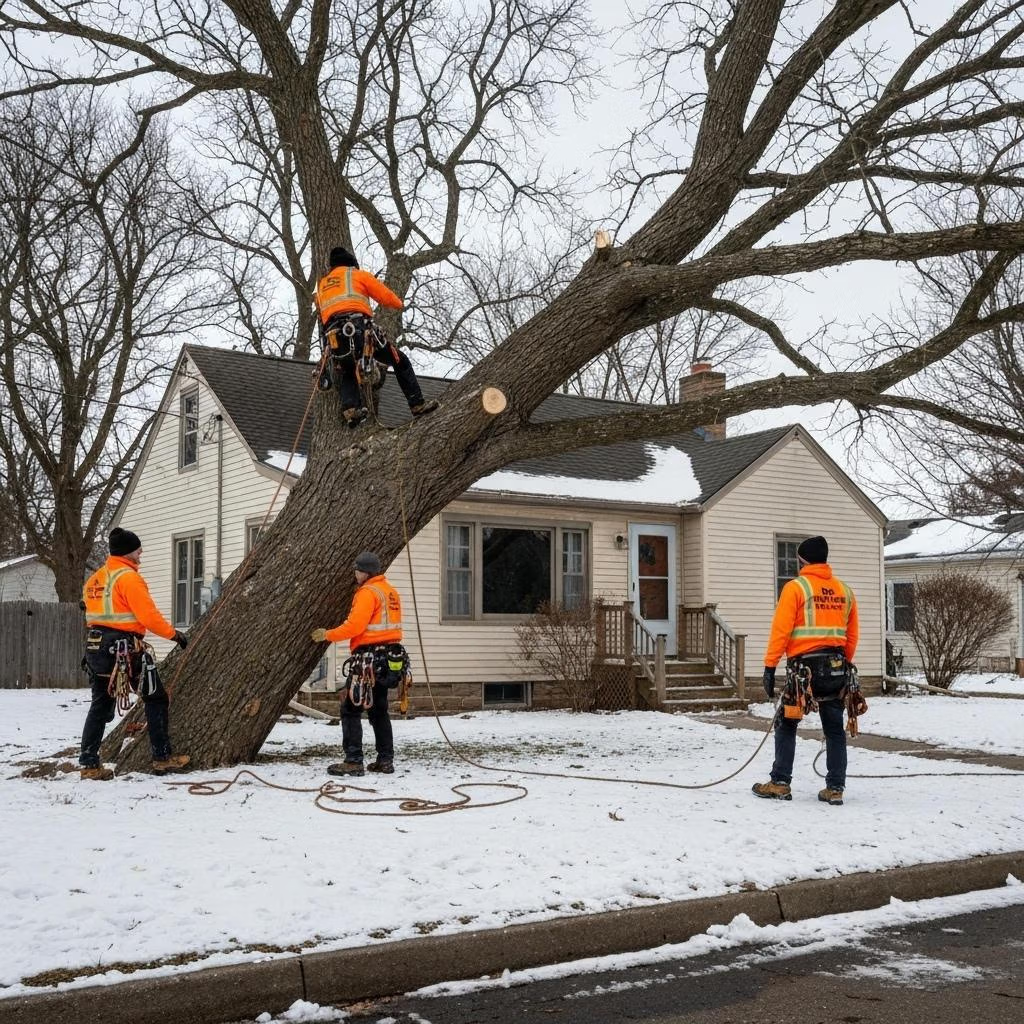
Dunbar uses a systematic assessment: determine damage extent, identify immediate hazards, prioritise tasks, then allocate crews and the right equipment to each site for safe, prompt removal.
Assessments in those counties include damage evaluation and clear documentation (reports and photos) to support insurance claims and recovery planning.
Equipment is chosen to match the situation: chainsaws and chippers for smaller jobs; bucket trucks, stump grinders, and rigging for complex or hard‑to‑reach removals. Selection considers site access and safety.
Coverage often applies when a tree threatens people or property; policy limits and deductibles vary. Costs reflect tree size, access difficulty, and removal complexity — an on‑site estimate gives the most accurate figure.
Many policies cover emergency removal when there is an immediate threat. Clients should document damage, confirm limits and deductibles, and coordinate with their insurer.
Primary cost drivers are tree size and height, site accessibility, and the complexity or instability of the tree. Each increases equipment, time, and crew requirements.
Knowing these variables helps owners budget and choose the right level of service for safe removal.
Ensure safety and call emergency services if anyone is injured. Do not approach a tree that may be unstable or touching power lines. Contact Dunbar for assessment and removal, and photograph the damage for insurance.
Have trees inspected for decay, large dead limbs, significant lean, or root issues. Regular pruning and removal of hazardous trees reduce storm risk; secure loose items before storms.
Look for visible decay, large trunk cracks, severe leaning, persistent dead branches, root damage, or pest infestation. Trees near power lines or structures warrant prompt assessment.
Dunbar performs a risk‑based assessment, uses specialised equipment, implements strict safety controls, protects nearby structures, and completes a thorough cleanup following removal.
Expect an on‑site assessment, controlled cutting and rigging, removal of the hazard, debris clearance, and ongoing communication about timeline and costs.
Dunbar minimises ecological impact where possible and offers recycling options like chipping for mulch or donating usable wood as part of responsible site restoration.